
Kitabda Nə Var? Kitabda Nə Var? Book reviews
Appearance
Join Us
What's in the Book? Discussion About Us
Azərbaycan English ✓ Русский Türkçe
← Reviews
Non-fiction

Digital Transformation: Survive and Thrive in an Era of Mass Extinction

Thomas M. Siebel
Review by: İdris Muxtarzadə23 September 2026
C3.ai founder Tom Siebel's case-study-driven business book on how the convergence of cloud, big data, AI, and IoT is driving companies toward 'mass extinction.'
Who Is This Book For?
Good Fit
  • Company executives and government leaders who want to understand the strategic side of digital transformation
  • Anyone who wants to see the combined impact of cloud, big data, AI, and IoT covered in a single book
  • Fans of business books grounded in real, named company case studies (3M, Caterpillar, Shell)
  • Readers curious about the inside perspective of a veteran Silicon Valley entrepreneur
Not a Fit
  • Readers looking for a technical, programming-level explanation of AI (the book operates at a strategic/managerial level)
  • Anyone wanting a fully neutral source, given C3.ai's own commercial stake (the author also owns the AI company)
  • Readers wary of fast-aging technology books who'd prefer a more "classic" business strategy title
Does this book sound like you?

Add it to your shelf so your picks stay in one place and you do not miss new reviews.

How Readers Rate It
Technicality 3.8/5 Industry-specific
Optimism 3.7/5 Optimistic
Practicality 4.0/5 Case-based
41 voters
Foreword: A Call to Action
Covers the first of the book's two forewords, Condoleezza Rice's 'A Call to Action' (pp. 11-13) — about 3% of the 269-page book. Introduces the thesis of four converging technological forces (cloud, big data, AI, IoT) and early notes on C3.ai's real clients (3M, Caterpillar, Shell, U.S. Air Force); the separate examination of each technology in later chapters (chapters 4-8) is not covered here.

Condoleezza Rice, the foreword's author (the former U.S. Secretary of State, now a corporate advisor), opens by describing having learned firsthand the importance of identifying the source and scope of risks and opportunities — framing Siebel's book as devoted to digital transformation, simultaneously the greatest risk and the greatest opportunity.

The core thesis is laid out: the convergence of four technological forces — cloud computing, big data, AI, and the Internet of Things — is causing successive 'mass extinctions' across industries, leaving behind a trail of organizations that either can no longer survive or have become irrelevant.

An example is given of how the entire financial-services value chain, from retail banking to payments, is being eroded — proof that digital transformation now has concrete industry consequences, not just abstract ones.

The spread of AI-powered applications in 'capital-intensive' industries like oil, gas, manufacturing, utilities, and logistics is highlighted — these industries, while less publicized than consumer industries, are undergoing major shifts resulting in significant economic and environmental benefits.

Drawing on personal experience working with Siebel, Rice stresses that the book is grounded in concrete case studies of C3.ai's work with real organizations like 3M, Caterpillar, Royal Dutch Shell, and the U.S. Air Force, some of which are among the largest of their kind.

Liked this review?

Get new reviews in your inbox.

Reading Experience
  • The book opens with endorsement quotes from prominent business and government leaders (Robert Gates, a Yale president, etc.), lending it credibility
  • Real, named company case studies (3M, Caterpillar, Shell) make abstract concepts concrete
  • A clear, topic-divided chapter structure (a separate chapter for each technology)
  • The author's own 40-year technology career (Oracle, Siebel Systems, C3.ai) lends experiential credibility
Content Warning
The author also owns C3.ai, the company selling the technologies described in the book — a potential conflict of interestAs a 2019 publication in a fast-changing tech field, some examples may already feel dated
If You Liked This
The Story of GoogleJohn Battelle

Written from inside the tech industry, a similarly documentary-business style

The System: Who Owns the Internet, and How It Owns UsJames Ball

A similarly critical look at the economic/political power of digital technologies

Spoiler
How does this part end?
⚠️ Rice: real case examples

At the end of the part read, Rice, speaking of her own experience working with Siebel, stresses that the book rests on concrete case examples of C3.ai's work with real organisations such as 3M, Caterpillar, Royal Dutch Shell and the US Air Force, some of them among the largest of their kind.

Responsibility. This review reflects the personal assessment of its author, who is responsible for it. As a platform, "What's in the Book?" is not responsible for the content of the review. All rights to the work belong to its author and publisher; the cover image is used for promotional purposes only.

If you see a problem, write to us. Publisher, author, rights holder, or just a reader — it doesn't matter. If there's something problematic about copyright in this review, if the review's author has broken the site's rules, or if you simply have a suggestion or complaint, hey@kitabdanevar.com. We'd rather resolve this between ourselves than go to court: we review requests within 48 hours and, if needed, correct or fully remove the review.
How Would You Rate It?
Did this review help you decide?
Reviews · 0
Similar Books
Review
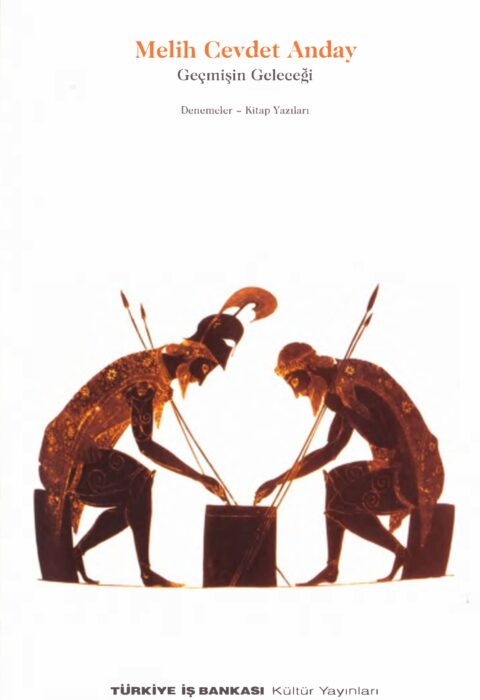
More than seventy short essays, mostly book reviews, that Anday published in Çerçeve magazine and the Cumhuriyet Kitap supplement between 1987 and 1991. The range is wide — from translating Ottoman Divan poetry to Wittgenstein, from poets who took their own lives to Feyerabend — and every piece points the reader towards another book. Anday's defence of 'difficult writing' and the thoughts on translating poetry are especially valuable, but because most pieces refer to long-forgotten 1980s publications, parts of the book now read like a historical record.
3.6 / 5
ReviewTürkanə Əliyeva
The Future of the Past

The Future of the Past

Melih Cevdet Anday · Non-fiction
Review
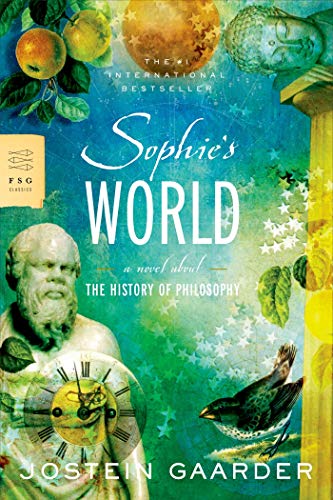
A phenomenon that turns the entire history of Western philosophy into a page-turning novel — translated into nearly forty languages worldwide, it opens with 14-year-old Sophie Amundsen finding a mysterious "Who are you?" in her mailbox, and never stops treating philosophy as an adventure rather than a textbook.
4.6 / 5
ReviewTürkanə Əliyeva
Sophie’s World

Sophie’s World

Jostein Gaarder · Classics
Review
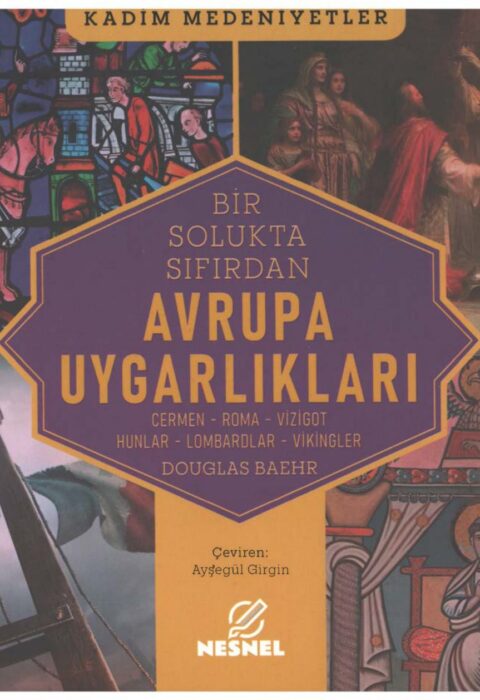
One of the more coherent «civilisations» volumes in the series: the political history of early medieval Europe, from the Migration Period to the Carolingians and from the Vikings to Muslim Spain, is told along a clear chronological line with plenty of dates; but the text carries the perspective of Turkish school textbooks («Hun Turks», «Istanbul» in the year 395), contains some factual and editing errors, and despite the word «civilisations» in the title, culture, economy and daily life barely appear.
3.0 / 5
ReviewTürkanə Əliyeva
European Civilisations — Germanic Peoples, Rome, Visigoths, Huns, Lombards, Vikings

European Civilisations — Germanic Peoples, Rome, Visigoths, Huns, Lombards, Vikings

Douglas Baehr · Non-fiction
Review
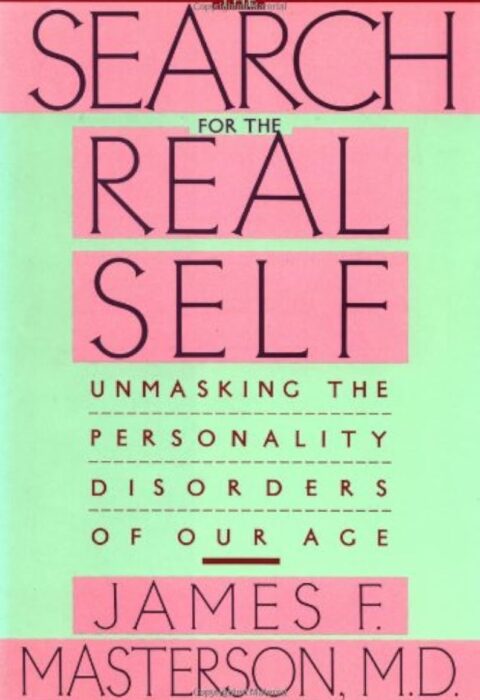
A classic written for both specialists and general readers by a psychiatrist regarded as a pioneer in understanding borderline and narcissistic personality disorders. The basic idea: when the «real self» cannot develop in early childhood, a person builds a self-damaging «false self» to protect against fear of abandonment and emptiness. The clinical stories are vivid and familiar: examples from work, love and eating disorders. But the book is written in psychoanalytic language, its developmental account rests on the mother–infant relation, and examples from 1980s America now feel somewhat distant.
3.8 / 5
ReviewRafel Əlizadə
The Search for the Real Self

The Search for the Real Self

James F. Masterson · Non-fiction
Esc — close · ↵ — open
Text