Kitabda Nə Var? Kitabda Nə Var?
Appearance
Join Us
What's in the Book? Discussion About Us
Azərbaycan English ✓ Русский Türkçe
← Reviews
Non-fiction

Ruh Eşin Nerede?

In English: Ruh Eşin Nerede? (Where Is Your Soulmate?)
Can Aydoğmuş
Review by: İdris Muxtarzadə12 October 20261 min read
A self-help book by a well-known social-media author on relationships, the subconscious and ancestral energy, resting on personal experience, astrology and «the power of thought». Its strongest points are the suggestions on communication, gratitude, forgiveness and watching one's own words, which push the reader to see that their relationship pattern comes from the family. Its weaknesses are claims with no scientific basis (the influence of planets, a subconscious cause of illness, ancestral «burden») and repetition.
Who Is This Book For?
Good Fit
  • Readers who feel the same scenario repeating in their relationships and like asking themselves questions
  • Those with a personal interest in astrology, chakras and dream journals
  • Readers who enjoy the author's plain, chatty social-media voice
Not a Fit
  • Anyone seeking an evidence-based psychology book: the main claims here are not scientifically verified
  • Those with a serious psychological problem, depression or a health complaint: the book does not replace a professional
  • Readers who cannot stand repetition and long «set an intention, code it» advice
How Readers Rate It
Practicality 3.4/5 Average
Scientific basis 2.1/5 Weak
Readability 3.8/5 Flowing
40 voters
Introduction and early chapters: the soulmate, «taking in and letting go», and the pattern from the family
Read: the first part of the book — about the author, acknowledgements, «Beginning» and the first sections (approx. pp. 1–92) — about 22% of the book. The later parts were not read.

This is Can Aydoğmuş's fifth book. He writes that he lost his mother, father and sister at a young age and then took personal-development courses for years. In the introduction he says he repeats ideas on purpose, to plant them in the reader's subconscious, and states plainly that he is not a psychologist, doctor, lawyer or healer; he advises anyone with a serious problem to see a specialist.

The core idea is the balance of «taking in and then letting go» in relationships. For the author a soulmate is a person whose planets sit opposite yours in the astrological charts; love at first sight (sexual, hormonal) is not a soulmate, everyone has several soulmates, and if a relationship is hard that person is not a soulmate. Painful stories such as Leyla and Majnun or Farhad and Shirin do not count as soulmates.

A running theme: out of love and a sense of belonging, people copy their parents' relationship pattern. The author gives examples: a woman who cannot digest her father's infidelity cheats on every partner; a friend who is constantly quarrelling grew up in a tense home and repeats the same pattern. The solution is «awareness», with suggestions such as watching words and thoughts, positive affirmations, saying «cancel, cancel», and a gratitude notebook.

The practical sections cover a home detox and Feng Shui layout according to the Bagua map, a «friend detox», bowing to parents saying «I accept you as you are» rather than «I forgive you», setting aside a corner at home for ancestors, and keeping a dream journal. The chapters are short, full of personal stories and rely on «miracle» examples from people the author has advised.

Reading Experience
  • Chapters are short, written in a social-media post style with many personal examples
  • The same ideas («coding», «awareness», «flow») are repeated again and again throughout
  • The practical instructions (gratitude notebook, dream journal, letter writing, cord-cutting meditation) are concrete and doable
  • No scientific source is cited; phrases like «research has shown» are not verified
  • Astrological and numerological interpretation runs through much of the text
Content Warning
Claims with no scientific basis: planets determining relationships, people being able to live 120–240 years, the Y chromosome disappearing and a risk of men dying out, the eldest child carrying the family's burden and first-born children being able to dieExamples that tie illness (for instance cancer after a divorce, linked to a portrait in the bedroom) or hatred, anger and «not wanting to live» to a cause — this can lead to blaming the sickPersonal «miracles» such as an arm that can be raised again after meditation or a stomach ache going away are health claims that are not provenThe religious-spiritual rules (the author's view) of not saying «I forgive» to parents and not «cutting the tie» with them could be harmful for some readersSexual topics (orgasm, premature ejaculation, a sexless life) are touched briefly and in passing, but there is no explicit sceneTraditional views on gender roles (a woman «feeds a man with life energy», should remain her husband's partner after childbirth)
If You Liked This
Getting the Love You WantHarville Hendrix, Helen LaKelly Hunt

On couples and childhood patterns, but a guide based on clinical experience

The SecretRhonda Byrne

A plain presentation of the power of thought and the «law of attraction»

The 5 Love LanguagesGary Chapman

A shorter, more practical book on how couples express love

Spoiler
How does this part end?
⚠️ «Do not lie» and «Stay in joy».

At the end of the part read, in the section «Listen to the voice of your heart», the author writes that the mind is «empty», that it is the heart that tells the truth, and suggests that the reader put their right hand on their heart and set an intention. Then comes the section «Do not lie»: with every lie you throw a rope around yourself, and in the end you try to move forward holding all the ropes but cannot; instead of trying to hide these ropes you can experience miracles in your life. The part ends with «Stay in joy»: in happiness and joy you are connected with the source. What follows is outside the scope of this review.

Responsibility. This review reflects the personal assessment of its author, who is responsible for it. As a platform, "What's in the Book?" is not responsible for the content of the review. All rights to the work belong to its author and publisher; the cover image is used for promotional purposes only.

If you see a problem, write to us. Publisher, author, rights holder, or just a reader — it doesn't matter. If there's something problematic about copyright in this review, if the review's author has broken the site's rules, or if you simply have a suggestion or complaint, hey@kitabdanevar.com. We'd rather resolve this between ourselves than go to court: we review requests within 48 hours and, if needed, correct or fully remove the review.
How Would You Rate It?
Did this review help you decide?
Reviews · 0
Similar Books
Reviews
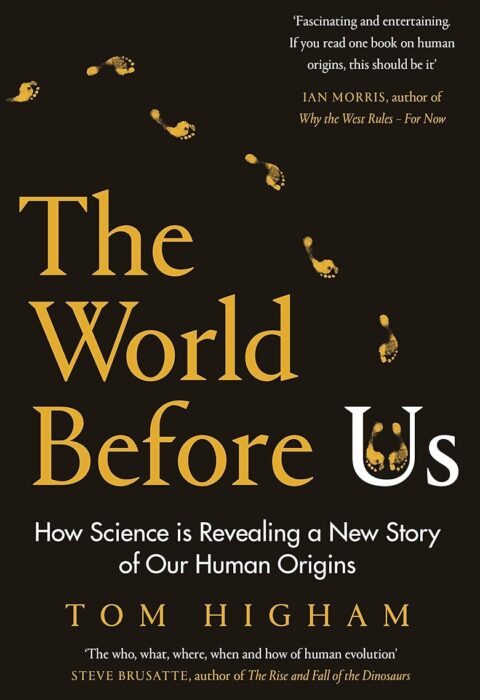
A lively, candid and scientifically very reliable book by an archaeologist who led Oxford's radiocarbon laboratory, about the other human groups that shared the Earth with us over the last 300,000 years — Neanderthals, Denisovans, the “Hobbits”, Homo erectus. Its greatest strength is that the discoveries are told from the inside by someone who took part in them: the story of “Denny”, the girl with a Neanderthal mother and a Denisovan father, found among thousands of bone fragments in Siberia's Denisova Cave, is genuinely thrilling. The weak side: some chapters get heavy with long technical explanations of laboratory methods. The Turkish translation reads smoothly. One of the best recent books for anyone interested in human evolution.
4.4 / 5
ReviewsAytən Həsənova
The World Before Us

The World Before Us

Tom Higham · Non-fiction
Reviews
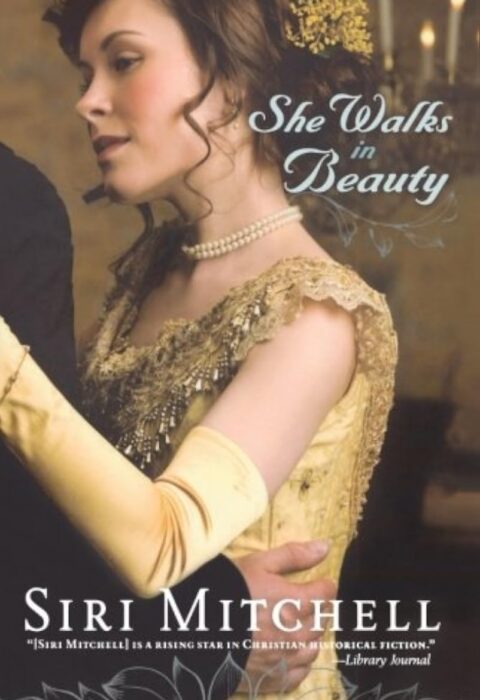
The story of Clara, a mathematics-loving teenager forced into her first «debut» season in the Gilded Age high society of 1891 New York. Its strongest side is the vivid depiction of the era's social rules (the debut, the corset, newspaper gossip) and the heroine's struggle between her love of science and reading and social expectations. Its weak side is the simply set-up conflict of the first part and the probable romantic line.
3.6 / 5
ReviewsCavid Mehdiyev
She Walks in Beauty

She Walks in Beauty

Siri Mitchell · Novel
Reviews
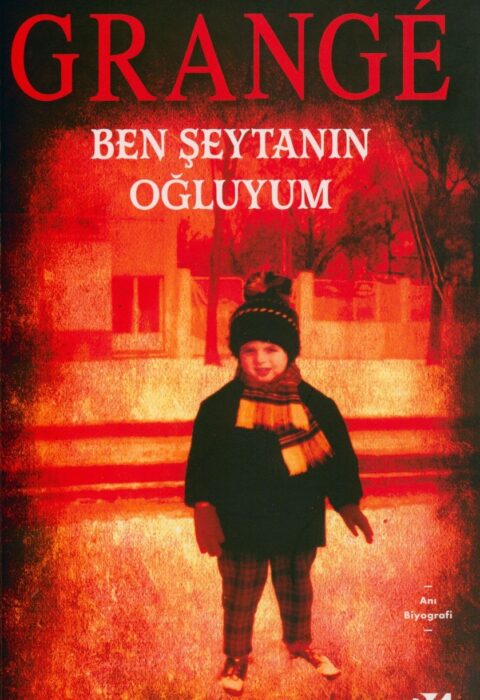
An autobiographical book in which the author of «The Crimson Rivers» returns to childhood, the parents' marriage and the divorce file. Its strongest quality is that the author looks for the source of the theme of fear in the novels and turns the search into a story: the opening scene reads like a thriller. Its weakness is that the inner monologues of the mother and grandmother are reconstructed from documents, so the reader must decide for themselves which part is document and which is the author's imagination.
4.0 / 5
ReviewsTürkanə Əliyeva
I Was Born of the Devil

I Was Born of the Devil

Jean-Christophe Grangé · Non-fiction
Reviews
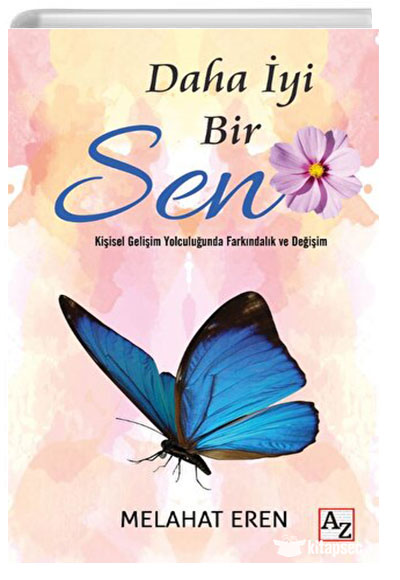
A broad, encyclopedic self-help book by Melahat Eren, covering dozens of topics from self-discovery to financial literacy in a collection of general, widely-applicable advice.
3.9 / 5
ReviewsRafel Əlizadə
A Better You

A Better You

Melahat Eren · Non-fiction
Esc — close · ↵ — open
Text