Kitabda Nə Var? Kitabda Nə Var?
Appearance
Join Us
What's in the Book? Discussion About Us
Azərbaycan English ✓ Русский Türkçe
← Reviews
Novel

Ev Arkadaşım 3: Kalp Aritmisi

In English: Ev Arkadaşım 3: Kalp Aritmisi (Heart Arrhythmia)
Gonca Çakır
Review by: Rafel Əlizadə12 October 20261 min read
The life of a large group of friends, doctor couples and soldiers over almost a year: a wedding, pregnancies, losses, workplace intrigue and, in the last third, a sudden kidnapping-and-torture thriller. Its strongest qualities are the warm humour, the friendship and family scenes and the broad cast. Its weaknesses are the length, the repeated emotional scenes, the abrupt shift of tone and the stereotyped portrayal of mental illness.
Who Is This Book For?
Good Fit
  • Readers who like a large group of friends, doctor couples and plenty of warm family scenes
  • Series readers who have read the first two books and want to continue with the characters
  • Anyone looking for an emotional portrayal of pregnancy, birth and new parenthood
Not a Fit
  • Readers who want to avoid several explicit love scenes (between married or consenting couples)
  • Readers sensitive to depictions of torture, kidnapping and violence against a child
  • People who have not read the earlier books and may struggle to follow the many characters from a single volume
How Readers Rate It
Readability 4.2/5 Flowing
Emotional weight 4.0/5 Heavy
Romance 4.4/5 A lot
40 voters
The opening: a wound of the soul, an abandoned flat and the attack in the forest
Book pp. 1–19 · about 4% (the opening scenes). Merih's plan and Fatih's talk with his patient (pp. 20–23) are in the spoiler section; the remaining ≈95% is not opened in this review.

The book is the third volume of the series and requires knowing the events of the earlier volumes. In the opening scene the doctor Fatih looks at his wife Asya's face and feels helpless: Asya behaves as though she had not lived through what happened, bakes pastries, prepares sweets to take to the clinic. The doctor Mehmet Hoca explains to Fatih that Asya has developed post-traumatic «alexithymia», that is emotional blindness: the patient has difficulty recognising and expressing her feelings. For now medication is not needed, psychotherapy will be applied. Fatih bites his lower lip until he tastes blood.

Meanwhile Leyla sits alone at home watching «P.S. I Love You», eating crisps and crying: she has not seen Merih for five days. What happened between them is not fully opened in this part, but on the night Merih meant to propose something broke, and he has not explained to Leyla what happened. Merih comes to the flat with a small suitcase, Leyla tries to act coolly: «Shall I help?» she says, but her heart tightens.

Leyla tells Merih that the company boss Adil Bey has put her on compulsory leave because of recent events. Merih rages at his colleague named Altan: «Shouldn't that fool have been put on compulsory leave?» Leyla does not understand what he means. Merih leaves the flat to go to a hotel and in a phone call with his friend Semih says that on that night he was going to tell Leyla he wanted to join his life with hers.

On the road two black cars follow him. Beside the forest the cars cut off the road, several heavily built men drag Merih into the forest and beat him savagely. One of them says «Altan Bey sends his greetings. This is how a threat is served». Merih gets to his feet half fainting, vomits, and cannot find his phone in the car: the attackers have smashed it too.

At the roadside a woman of about 25–26, the journalist Görkem, finds him and wants to take him to hospital. Merih refuses and gives the number of his friend Onur. Until Onur comes Görkem stays with him, saying «occupational disease» and joking that he looks like a «bloody heap of meat». Onur arrives, takes Merih to the clinic and stitches his wound. Merih tells Onur he will not go to the police: he cannot prove Altan did this.

Reading Experience
  • The story is split among many couples; chapters change viewpoint between Asya, Fatih, Leyla, Merih, Selin, Devran and Zehra, which widens the world but may be hard for readers new to the series
  • The banter among friends and the humour (Onur–Zeynep, Merih–Leyla, Selin's harsh but warm character) are the liveliest part of the book
  • The descriptions of pregnancy, ultrasound, premature birth and newborn intensive care are simple and clear; medical explanations are given in footnotes
  • The crying, sudden emotion and «pregnancy hormone» scenes are repeated many times; the book runs to 527 pages and some parts are stretched
  • After about page 430 the genre shifts sharply: romantic comedy and domestic scenes turn into a kidnapping, torture and murder thriller, and the tone suddenly darkens
  • In the epilogue the life ten years later is told through Emir's diary; the author's closing words say a short goodbye to the couples
Content Warning
An adult book (18+): there are several explicit sex scenes, all between married or consenting couples (the wedding night, Fatih and Asya's table scene, Selin and Devran's kitchen and bedroom scene); the language is not crude but it is detailedThe last part describes prolonged torture: an injured man is chained to an altar, his broken leg and wounded knees are struck, he is burned with cigarettes, beaten, cut, and kept with almost no food or waterThe kidnapper's past includes rape (over 10 days, by her husband's brother) and her manipulation of her own child into fratricide; child abuse, locking in a dark room and control by «making him hear voices» are describedA character is killed by having her neck broken and the attacker is shot by police; the book also has stabbing, an armed ambush and beatingsGökçe's loss of her baby, premature labour and neonatal intensive care may be heavy for readers sensitive to mother-and-baby themesThe cutting of Altan's genitals after his burn accident is presented in a comic tone as the friends' joke, which some may find ethically uncomfortableMental illness (delirium, «voices») is equated with violence and murder; this stereotyped portrayal may reinforce prejudice against patientsFatih's overprotective behaviour (policing restaurant meals and movement) and the patient-confidentiality issue (threatening Onur to learn of Asya's pregnancy) are presented romantically, which may bother some readers
If You Liked This
Ev Arkadaşım (book 1)Gonca Çakır

The beginning of the same series: Asya and Fatih's story from flatshare to love

The FlatshareBeth O'Leary

Two people sharing one flat slowly grow close; a gentler, funnier «housemate» romance

Vision in WhiteNora Roberts

A warm family-style novel following interlinked friends' couple stories across a series

Spoiler
The end of the 5%: Merih's plan and Oğuz's question
⚠️ Pp. 20–23: Merih's secret knowledge about Altan and Fatih's talk with his patient. Do not open it if you do not want to know.

In the clinic Merih tells Onur that Altan's aim is to make him look jealous and sick-minded in Leyla's eyes and to draw Leyla into his own arms. Merih is aware of this and had been behaving calmly beforehand, because he has information about Altan that could shake the company: Altan is a «mole» in the company where Leyla works and is preparing a major embezzlement. Merih will present this with proof to Leyla's boss very soon. How he knows it he refuses to tell Onur.

Meanwhile Fatih goes into his patient Oğuz's room. Oğuz has recently been responding to delirium treatment, his crises have lessened and he may soon be discharged. Oğuz strangely calls him «Ozan»: he does not accept that Fatih's name is Fatih. Then he looks at Fatih's face and says «Did you cry? Because of that girl?» and looks at the wedding ring on Fatih's finger. Fatih wants to describe Asya, but no word is enough.

Responsibility. This review reflects the personal assessment of its author, who is responsible for it. As a platform, "What's in the Book?" is not responsible for the content of the review. All rights to the work belong to its author and publisher; the cover image is used for promotional purposes only.

If you see a problem, write to us. Publisher, author, rights holder, or just a reader — it doesn't matter. If there's something problematic about copyright in this review, if the review's author has broken the site's rules, or if you simply have a suggestion or complaint, hey@kitabdanevar.com. We'd rather resolve this between ourselves than go to court: we review requests within 48 hours and, if needed, correct or fully remove the review.
How Would You Rate It?
Did this review help you decide?
Reviews · 0
Similar Books
Reviews
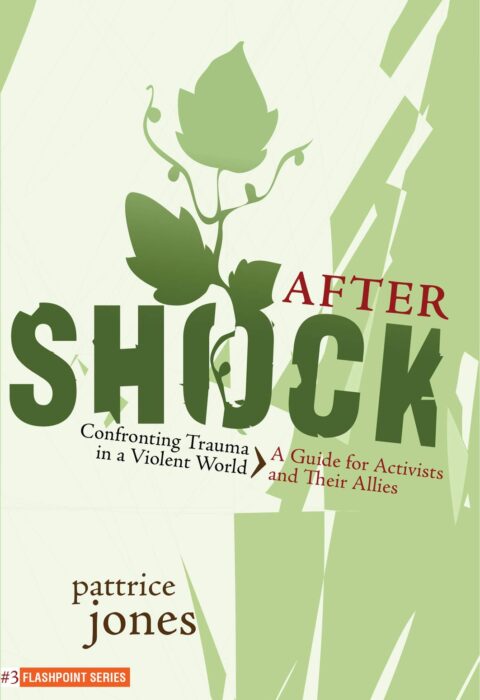
Psychologist and animal-rights activist pattrice jones names the trauma suffered by people who witness and fight violence — activists, volunteers, rescuers — «aftershock», and offers a guide to preventing it and recovering. The practical advice (sleep, water, breathing, talking to comrades) and the reflections on «choice» are useful; but the book is written squarely from a radical ecofeminist and vegan worldview, and some judgements (feeling threatened by American flags, leaning on contested theories) may alienate readers.
3.3 / 5
ReviewsRafel Əlizadə
Aftershock — Confronting Trauma in a Violent World

Aftershock — Confronting Trauma in a Violent World

pattrice jones · Non-fiction
Reviews
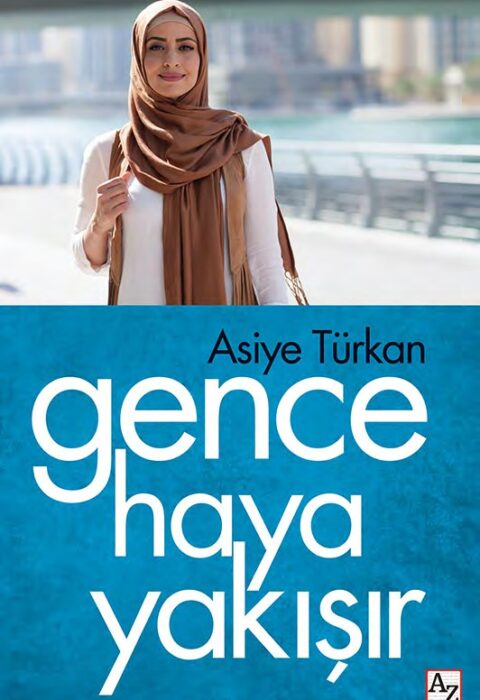
A religious advice book for young people by Asiye Türkan, a theology graduate and family counsellor living in Germany: it speaks warmly and sincerely about modesty, chastity and the value of youth through Qur'anic verses, hadith and stories of the prophets, but it is more sermon than analysis, and some claims — that marriages built on dating don't last, that working mothers leave children with strangers — rest on no source at all.
3.0 / 5
ReviewsTürkanə Əliyeva
Modesty Becomes the Young!

Modesty Becomes the Young!

Asiye Türkan · Non-fiction
Reviews
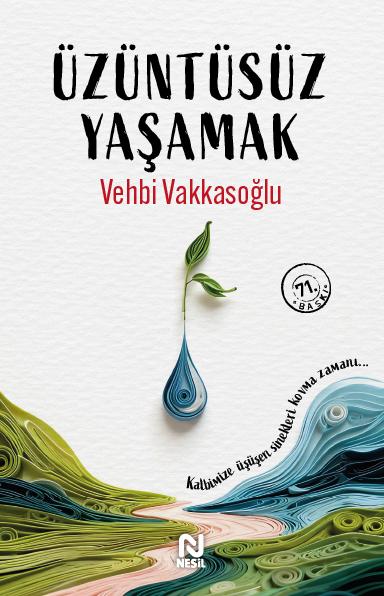
A comfort book by Turkish educator-writer Vehbi Vakkasoğlu, drawing on over 40 years of experience to address sorrow through a religious-spiritual lens, real conversations with young people, and Quranic/hadith references, in short chapters.
3.8 / 5
ReviewsCavid Mehdiyev
Living Without Sorrow

Living Without Sorrow

Vehbi Vakkasoğlu · Non-fiction
Reviews
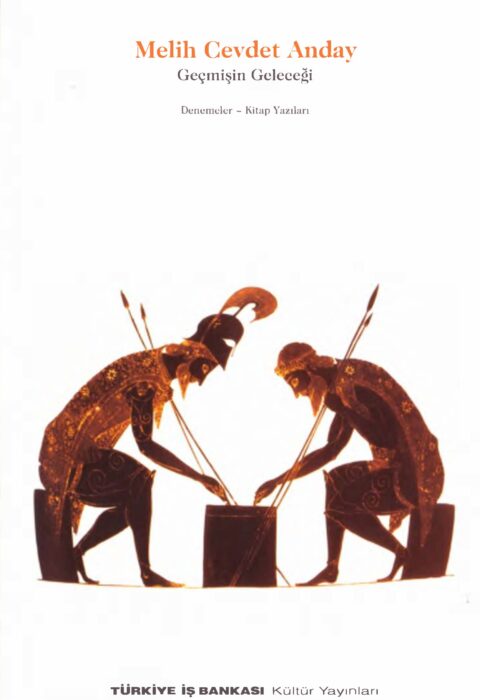
More than seventy short essays, mostly book reviews, that Anday published in Çerçeve magazine and the Cumhuriyet Kitap supplement between 1987 and 1991. The range is wide — from translating Ottoman Divan poetry to Wittgenstein, from poets who took their own lives to Feyerabend — and every piece points the reader towards another book. Anday's defence of 'difficult writing' and the thoughts on translating poetry are especially valuable, but because most pieces refer to long-forgotten 1980s publications, parts of the book now read like a historical record.
3.6 / 5
ReviewsTürkanə Əliyeva
The Future of the Past

The Future of the Past

Melih Cevdet Anday · Non-fiction
Esc — close · ↵ — open
Text