Kitabda Nə Var? Kitabda Nə Var?
Appearance
Join Us
What's in the Book? Discussion About Us
Azərbaycan English ✓ Русский Türkçe
← Reviews
Novel

İçinde Bir Sen 5: Ehza

In English: İçinde Bir Sen 5: Ehza (A You Within)
Binnur Şafak Nigiz
Review by: Cavid Mehdiyev13 October 20261 min read
A dark fantasy romance about grief, betrayal and a final war with an enemy who wears the face of the person the heroine loves. Strengths: poetic language, strong set pieces (the birth ritual, the letter, the graveyard at the end) and the humour of İbrahim and Mustafa Baba against heavy events. Weaknesses: it assumes you know the series from the start, long inner monologues and repeated grief passages bloat the text, the suicide and violence themes are heavy, and the ending is left to a sequel.
Who Is This Book For?
Good Fit
  • Readers of dark fantasy romance, supernatural races, wolf packs and a large shared universe
  • Those who want to read about love, grief, betrayal and «falling for the enemy» with intense feeling
  • Readers who have finished the earlier books and want to see the climax
Not a Fit
  • Those who want to start the series here without the earlier books: characters and rules are not re-explained
  • Readers sensitive to suicide, grief and heavy emotional scenes
  • Those who want a story that wraps up in one book: this one ends with a «To be continued» note
How Readers Rate It
Readability 4.1/5 Smooth
Tension 4.5/5 High
Emotional weight 4.7/5 Heavy
40 voters
The opening: the darkness inside Efken, Mahzar's death and Mahinev's oath
The first ≈4% of the book: Efken's opening monologue and the main part of chapter 1 (pp. 1–20). The passage from Istanbul to Varta and the house in the snowy forest (pp. 20–29) are in the spoiler section; the remaining ≈95% is not opened in this review.

The book is the fifth volume of the series and hard to follow without the previous four. The opening pages consist of two parts. First, like the darkness of a flame, Efken Karaduman speaks. He feels like a prisoner inside his own body: a dark being called «Nemesis» rules the same body, and Efken finally understands that he is in fact Nemesis himself and only a small piece of will is left. To Mahinev, whom he loves, he leaves a black tulip saying «do not forgive me»: he knows he does not deserve to be forgiven.

Then Efken speaks with Mustafa Baba, known as «father»: «Are you writing your own death warrant?» Efken says that if he cannot cope he will choose death: when he dies the Nigin bond will break and she will stay with her family. Mustafa Baba firmly stops him: all the Silver Claws would be orphaned, the packs scattered. One last «ehza» remains, one last arrow, and he should not use it unless he must.

Chapter 1 begins in Mahinev's voice: the woman who a night before wept «how am I to become his enemy» now stands as an enemy before Nemesis. She presses the sword, the source of his power, under his chin and says «This sword will not kill you, I know. But my betrayal killed you». Efken vanishes, Nemesis remains. He says he will gather the seven suns and destroy Nemesis, that when the «seven keys» come together his death will be at her hand. Nemesis opens a portal and goes, saying «I know you will not forgive me».

Then suddenly it emerges what price was paid: her brother Mahzar lies fallen in wolf form, her mother buries her face in his fur weeping, her father Aykan does not speak, and Miran says «Brother, get up, my sister drove them all away». Mahinev's blood heals, Crystal gets up; but it does not help Mahzar. Mahzar is dead. When her father lays his hand on his son's forehead the key mark glows and Mahzar returns to human form: lifeless, shrunken, calm. Mahinev weeps aloud for the first time.

Reading Experience
  • The text runs mostly in Mahinev's first-person voice; Efken's sections are few but show the reasons behind Nemesis's disastrous choices
  • Chapters are built on tarot-card names («Three of Swords», «Half Moon», etc.) with gothic-metal song titles as epigraphs; there is also a playlist at the start of the book
  • The language is rich in metaphor; long inner monologues and repeated grief passages sometimes slow the plot
  • The humour of İbrahim and Mustafa Baba gives breathing room between heavy scenes, though in places it turns into rough language and insults
  • Battle and ritual scenes are visually strong, but the rules (keys, shadows, the Nigin Bond) require knowledge from the earlier books
  • It ends on a cliffhanger, and a new secret (the ninth key) is opened at the very end
Content Warning
This is a book for adults (18+): there is no explicit sex scene, but there is sexual tension, kissing and descriptions of naked bodies; the birth scene is detailed, with blood and physical painThe main character stabs herself on the page near the end, and earlier there is long grief, a wish to die and suicidal thoughts; this may be heavy for readers sensitive to these topicsThere is a lot of violence: beatings that amount to torture, murders, beheadings of shadow creatures, mass battle, and mother and baby in danger of death during labourThe male lead (Efken/Nemesis) shows controlling behaviour such as kidnapping, imprisonment and threats; several male characters declare a woman «their mate», and this is presented in a romantic toneThere is profanity, rough language, smoking and alcohol; religious terms («the Antichrist», «the Beast of the Earth») are used as jokesThe book is part of a series and may be hard to follow for readers who have not read the earlier ones
If You Liked This
A Court of Thorns and RosesSarah J. Maas

Supernatural races, a soul-mate bond, a dark male lead and a large fantasy world

The Mortal Instruments: City of BonesCassandra Clare

A hidden supernatural world, wolf and warlock storylines, fate-woven love

TwilightStephenie Meyer

Wolf packs, supernatural romance and the theme of choosing for love; lighter and aimed at younger readers

Spoiler
The end of the 4%: the way to Varta and the house in the snowy forest
⚠️ Pp. 20–29: the carrying away of Mahzar's body and Mahinev's wounded decision. Do not open it if you do not want to know.

Aykan says «He is a Red Mega; until the keys come together we must preserve his body» and orders the body taken to its homeland Varta, to the only place where it will be safe. Mahinev's mother objects: «Where are they taking my son? My son is dead!» and wails «you could not protect him». Miran begs «sister, do something». Mahinev gives the command: İbrahim will open the portal, the body will be taken to Varta. Vitali offers to ease her mother's pain, her mother says «you must kill me».

The portal first opens onto the church in Istanbul. There Mahinev takes her brother's head in her palms and cries «I could not protect you», falling to her knees. Then she drives the sword into the floor and rises: her tears are dry, only hatred is in her eyes. She leaves her heart in Istanbul: «it was time for Nemesis to meet the deposed queen». A second portal brings them to Varta's snowy forest, to the house where she once lived; beside the house Efken's phantom appears.

Responsibility. This review reflects the personal assessment of its author, who is responsible for it. As a platform, "What's in the Book?" is not responsible for the content of the review. All rights to the work belong to its author and publisher; the cover image is used for promotional purposes only.

If you see a problem, write to us. Publisher, author, rights holder, or just a reader — it doesn't matter. If there's something problematic about copyright in this review, if the review's author has broken the site's rules, or if you simply have a suggestion or complaint, hey@kitabdanevar.com. We'd rather resolve this between ourselves than go to court: we review requests within 48 hours and, if needed, correct or fully remove the review.
How Would You Rate It?
Did this review help you decide?
Reviews · 0
Similar Books
Reviews
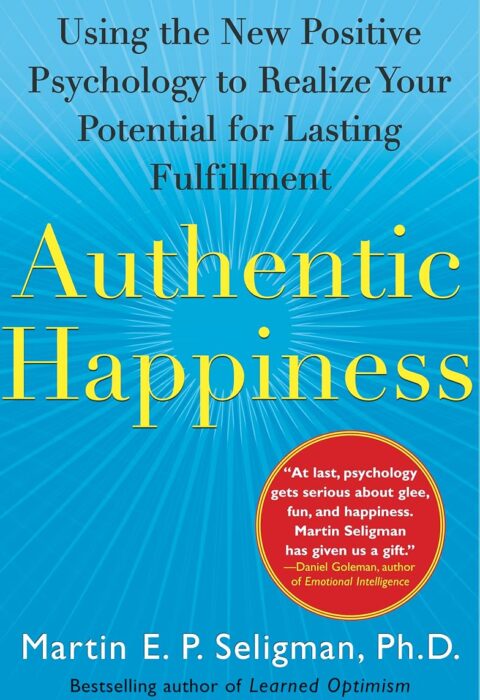
The main book of Martin Seligman, one of the founders of positive psychology, explaining happiness through «positive emotion, strengths and meaning». In the first chapter that was read, the strongest side is that it tells scientific research (the nuns, the smile, the colonoscopy) like vivid stories and clearly shows the difference between «feeling good» and «the good life». The weak side is that some studies are limited to small samples and the American context and that the author places himself somewhat at the centre. It does not replace treatment of depression; a strong start for those curious about the scientific foundations of happiness.
4.0 / 5
ReviewsTürkanə Əliyeva
Authentic Happiness

Authentic Happiness

Martin E. P. Seligman · Non-fiction
Reviews
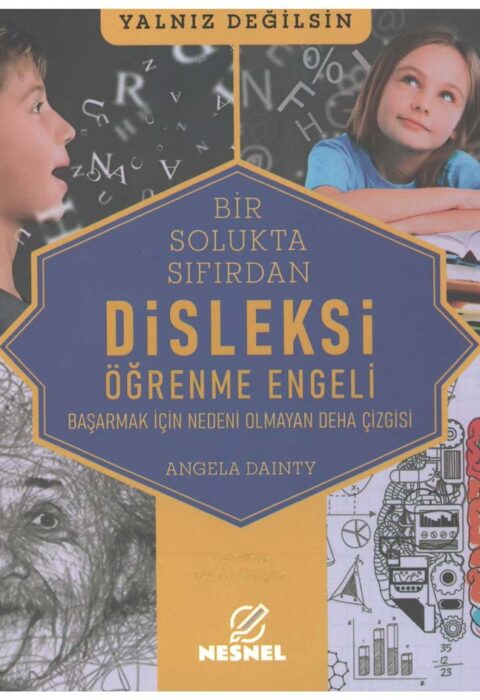
A short information book that explains dyslexia not in isolation but alongside dyscalculia, dysgraphia, dyspraxia and non-verbal learning disability: the chapter on «twice-exceptional» children — those with both a learning difficulty and giftedness — covers a valuable and rarely discussed topic, but the closing list of «dyslexic celebrities» is full of unproven claims and factual errors, and most of the text reads like a textbook.
3.0 / 5
ReviewsTürkanə Əliyeva
Dyslexia — The Learning Barrier

Dyslexia — The Learning Barrier

Angela Dainty · Non-fiction
Reviews
A modern New York take on «When Harry Met Sally»: pink-haired, chaotic would-be stand-up comic Ari and uptight, minute-by-minute planner chef Josh keep running into each other over the years and can't stand each other — until it turns into friendship and then something more. The dialogue is sharp and funny and the characters vivid; but there is plenty of explicit sex and coarse language, and the enemies-to-lovers formula holds no surprises.
3.6 / 5
ReviewsCavid Mehdiyev
You, Again

You, Again

Kate Goldbeck · Novel
Reviews
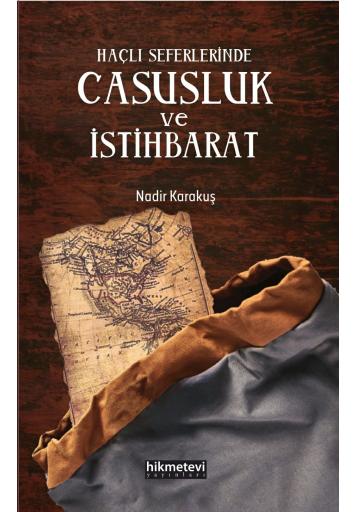
A faculty member at Hitit University's Faculty of Theology, Nadir Karakuş offers a comprehensive treatment of espionage and intelligence activity during the Crusades (1095–1291), filling a real gap in the field — the Foreword and Introduction make a persuasive case for why the book was written and how its subject connects to the present.
4.0 / 5
ReviewsAytən Həsənova
Espionage and Intelligence in the Crusades

Espionage and Intelligence in the Crusades

Assoc. Prof. Nadir Karakuş · Non-fiction
Esc — close · ↵ — open
Text