Kitabda Nə Var? Kitabda Nə Var?
Appearance
Join Us
What's in the Book? Discussion About Us
Azərbaycan English ✓ Русский Türkçe
← Reviews
Non-fiction

Authentic Happiness

In English: Authentic Happiness: Using the New Positive Psychology to Realize Your Potential for Lasting Fulfillment (Gerçek Mutluluk)
Martin E. P. Seligman
Review by: Türkanə Əliyeva09 October 20261 min read
The main book of Martin Seligman, one of the founders of positive psychology, explaining happiness through «positive emotion, strengths and meaning». In the first chapter that was read, the strongest side is that it tells scientific research (the nuns, the smile, the colonoscopy) like vivid stories and clearly shows the difference between «feeling good» and «the good life». The weak side is that some studies are limited to small samples and the American context and that the author places himself somewhat at the centre. It does not replace treatment of depression; a strong start for those curious about the scientific foundations of happiness.
Who Is This Book For?
Good Fit
  • Readers who want the main ideas of positive psychology from the source
  • People interested in finding their character strengths and using them at work and in relationships
  • Anyone who thinks happiness is not only pleasant feeling but also meaning and engagement
Not a Fit
  • Anyone seeking short ready-made recipes: the book is long and has tests and a philosophical background
  • Anyone wanting to replace treatment of severe depression or a mental disorder with a book
  • Anyone expecting scientific presentation to be balanced throughout: the author takes a sharp stand on some subjects (hedonism, the past of his own field)
How Readers Rate It
Readability 3.3/5 Average
Depth 3.2/5 Average
Practical advice 3.2/5 Average
40 voters
Chapter 1: the nuns, the Duchenne smile and what a good life is
Read: chapter 1 «Positive Emotion and Positive Character» and the first pages of chapter 2 (approx. pp. 1–19) — about 4% of the book. The other chapters were not read.

The chapter opens with the story of two nuns: Cecilia and Marguerite, who took the same vows in Milwaukee in 1932. Cecilia at ninety-five has never been ill for a day, while Marguerite suffered a stroke at fifty-nine. The nuns' way of life, diet and medical care are the same; the difference lies in the autobiographies they wrote as novices: Cecilia says «very happy», «joyfully», while Marguerite expresses no positive emotion at all. When the amount of positive emotion in the writing was measured, 90% of the most cheerful quarter lived to 85, against 34% of the least cheerful quarter.

The second example is the smile: the Duchenne smile (the skin around the eyes crinkles) is genuine, while the «Pan American smile» is merely a polite pose. Keltner and Harker, looking at the photographs of 141 girls in the Mills College 1960 yearbook, showed that girls with a Duchenne smile married more over the next thirty years, stayed married and felt better; physical beauty does not explain this. From these two studies Seligman concludes that «positive emotion is not merely a pleasant feeling but an indicator of longevity and marital satisfaction».

Then the author criticises hedonism: the formula «quality of life is good moments minus bad moments» is wrong. In Daniel Kahneman's colonoscopy experiment, of 682 patients the group with an extra minute of less uncomfortable time added at the end remembers the experience better and is more willing to repeat it, although the total pain was greater. In the «experience machine» thought experiment (a machine that stimulates your brain) most people refuse: we want not positive emotion but to earn it. Shortcuts — drugs, chocolate, shopping, television — produce emptiness and insincerity.

At the end of the chapter the author shows the plan of the book: Part 1 positive emotions, Part 2 24 strengths and 6 virtues (wisdom, courage, love, justice, temperance, spirituality), Part 3 «the good life». The «good life» is not champagne and a Porsche: «the good life is using your signature strengths every day». Seligman gives as examples that his own strength is love of learning, whereas chairing a committee brings him exhaustion, not vitality. Then the Fordyce happiness questionnaire is given and it is reported that average American adults scored 6.92 (out of 10).

Reading Experience
  • The chapter opens with a portrait of two nuns, and the science grows out of the story
  • Thought experiments such as the colonoscopy and the «experience machine» make the abstract idea concrete
  • The author gives examples from his own strong and weak sides, inviting the reader to find their own strengths
  • The Fordyce questionnaire at the end of the chapter turns the reader from a passive reader into a participant
Content Warning
The book does not replace treatment of depression or other mental disorders; in severe cases consult a specialistStudies on nuns and yearbook photographs were done with limited groups and the results should not be generalised to everyoneThe description of the colonoscopy experiment speaks openly about bodily functions; it may be unpleasant for sensitive readers
If You Liked This
Learned OptimismMartin E. P. Seligman

The author's earlier book on optimism and explanatory style

FlowMihaly Csikszentmihalyi

The main book on full engagement and «flow»

Man's Search for MeaningViktor E. Frankl

A classic on the search for meaning

Spoiler
How does this part end?
⚠️ «Learned helplessness» and the author's path in psychology.

At the end of the part read Seligman recalls 1968: as an assistant professor at Cornell he discovered «learned helplessness» in dogs (dogs that could not escape electric shock later gave in even when they could escape) and that this challenged learning theory, while he himself was interested in the theory's consequences for human suffering. What follows is outside the scope of this review.

Responsibility. This review reflects the personal assessment of its author, who is responsible for it. As a platform, "What's in the Book?" is not responsible for the content of the review. All rights to the work belong to its author and publisher; the cover image is used for promotional purposes only.

If you see a problem, write to us. Publisher, author, rights holder, or just a reader — it doesn't matter. If there's something problematic about copyright in this review, if the review's author has broken the site's rules, or if you simply have a suggestion or complaint, hey@kitabdanevar.com. We'd rather resolve this between ourselves than go to court: we review requests within 48 hours and, if needed, correct or fully remove the review.
How Would You Rate It?
Did this review help you decide?
Reviews · 0
Similar Books
Reviews
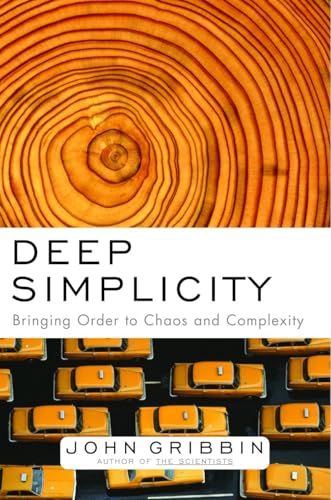
A quality book from a master of popular science that explains chaos and complexity theory through the history of science from Galileo to Boltzmann, clearly and without equations, and builds a convincing case that the world's complexity arises from simple laws.
4.1 / 5
ReviewsCavid Mehdiyev
Deep Simplicity

Deep Simplicity

John Gribbin · Non-fiction
Reviews
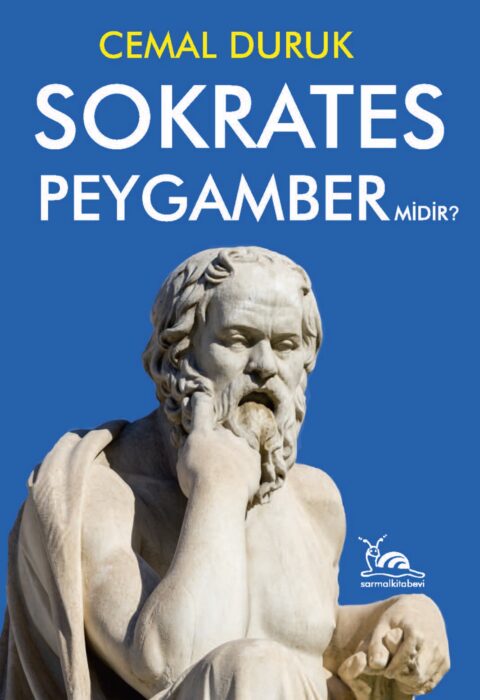
Cemal Duruk's short book examining the question «Was Socrates a prophet?» by comparing it with the concept of prophethood in the Islamic, Jewish and Christian traditions. In the first chapter that was read the concept of prophethood is explained in plain language: the difference between nabi and rasul and five common qualities (sidq, amanah, fatanah, ismah, tabligh) are illustrated with verses and hadiths. The chapter is written from a faith-based perspective and is not a study in the history of philosophy; this is both its strength (systematic exposition) and its limitation. Interesting for those who want to read about the concept of prophethood in plain exposition with a comparative religious perspective.
2.9 / 5
ReviewsTürkanə Əliyeva
Was Socrates a Prophet?

Was Socrates a Prophet?

Cemal Duruk · Non-fiction
Reviews
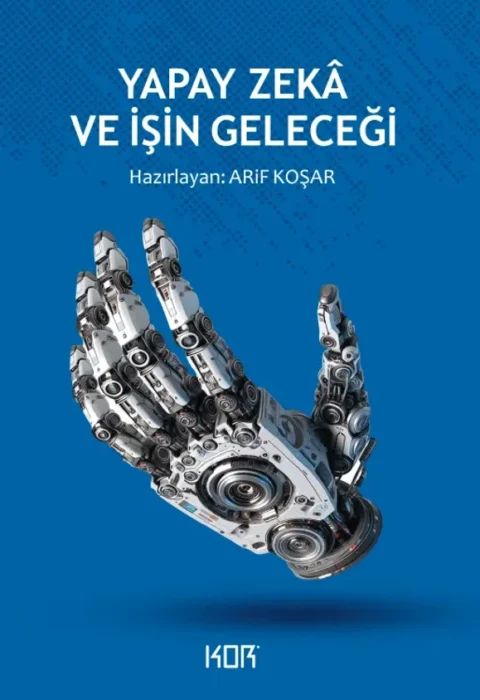
This collection, edited by Marxist economist Arif Koşar, sets a critical frame against the "techno-utopian" narrative around artificial intelligence — arguing technology is never "neutral" but shaped by capital's interests; it offers strong theoretical argumentation, but its openly partisan stance makes it a poor fit for readers seeking neutral economic analysis.
4.0 / 5
ReviewsRafel Əlizadə
Artificial Intelligence and the Future of Work

Artificial Intelligence and the Future of Work

Ed. M. Arif Koşar (multi-author essay collection) · Non-fiction
Reviews
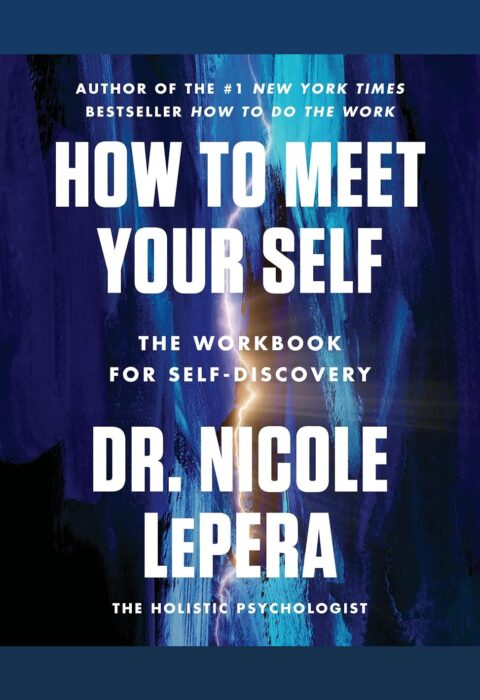
A workbook by Dr Nicole LePera, based on the «SelfHealers» movement, designed to recognise unconscious patterns. Its strongest side is the non-judgmental tone, short daily exercises (breath, grounding, journal) and the space given on the pages for writing. Its weak side is that the scientific proof for some ideas (the inner child, the «Authentic Self») is weak, the motivational language is general and it is no substitute for professional therapy.
3.5 / 5
ReviewsCavid Mehdiyev
How to Meet Your Self

How to Meet Your Self

Nicole LePera · Non-fiction
Esc — close · ↵ — open
Text