Mikado’s Sticks
Good Fit
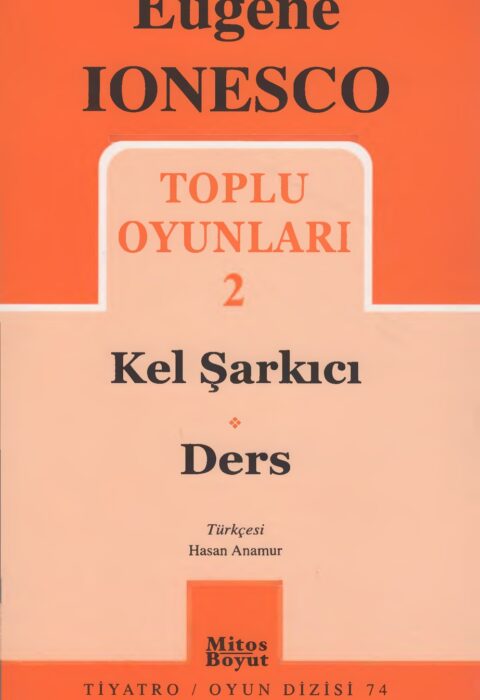
- Lovers of absurdist theatre — Beckett, Ionesco, Pinter
- Readers curious about classic Turkish drama
- Anyone who enjoys dialogue-driven psychological tension between two characters
Not a Fit
- Readers who want a clear plot and a definite ending — the play leaves more questions than answers
- Those put off by drunkenness, swearing and sexual innuendo
- People who like to watch plays rather than read them
The play opens in silence: a dark stage, a dog barking on the floor below, a key turning in the lock. The Man shakes the snow from his coat: 'Come in, this is it.' The Woman is timid; she lays the baby on the daybed and several times tries to leave, saying she is a burden. The Man is lost in his own world, replaying an argument from the house where he spent the evening — with an 'ignoramus' who claimed socialists would slaughter all intellectuals and that rebellious nations deserve an atom bomb. Two people share a room but hold two separate conversations. Anday has the Man say it outright in the first pages: all conversations are more or less like this.
The first major tension is built around kindness. The Man considers it tactful not to ask the Woman anything — a way of 'not doing a good deed'. He despises 'rescuers' and mimics them walking 'like men just up from prostate surgery'. The Woman calls this 'treating me as if I don't exist': 'I'm a human being, not a cat.' Pity that asks no questions turns her into a kitten picked up by the scruff of the neck and carried into a warm room. This is one of the play's deepest ideas: kindness without listening can be humiliating, while listening demands responsibility and closeness — exactly what the Man is running from.
At last the Woman begins her story: her husband fell in love with another woman and left her and the baby at his aunt's house; in that wealthy family she was pushed first from the dinner table, then out of the house. As she tells it, the Man suddenly loses his temper, shouts 'You're making it up!', then abruptly suspects: 'Were you waiting for me on that corner?' By now the audience cannot tell who this woman is, whether the story is true, or why the man is so shaken. Later the Woman herself says: 'The story I told you was made up.'
From here the play turns into a game: they will take turns telling stories till morning, but 'no judging'. The Man's first 'confession' — that his parents are not at home after all — doesn't frighten her: 'I have no hope left to be afraid with.' His second story is harsh: at primary school he told a quiet deskmate 'That man isn't your real father', and the boy stayed away from school for three days. Rumi's little tale of the stork and the snipe — what made two such different birds walk side by side? both were lame — is offered as the key to this night's meeting between two wounded people.
The play's strength lies in its language: Anday builds dialogue from short, harsh, often comic lines whose logic keeps breaking down while remaining emotionally precise. Its weakness comes from the same source: after a while the reader no longer knows whose story to believe, and some will find this uncertainty tiring.
- Just two characters and one room — tension is built entirely through dialogue
- Strong stage details: a barking dog, a stopped wall clock, the blue light of dawn
- A skilful blend of absurd humour with heavy themes such as abandonment and loneliness
Dialogue whose meaning keeps slipping; waiting and absurdity
One night, alcohol and stories that contradict each other
Anday's anthology on the theory of comedy and theatre
At the end of the part read, Rumi's short tale of the stork and the snipe — what made these two different birds walk side by side? both were lame — is offered as the key to the meeting of two wounded people tonight.
If you see a problem, write to us. Publisher, author, rights holder, or just a reader — it doesn't matter. If there's something problematic about copyright in this review, if the review's author has broken the site's rules, or if you simply have a suggestion or complaint, hey@kitabdanevar.com. We'd rather resolve this between ourselves than go to court: we review requests within 48 hours and, if needed, correct or fully remove the review.