Kitabda Nə Var? Kitabda Nə Var?
Appearance
Join Us
What's in the Book? Discussion About Us
Azərbaycan English ✓ Русский Türkçe
← Reviews
Non-fiction

The Kazdin Method for Parenting the Defiant Child

Alan E. Kazdin
Review by: İdris Muxtarzadə23 September 20261 min read
The Yale child-behavior clinic director's evidence-based method for defiant children: reinforce the positive first, then reduce the negative.
Who Is This Book For?
Good Fit
  • Parents of a defiant or hard-to-manage child
  • Anyone who wants the science behind why punishment-first parenting often fails
  • Parents who like a concrete, step-by-step "what to do in this situation" format
  • Readers seeking research-backed advice from an academic source like Yale University
Not a Fit
  • Parents looking for an overnight fix (the method requires patience and consistency)
  • Anyone who prefers a philosophical/emotional approach to parenting over a clinical-methodical one
  • Readers looking for material focused only on very young children (0-3); the book targets mostly age 4 and up
How Readers Rate It
Practicality 4.2/5 Applied
Scientific grounding 4.1/5 Research-based
Patience required 3.9/5 Long-term
46 voters
Introduction and The Method: Why Doesn't Punishment Work?
Covers the book's Introduction (pp. 11-12) and the subsections of 'The Method' — 'The Method,' 'Where This Method Came From,' 'Opening Up,' and 'So, Relax' (pp. 13-26) — about 5% of the 345-page book. Explains the method's core principle (reinforce the positive first) and its scientific roots; the age-specific scenarios (chapters 3-4) and punishment techniques (chapter 6) are not covered here.

The Introduction opens with real parent scenarios: a 4-year-old's increasingly severe tantrums, a 13-year-old's confessions of theft and property damage — Kazdin describes the confusion, fear, and sense of failure these situations create in parents.

The Method section lays out the core principle: parents typically try to stop bad behavior first, through punishment, whereas Kazdin proposes the reverse — first strengthen the desired opposite behavior through positive reinforcement, and only then move to techniques for reducing the negative behavior.

'Where This Method Came From' grounds the approach in Kazdin's more than 30 years of clinical work at Yale, having worked with roughly 6,000 children, 4,000 parents, and 5,000 teachers — the method isn't a single theory but the product of decades of tested behavioral science.

'Opening Up' calls on parents to minimize their own emotional reactions — anger, blame — while applying the method, and to stay calm and consistent instead.

'So, Relax' reassures parents: the method isn't complicated, but it does require consistency and patience — Kazdin prepares readers for the fact that initial results may take a few weeks.

Reading Experience
  • Research-grounded but written in plain language, free of academic jargon
  • Each section opens with a real parent story, immediately drawing the reader in emotionally
  • Structure by age group (from chapter 4 onward) makes practical navigation easy
  • Concrete, field-tested recommendations drawn from 30 years of clinical experience
Content Warning
The method requires real patience and consistency — may disappoint readers looking for a quick fixSome examples (theft, property damage) may be unsettling
If You Liked This
Bringing Up BébéPamela Druckerman

A different cultural context, but a similarly practical, everyday-scenario-based parenting approach

What Great Parents DoErica Reischer

Another research-based, step-by-step guide in the same genre

Spoiler
How does this part end?
⚠️ «Relax»: the method is not complicated

At the end of the part read, the section «So, Relax» reassures parents: the method is not complicated, but it demands consistency and patience. Kazdin prepares readers for the fact that the first results may take a few weeks.

Responsibility. This review reflects the personal assessment of its author, who is responsible for it. As a platform, "What's in the Book?" is not responsible for the content of the review. All rights to the work belong to its author and publisher; the cover image is used for promotional purposes only.

If you see a problem, write to us. Publisher, author, rights holder, or just a reader — it doesn't matter. If there's something problematic about copyright in this review, if the review's author has broken the site's rules, or if you simply have a suggestion or complaint, hey@kitabdanevar.com. We'd rather resolve this between ourselves than go to court: we review requests within 48 hours and, if needed, correct or fully remove the review.
How Would You Rate It?
Did this review help you decide?
Reviews · 0
Similar Books
Reviews
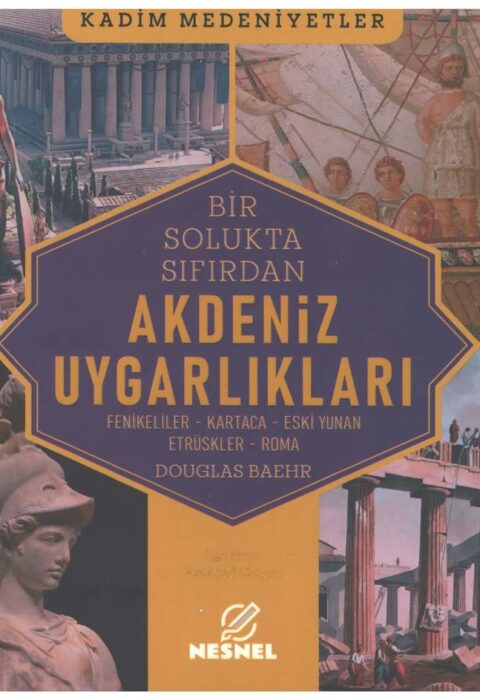
A pocket book presenting the Mediterranean world from the Phoenicians to Rome in five chapters: it has interesting details such as Herodotus's Lydian story and the Lemnos stele, but the Etruscan chapter presents the scientifically rejected «proto-Turkic» theory, racial skull typology and exaggerated genetic claims as if proven, which seriously undermines the book's credibility.
2.5 / 5
ReviewsRafel Əlizadə
Mediterranean Civilisations — Phoenicians, Carthage, Ancient Greece, Etruscans, Rome

Mediterranean Civilisations — Phoenicians, Carthage, Ancient Greece, Etruscans, Rome

Douglas Baehr · Non-fiction
Reviews
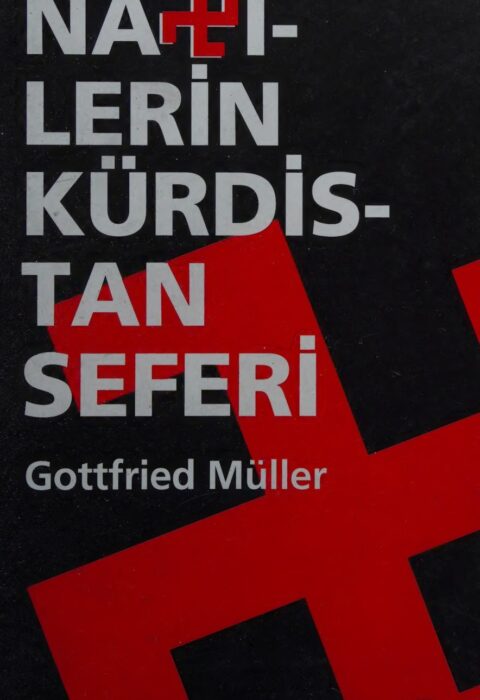
The memoir of a German officer who parachuted into Iraqi Kurdistan in 1943: a plan to seize the Mosul and Kirkuk oilfields from the British through a Kurdish uprising, a failed adventure remembered as Operation Mammoth. The book is a rare first-hand source and reads like a spy novel. Yet in the first half the author barely touches on the nature of the Nazi regime and portrays the Kurds through exotic stereotypes of «natural» people. It is a historical document to be read with a critical eye.
3.2 / 5
ReviewsTürkanə Əliyeva
Im brennenden Orient

Im brennenden Orient

Gottfried Müller · Non-fiction
Reviews
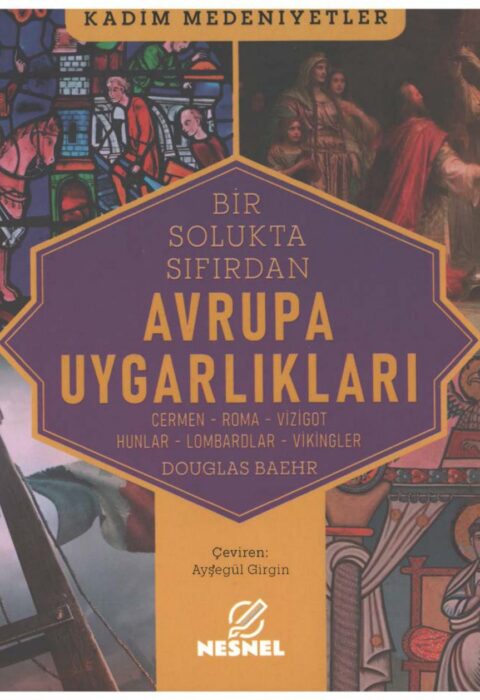
One of the more coherent «civilisations» volumes in the series: the political history of early medieval Europe, from the Migration Period to the Carolingians and from the Vikings to Muslim Spain, is told along a clear chronological line with plenty of dates; but the text carries the perspective of Turkish school textbooks («Hun Turks», «Istanbul» in the year 395), contains some factual and editing errors, and despite the word «civilisations» in the title, culture, economy and daily life barely appear.
3.0 / 5
ReviewsTürkanə Əliyeva
European Civilisations — Germanic Peoples, Rome, Visigoths, Huns, Lombards, Vikings

European Civilisations — Germanic Peoples, Rome, Visigoths, Huns, Lombards, Vikings

Douglas Baehr · Non-fiction
Reviews
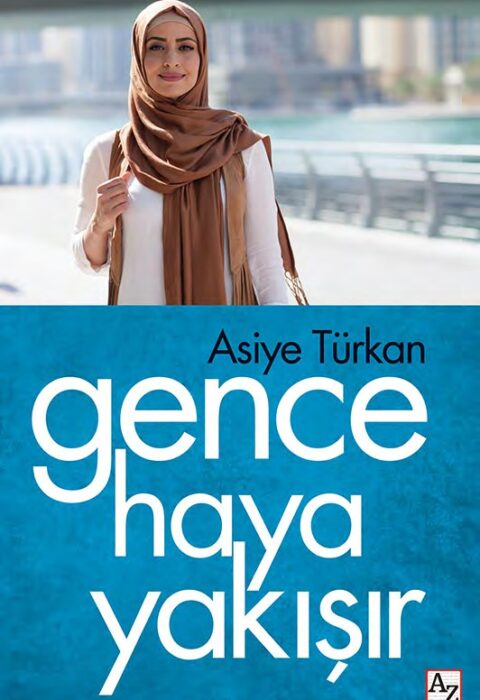
A religious advice book for young people by Asiye Türkan, a theology graduate and family counsellor living in Germany: it speaks warmly and sincerely about modesty, chastity and the value of youth through Qur'anic verses, hadith and stories of the prophets, but it is more sermon than analysis, and some claims — that marriages built on dating don't last, that working mothers leave children with strangers — rest on no source at all.
3.0 / 5
ReviewsTürkanə Əliyeva
Modesty Becomes the Young!

Modesty Becomes the Young!

Asiye Türkan · Non-fiction
Esc — close · ↵ — open
Text