Kitabda Nə Var? Kitabda Nə Var?
Appearance
Join Us
What's in the Book? Discussion About Us
Azərbaycan English ✓ Русский Türkçe
← Reviews
Non-fiction

The Longevity Diet

Valter Longo
Review by: Aytən Həsənova16 September 20261 min read
A multi-pronged scientific case for longevity built on Valter Longo's 30 years of research into the fasting-mimicking diet and the "Five Pillars" methodology.
Who Is This Book For?
Good Fit
  • Readers who like nutrition and longevity science woven together with personal narrative
  • Anyone encountering the fasting-mimicking diet (FMD) concept for the first time
  • Readers who want the "why" behind recommendations, backed by named research institutes and clinical work
  • Anyone interested in comparing diets across cultural/family context (Italy's regional food traditions)
Not a Fit
  • Readers expecting a concrete daily menu and step-by-step instructions right away (those come in later chapters and the appendices)
  • Anyone wanting fully neutral advice from a source with no commercial stake — the author has a financial interest in L-Nutra and its Prolon product
  • Readers generally skeptical of diet books who trust only independent academic sources
How Readers Rate It
Scientific grounding 3.2/5 Average
Practicality 3.6/5 Actionable
Beginner-friendliness 3.8/5 Beginner
45 voters
Introduction and Chapter 1: "Caruso's Fountain" — the author's story and the method's foundation
Covers the Introduction (pp. 9–17) and the opening of Chapter 1 ("Caruso's Fountain," pp. 19–23) — about 15 pages total, ~5% of the book; the "Five Pillars," the concrete diet plan, the disease-specific chapters (cancer, diabetes, Alzheimer's, etc.), and the meal-plan appendices are not covered here.

The book opens with the author's personal story — Valter Longo wanted to be a rock star in his youth, but switched to studying the biology of aging while majoring in biochemistry at the University of California; he now directs the USC Longevity Institute and the Longevity and Cancer Program at IFOM in Milan.

Longo explains that his research has focused for over 30 years on the link between the fasting-mimicking diet (FMD) and cellular renewal — a diet that promises the benefits of fasting (stem cell activation, organ renewal) without the hunger.

The foundation of his methodology is a framework he calls the "Five Pillars of Longevity": basic/"juventology" research, epidemiology, clinical trials, studies of centenarians, and understanding complex systems — the goal being to ground recommendations on the broadest possible scientific basis.

Chapter 1 ("Caruso's Fountain") opens in the village of Molochio in Italy's Calabria region — the author's childhood neighbor Salvatore Caruso died at 110, and the village of about two thousand people had four residents over 100, one of the highest such rates in the world.

Longo describes growing up between his family's two traditional diets — the fish-based cuisine of Liguria in northern Italy and the low-protein, vegetable-heavy diet of Calabria in the south — and then, at 16, moving to Chicago and encountering what he calls the "heart-attack diet," where he observed relatives developing cardiovascular disease rarely seen back in Italy — observations that later drove his research.

This chapter sets the book's overall tone: personal, autobiographical narrative interwoven with scientific claims, though no concrete clinical results or statistics are presented yet in this section — those come in later chapters.

Reading Experience
  • Personal, autobiographical narrative alternates with scientific explanation to quickly draw the reader in
  • The "Five Pillars" methodology tries to ground every recommendation in a multi-pronged scientific base — theory, epidemiology, clinical work, centenarian studies, and systems thinking
  • Concrete numbers and statistics are still sparse at this point — the scientific tone functions more as a promise for later chapters
Content Warning
The author openly discloses his commercial interests in the Introduction (the company L-Nutra, the Prolon FMD product) — it's transparent, but worth keeping in mind that this is not a disinterested sourceThe book recommends doing the FMD "under the supervision of a dietitian or doctor" — consulting a professional before making dietary changes on your own is important
If You Liked This
The Blue ZonesDan Buettner

Investigates the world's longest-lived regions, a similar "traditional diet + longevity" theme

In Defense of FoodMichael Pollan

A similar approach combining nutrition science with cultural/traditional dietary comparison

Spoiler
Where does the book go from here?
⚠️ The general direction, based on the table of contents, is revealed here.

The book goes on to detail the "Five Pillars of Longevity," then presents the concrete daily "Longevity Diet" plan and the practical details of the fasting-mimicking diet (FMD), followed by a chapter on exercise and weight management.

The second half of the book is devoted to disease-specific chapters — examining the role of FMD in preventing and treating cancer, diabetes, cardiovascular disease, Alzheimer's and other neurodegenerative diseases, and inflammatory/autoimmune conditions — closing with a chapter on "How to Stay Young" and appendices with a two-week meal plan and vitamin/mineral food sources.

Responsibility. This review reflects the personal assessment of its author, who is responsible for it. As a platform, "What's in the Book?" is not responsible for the content of the review. All rights to the work belong to its author and publisher; the cover image is used for promotional purposes only.

If you see a problem, write to us. Publisher, author, rights holder, or just a reader — it doesn't matter. If there's something problematic about copyright in this review, if the review's author has broken the site's rules, or if you simply have a suggestion or complaint, hey@kitabdanevar.com. We'd rather resolve this between ourselves than go to court: we review requests within 48 hours and, if needed, correct or fully remove the review.
How Would You Rate It?
Did this review help you decide?
Reviews · 0
Similar Books
Reviews
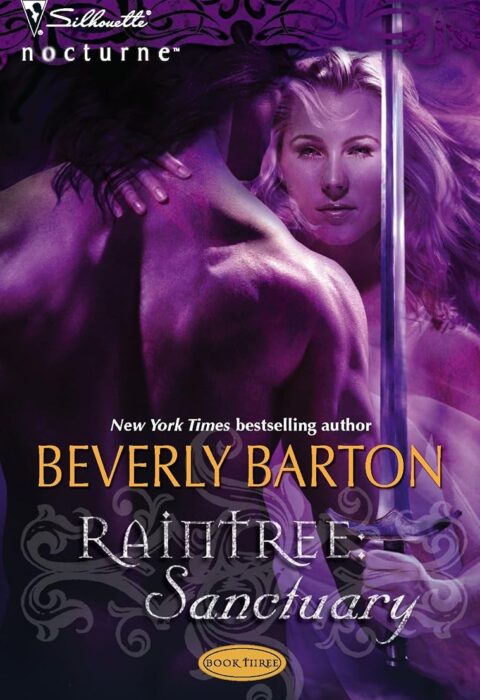
Set against the ancient enmity of powerful magical clans, this paranormal romance is built around a six-year-old girl born from a one-night affair and combines war with love. Its strongest side is the fast plot, little Eve's often funny and often dangerous magic scenes, and the way the conflict of two enemy families turns into union at the end. Its weakest side is the hero's possessive «you are mine» attitude, a first sex scene that looks partly coerced, the shallow presentation of characters carried over from the first two books, and an ending that wraps up in a hurry and too easily. Entertaining for readers of the genre, weak for anyone looking for deep analysis.
3.1 / 5
ReviewsAytən Həsənova
Raintree: Sanctuary

Raintree: Sanctuary

Beverly Barton · Novel
Reviews
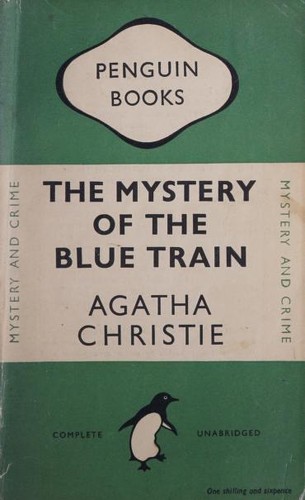
Written in the aftermath of a personal crisis (a mother's death and the collapse of a marriage) and famously called "the book I hate most" by Christie, this Poirot novel nonetheless delivers every ingredient of the classic "murder aboard a train" formula: a mysterious jewel, a thief in disguise, an unexpected killer.
3.9 / 5
ReviewsCavid Mehdiyev
The Mystery of the Blue Train

The Mystery of the Blue Train

Agatha Christie · Classics
Reviews
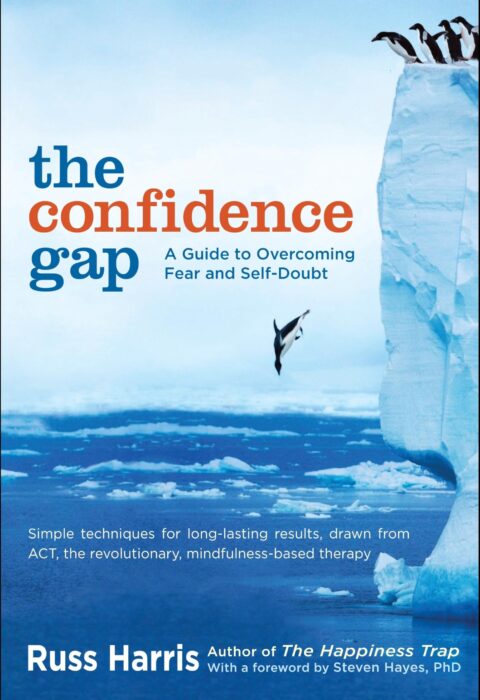
Russ Harris's practical book that teaches how to cope with fear and lack of confidence on the basis of ACT (Acceptance and Commitment Therapy). In the part that was read, the strongest side is that it turns the confidence problem upside down from the logic of «wait for confidence to come and then act» and that the author openly tells his own story of social anxiety and alcohol. The weak side is that the introduction and first chapters have many promises and few techniques, and some expressions come close to a sales tone. A good start for people with confidence problems and those interested in the subject; it does not replace treatment of a mental disorder.
3.9 / 5
ReviewsRafel Əlizadə
The Confidence Gap

The Confidence Gap

Russ Harris · Non-fiction
Reviews
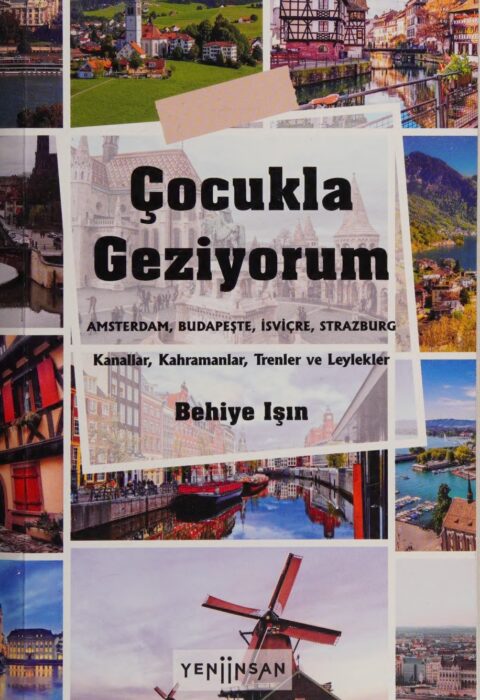
The diary of a mother trained in urban planning, describing a family's first trips to Europe with two small sons. Its greatest strength is honesty: the author hides neither the failed boat tour, nor the child screaming on the floor at a museum door, nor the badly chosen restaurants. Every page offers interesting information on history, architecture and cheese, and a practical lesson for parents. Its weaknesses are some nationalist generalisations, long passages that read like a guidebook, and photographs lost in the scan.
3.6 / 5
ReviewsTürkanə Əliyeva
Çocukla Geziyorum

Çocukla Geziyorum

Behiye Işın · Non-fiction
Esc — close · ↵ — open
Text