Kitabda Nə Var? Kitabda Nə Var?
Appearance
Join Us
What's in the Book? Discussion About Us
Azərbaycan English ✓ Русский Türkçe
← Reviews
Non-fiction

The Story of You: And How to Create a New One

Steve Chandler
Review by: Aytən Həsənova23 September 20261 min read
Motivational speaker Steve Chandler's short, practice-oriented case for recognizing and rewriting the limiting 'stories' we tell about ourselves.
Who Is This Book For?
Good Fit
  • Anyone who wants to recognize their own limiting beliefs (the inner voice that says "I can't")
  • Readers who enjoy short chapters (a few pages each) and fast-moving self-help books
  • Anyone who finds it easy to learn through metaphor and real stories (athletes, celebrities)
  • Readers curious about the personal-development philosophy of career coaches and speakers
Not a Fit
  • Readers looking for a research-based, academic psychology book
  • Anyone expecting a step-by-step, concrete methodology (exercises, worksheets) — the book is mostly inspirational essay-style chapters
  • Readers tired of the typical repetitive rhetorical style of American self-help literature
How Readers Rate It
Inspirational tone 4.1/5 Motivational
Structure 3.5/5 Average
Practicality 3.7/5 Applied
45 voters
Where Did You Learn Your Story?
Covers Chapter 1, 'Where Did You Learn Your Story?' (pp. 11-18) — about 4% of the 192-page book. Explains the core thesis (we are the stories we tell about ourselves) and the Charlie Lau example; the other 18 chapters' topics (chaos, self-criticism, creativity) are not covered here.

The chapter argues that every person carries an inner 'zone of innocence,' often visited frequently in childhood, that well-meaning adults trying to help the young person fit into society force them to forget.

Chandler poses the central question: was what those adults were trying to shape really your own story — or did they just want a story they could tell others?

The central example is baseball hitting coach Charlie Lau — not a natural talent, even considered a weak hitter in his own playing career, Lau eventually became one of the most respected hitting coaches in history, training stars like George Brett.

Chandler draws a generalization from this: perhaps people grow the most through pain and struggle, and perhaps that's why the best coaches are so often failed players — because they understand what they learned the hard way far more deeply than the naturally gifted ever could.

The chapter closes with a quote from psychiatrist Thomas Szasz — that every step of conscious learning requires a willingness to wound one's own self-esteem — which Chandler uses to explain why young people so often cling to fixed, unchanging stories to protect their sense of importance.

Reading Experience
  • Short, essay-style chapters (5-8 pages each) — suited to quick, "one chapter per sitting" reading
  • Examples drawn from real, recognizable figures (athletes, writers) make abstract concepts concrete
  • A direct, reader-addressing ("you") speaker's voice reflecting Chandler's background as a professional speaker
  • Philosophical quotes (Nietzsche, Picasso) used as chapter epigraphs
Content Warning
The book leans on personal observation and anecdote rather than scientific researchThe typical repetitive rhetorical structure of American self-help literature may tire some readers
If You Liked This
The Monk Who Sold His FerrariRobin Sharma

A similarly story-driven, inspirational approach to personal development

Feel the Fear and Do It AnywaySusan Jeffers

A similar focus on recognizing and changing self-limiting beliefs

Spoiler
How does this part end?
⚠️ Szasz's quote: a wound to self-esteem

The chapter read closes with the psychiatrist Thomas Szasz's line that «every step of conscious learning requires a person to agree to a wound to their self-esteem». Chandler uses it to explain why young people so often take refuge in fixed, unchanging stories to protect their sense of importance.

Responsibility. This review reflects the personal assessment of its author, who is responsible for it. As a platform, "What's in the Book?" is not responsible for the content of the review. All rights to the work belong to its author and publisher; the cover image is used for promotional purposes only.

If you see a problem, write to us. Publisher, author, rights holder, or just a reader — it doesn't matter. If there's something problematic about copyright in this review, if the review's author has broken the site's rules, or if you simply have a suggestion or complaint, hey@kitabdanevar.com. We'd rather resolve this between ourselves than go to court: we review requests within 48 hours and, if needed, correct or fully remove the review.

How Would You Rate It?
Did this review help you decide?
Reviews · 0
Similar Books
Reviews
A popular-science book in which a Turkish author draws on evolutionary psychology, biology and anthropology to ask why our brains go wrong. Its strength is pulling these topics together and summarising them in fluent Turkish: evolutionary mismatch, hedonic adaptation, dopamine, the costs of the agricultural revolution. Its weakness: there is no original research — it leans heavily on popular books by Harari, Burnett, Eagleman, Kahneman and others; some figures are unsourced and some historical details are oversimplified. A decent first step for Turkish readers new to the genre.
3.2 / 5
ReviewsCavid Mehdiyev
The Invention of Error

The Invention of Error

Abdullah Reha Nazlı · Non-fiction
Reviews
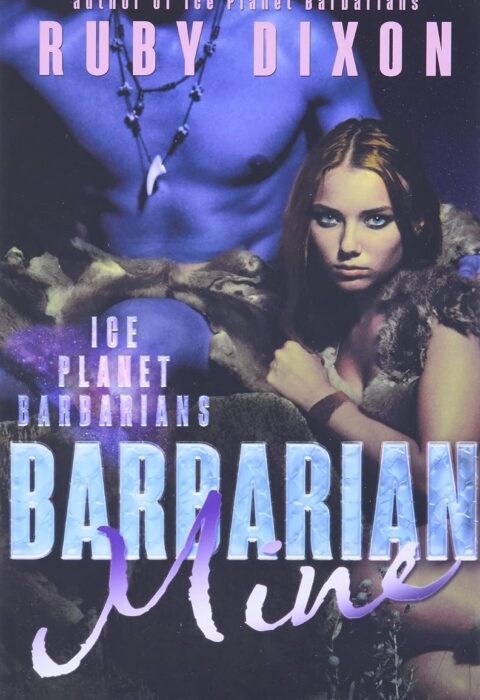
The fourth book of the series about human women living with blue, horned barbarians on another planet is the adventure of Rukh, a barbarian who has lived alone and half forgotten how to speak, and Harlow, who has been saved from cancer. Its strongest side is a sweet romance built on language learning, warm humour and the way family and community make sense at the end. Its weakest side is the question of consent at the start, when Rukh knocks Harlow out, carries her off and ties her hands and feet (the hero is softened when he later learns the word «no» and stops), the many detailed sex scenes, and the coarse, wrong word choices of the unofficial translation. Entertaining for readers of the genre, not for everyone.
3.2 / 5
ReviewsCavid Mehdiyev
Barbarian Mine

Barbarian Mine

Ruby Dixon · Novel
Reviews
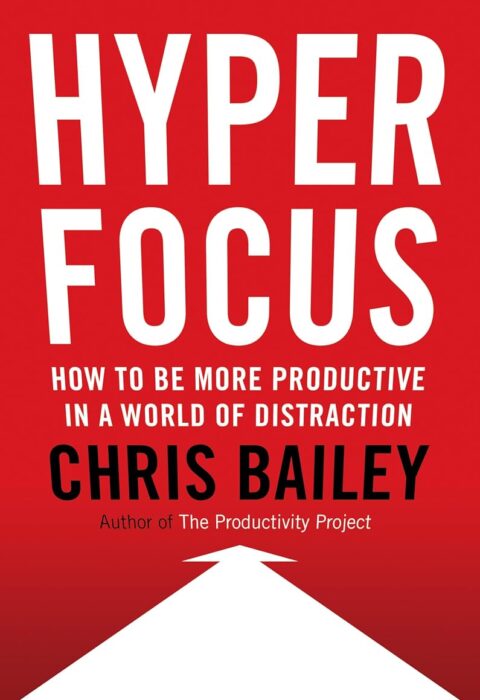
A tidy, easy-reading book that turns research on attention into everyday advice. Bailey proposes two modes: focusing fully on one task («hyperfocus») and deliberately letting the mind wander («scatterfocus»). The second is the most valuable part, because it shows that creative ideas arrive precisely when we stop focusing. But the book stretches some simple ideas, and much of the advice will be familiar from productivity blogs.
3.7 / 5
Reviewsİdris Muxtarzadə
Hyperfocus

Hyperfocus

Chris Bailey · Non-fiction
Reviews
A big, passionate book that turns early twentieth-century New York into a fairy-tale city and blends magical realism with an adventure novel. A white horse ready to fly, the burglar Peter Lake, the colour-obsessed gangster Pearly Soames, the mysterious Baymen of the marshes: every page brings an unexpected figure and a beautiful sentence. But the language is very ornate, the plot keeps wandering off onto side paths, and 776 pages demand patience. In the Turkish edition some sentences feel heavy and translated.
4.1 / 5
ReviewsRafel Əlizadə
Winter’s Tale

Winter’s Tale

Mark Helprin · Novel
Esc — close · ↵ — open
Text