Kitabda Nə Var? Kitabda Nə Var?
Appearance
Join Us
What's in the Book? Discussion About Us
Azərbaycan English ✓ Русский Türkçe
← Reviews
Novel

Fedai

In English: Fedai (The Pirate)
Harold Robbins
Review by: Cavid Mehdiyev12 October 20261 min read
A bestseller-style spy-and-adventure novel that combines 1970s Middle Eastern oil politics, Palestinian armed groups, drug smuggling and the collapse of a wealthy Arab family. Its strongest points are the lively backdrop of the period's events (the 1973 war, the oil embargo) and a tense chase thread. Its weaknesses are cliché characters, an excess of sex scenes, Arab and Jewish stereotypes and women turned into objects of violence.
Who Is This Book For?
Good Fit
  • Readers of Harold Robbins's sprawling bestsellers such as The Carpetbaggers, The Betsy or The Adventurers
  • Anyone curious about adventure-thrillers written against the 1970s oil crisis and Middle Eastern politics
  • Readers interested in the theme of moral emptiness inside a rich world
Not a Fit
  • Readers who cannot tolerate explicit sex scenes, violence and drug descriptions: much of the book is built from these
  • Anyone looking for a balanced, historically careful treatment of politics: Arab and Jewish stereotypes take up a lot of space
  • Readers sensitive to demeaning treatment of women, threats of sexual violence and the depiction of child marriage
How Readers Rate It
Readability 3.5/5 Average
Pace 3.0/5 Average
Romance 2.4/5 Average
40 voters
The opening: a birth in the desert and a billionaire bound for the French Riviera
Pp. 9–36 · about 8% of the book (the 1933 prologue and the main part of chapter 1). From the Rolls-Royce to the yacht journey and Ali Yasir's flat (pp. 37–41) is in the spoiler section; the remaining ≈88% is not opened in this review.

The novel begins in 1933 in the Arab desert, beside a tent. A strange friendship has grown between the Bedouin chief Semir and the Jewish traveller Ishak Bin Ezra: Bin Ezra mounts his horse, Semir gives him the Arab greeting, both men's eyes fill with tears, and Bin Ezra says «Aleichem shalom». In the tent his wife Nebile gives birth to a boy. The boy's eyes are strangely deep blue: the colour of the night sky in the desert. His name is Bedir Semir El Fay.

The story jumps to 1973. Bedir El Fay, now forty, is the Western manager of Middle Eastern oil money: a private Boeing 707, a yacht in France, an American wife Jordana and two sons. Flying from Los Angeles to Nice he has spent the night with two girls, who lie naked, and the cabin smells of hashish and amyl nitrite. He coldly orders that the girls be given five hundred dollars each and a return ticket.

His close men: the chief legal adviser Dick Carriage, his servant Cabir and the director of the Paris office Yusuf Ziyad. Bedir has an office in every country and in each a young, handsome, cultured director; the directors' main duty is to find beautiful girls for his parties. Bedir knows his wife Jordana does not sit at home during festivals and parties: Jordana is American, «not an Arab».

We read Jordana's own line: she has spent a night with a man in the Carlton hotel, hurriedly washes knowing her husband is coming, and leaves a hundred francs for the man. Many servants and receptionists keep her secrets. Her life consists wholly of social parties and secret affairs.

Yusuf Ziyad, for his part, does two things. First, on Bedir's behalf he meets the American film director Michael Vincent: he offers him ten million dollars to make a film about the life of the Prophet. On Bedir's desk there is a file on Vincent: his ties to anti-Semitic groups, his drinking problem, his being «persona non grata» in Hollywood. Second, he is preparing his own lover Jacques to win Jordana: he will go to the party with Princess Mara, she will praise his «bedroom mastery», and he will treat Yusuf only as a stranger.

Reading Experience
  • Short, conversational sentences and fast chapters make the book readable in bestseller fashion
  • The political backdrop (the 1973 war, the oil embargo, Geneva banks) is the book's strongest and most interesting point for its period
  • Most characters are types and caricatures: Yusuf, Mara, Vincent, the bankers
  • In several places the sex scenes serve no plot and simply repeat
  • Near the end (the rescue operation) the book turns into an adventure novel and picks up speed
Content Warning
The book contains many explicit sex scenes: sex with two women on a plane, harem-style entertainments, Jordana's affairs, a coercive scene with amyl nitriteSexual violence and humiliation of a woman: Bedir beats his wife and says «stay like a dog», and at the end Jordana is stripped and threatened with being thrown to soldiersA pre-arranged marriage to the 16-year-old Meryem and women described as «property»In the scene between Leyla and Carriage the girl moans her father's name, and there are sexual fantasies about her own father (a psychological incest motif)Drugs: cannabis, cocaine, amyl nitrite, heroin trafficking; descriptions of murder, bombing and hostage-takingArab, Jewish, Black and homosexual characters are given stereotypically and at times in demeaning language
If You Liked This
The CarpetbaggersHarold Robbins

The same author's famous novel about money, power and the film world

The AdventurersHarold Robbins

On Latin American politics and the fall of rich families

The Little Drummer GirlJohn le Carré

A more serious thriller about Palestinian organisations and the intelligence world

Spoiler
The end of the 10%: a telex, a yacht and Ali Yasir's flat
⚠️ Pp. 37–41: Bedir's exit from the plane, Ali Yasir's meeting and the identity of the young girl. Do not open it if you do not want to know.

When the plane lands at Nice a telex arrives: Bedir is told «ten million sterling has been deposited in your account at the Syrian Bank in Geneva»; the signature is Abu Said, financial adviser of the fedayeen organisation «Al-Ikhwah». Bedir burns the paper. This money plays the role of a bridge between Bedir's Western money and the Palestinian armed struggle.

Meanwhile in Cannes, at the flat of a fat Lebanese named Ali Yasir, a meeting is held with the American Tony and the Frenchman Pierre: there are problems with sending drug goods to America, ships are seized, and everyone suspects everyone. After the meeting Ali knocks on the bedroom door: there is a smartly dressed young girl. The girl asks «you won't give my father away, will you?»: this is the daughter of Bedir's first marriage, a secret fighter who hates her father.

Responsibility. This review reflects the personal assessment of its author, who is responsible for it. As a platform, "What's in the Book?" is not responsible for the content of the review. All rights to the work belong to its author and publisher; the cover image is used for promotional purposes only.

If you see a problem, write to us. Publisher, author, rights holder, or just a reader — it doesn't matter. If there's something problematic about copyright in this review, if the review's author has broken the site's rules, or if you simply have a suggestion or complaint, hey@kitabdanevar.com. We'd rather resolve this between ourselves than go to court: we review requests within 48 hours and, if needed, correct or fully remove the review.
How Would You Rate It?
Did this review help you decide?
Reviews · 0
Similar Books
Reviews
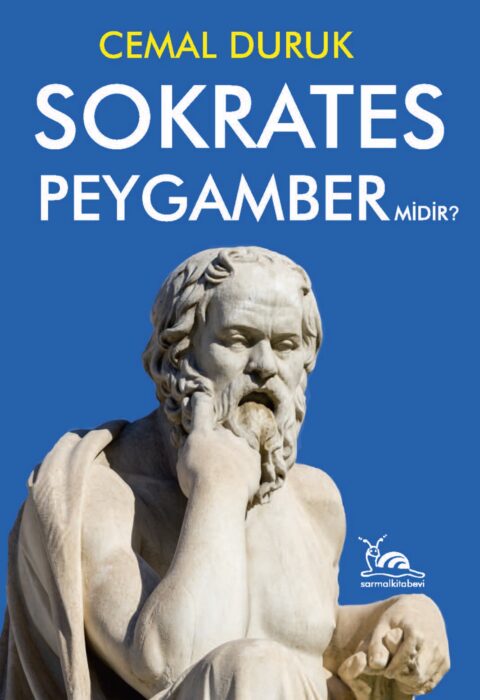
Cemal Duruk's short book examining the question «Was Socrates a prophet?» by comparing it with the concept of prophethood in the Islamic, Jewish and Christian traditions. In the first chapter that was read the concept of prophethood is explained in plain language: the difference between nabi and rasul and five common qualities (sidq, amanah, fatanah, ismah, tabligh) are illustrated with verses and hadiths. The chapter is written from a faith-based perspective and is not a study in the history of philosophy; this is both its strength (systematic exposition) and its limitation. Interesting for those who want to read about the concept of prophethood in plain exposition with a comparative religious perspective.
2.9 / 5
ReviewsTürkanə Əliyeva
Was Socrates a Prophet?

Was Socrates a Prophet?

Cemal Duruk · Non-fiction
Reviews
Written by controversial spiritual teacher Teal Swan out of personal trauma and an observation of a "mass loneliness epidemic," this book splits loneliness into three "pillars" — Separation, Shame, and Fear — and tries to resolve each through concrete connection exercises. It is a warm, confessional self-help work that leans on personal observation far more than on academic backing.
4.0 / 5
Reviewsİdris Muxtarzadə
The Anatomy of Loneliness

The Anatomy of Loneliness

Teal Swan · Non-fiction
Reviews
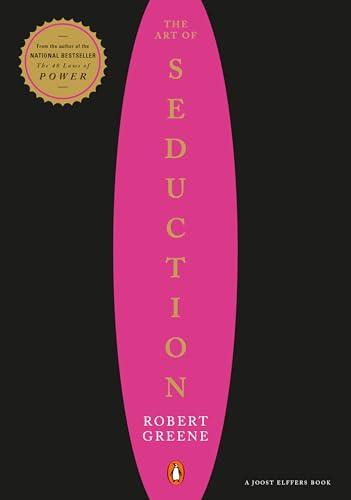
A famous bestseller that systematises the mechanics of charm and influence through the stories of figures from Cleopatra to Marilyn Monroe — richly sourced and readable, but one to read with a critical eye, since it openly champions manipulation as an «amoral game».
3.3 / 5
ReviewsAytən Həsənova
The Art of Seduction

The Art of Seduction

Robert Greene, Joost Elffers · Non-fiction
Reviews
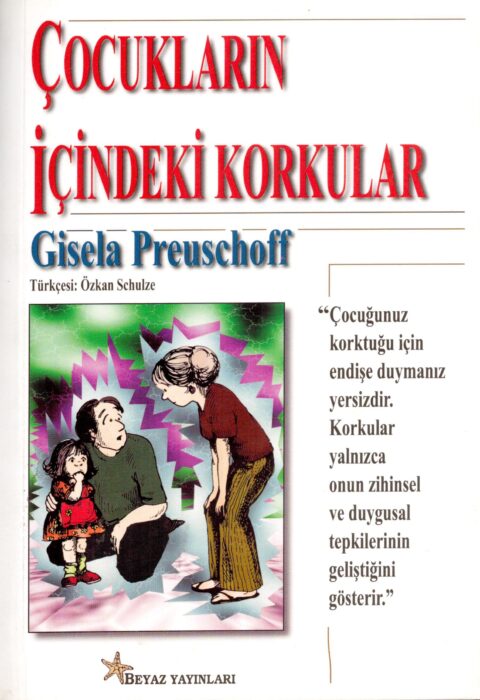
A warm, conversational guide with a spiritual tinge by a German author on children's fears, written for parents and educators. In the first chapter read, the strongest side is the acceptance of fear as a «normal feeling», thoughtful observations on the effect of the media and of adults' fears on children, and examples of calming through story. The weak side is that some claims (television, the immune system, «cosmic energy») sound unsourced and subjective, and the religious-spiritual framework may not suit every reader. A book that calls on parents to face their own fears, but not a scientific textbook.
3.4 / 5
ReviewsRafel Əlizadə
Fears Inside Children

Fears Inside Children

Gisela Preuschoff · Non-fiction
Esc — close · ↵ — open
Text