Kitabda Nə Var? Kitabda Nə Var?
Appearance
Join Us
What's in the Book? Discussion About Us
Azərbaycan English ✓ Русский Türkçe
← Reviews
Non-fiction

Fears Inside Children

In English: Fears Inside Children (Çocukların İçindeki Korkular)
Gisela Preuschoff
Review by: Rafel Əlizadə14 October 20261 min read
A warm, conversational guide with a spiritual tinge by a German author on children's fears, written for parents and educators. In the first chapter read, the strongest side is the acceptance of fear as a «normal feeling», thoughtful observations on the effect of the media and of adults' fears on children, and examples of calming through story. The weak side is that some claims (television, the immune system, «cosmic energy») sound unsourced and subjective, and the religious-spiritual framework may not suit every reader. A book that calls on parents to face their own fears, but not a scientific textbook.
Who Is This Book For?
Good Fit
  • Parents who do not know what to do about their child's fears
  • Teachers and educators who work with children
  • Anyone who wants to meet fear with understanding rather than scolding
  • Readers interested in calming a child with stories and imagination exercises
Not a Fit
  • Those seeking a treatment protocol for a clinical phobia or panic disorder
  • Readers who want a purely scientific source without a religious-spiritual framework
  • Anyone expecting up-to-date information on the modern digital environment: the book rests on 1990s Germany
How Readers Rate It
Practicality 4.1/5 Practical
Scientific grounding 3.1/5 Average
Readability 4.1/5 Flowing
39 voters
What is fear? The opposite of fear, the media and adults' fears
Read: the preface, the first chapter («What Is Fear?») and the beginning of the second («What Are Children Afraid Of?» — complex and bodily fears) — pp. vii–35, about 28% of the book.

In the preface the author notes that adults who dislike the «fearful child» and find him shameful push the child to suppress his fear, whereas fear can be overcome only when it is talked about and understood. In the first chapter fear is called «a feeling like anger and joy»: it prepares a person for danger and, as a protective reaction, helps development. The chapter explains the difference between fright (a reaction to a concrete threat), phobia (excessive fear of something harmless) and panic (a time-limited attack accompanied by bodily symptoms).

To the question «What is the opposite of fear?» the author's answer is trust, composure and self-confidence; she calls fear «narrowness» and its opposite «breadth». From birth to age three the basic fear is being separated from parents and left alone; at two a child turns wooden blocks into lions and makes them «live» in the cupboard and under the bed. As the child grows he shares adults' worries about AIDS, the atom bomb and unemployment and can no longer be calmed with «everything is fine»; the author holds that parents should give courage through their own example.

In the media section the author shows schoolchildren listening to the morning news, a magazine page with bloody pictures and the television; she refers to Neil Postman's thesis of «the disappearance of childhood» and to Klaus Hurrelmann's observations. Because children do not know concepts such as kilometres, probability or «a million counter-reports for every report», the news frightens them, and adults' silence feeds the fear further. Recommendations: limit television (none before three, half an hour a day at three to six), do not switch on the news unsupervised, talk through frightening information by means of play or story, and share the parent's own stance on the world.

The following parts discuss adults' fears (epidemics, nuclear accidents, ecological disasters) and the upbringing models «this world is dangerous» and «this world is lovely»; the author advises parents to accept their own faith and hope as well and briefly recalls the history of frightening children with God. The second chapter gives examples of a one-year-old afraid of a black statuette, fear of being alone and fears of medical examinations, blood and doctors; it recommends choosing words the child will understand such as «a mosquito will sting», not lying, and calming the child at separation with the story of the «bond of light».

Reading Experience
  • The chapters are built from short paragraphs, scenes from everyday life and personal memories
  • Calming stories and imagery (for example the «bond of light») are given concretely
  • The language is plain and warm, but some parts sound subjective with a spiritual-religious tone
  • There are few references to statistics and scientific claims
Content Warning
In connection with children's fears the book touches on death, war, divorce and hospital staysSome claims (the effect of television on the immune system, «cosmic energy») are not supported by scientific sourcesThe book does not replace specialist help in a clinical phobia or panic disorder
If You Liked This
I Love You With Your FearsMaría Luisa Ferrerós

A short parent guide that approaches children's fear through practical tables and games — reviewed on our site

The Whole-Brain ChildDaniel J. Siegel, Tina Payne Bryson

A practical book explaining a child's strong emotions through brain development

Spoiler
How does this part end?
⚠️ The «bond of light» story.

At the end of the part read, the author lists what a parent should do when a child has to be hospitalised: visit often, give the child an object of one's own and take it back, write letters or draw, and above all tell the story of one's love. As an example she gives a story that begins «five years ago you came to us on a light from far away...», in which an invisible bond of light joins parent and child.

Responsibility. This review reflects the personal assessment of its author, who is responsible for it. As a platform, "What's in the Book?" is not responsible for the content of the review. All rights to the work belong to its author and publisher; the cover image is used for promotional purposes only.

If you see a problem, write to us. Publisher, author, rights holder, or just a reader — it doesn't matter. If there's something problematic about copyright in this review, if the review's author has broken the site's rules, or if you simply have a suggestion or complaint, hey@kitabdanevar.com. We'd rather resolve this between ourselves than go to court: we review requests within 48 hours and, if needed, correct or fully remove the review.
How Would You Rate It?
Did this review help you decide?
Reviews · 0
Similar Books
Reviews
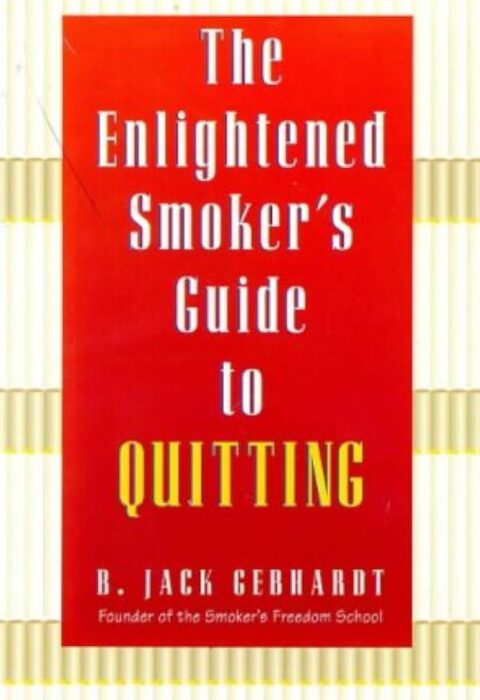
An unconventional, half-spiritual self-help book that says «forget cigarettes not through fear, will and prohibition but by enjoying your own happiness». Its strongest side is noting that blame and scare tactics often do not work in quitting, together with its short, playful assignments. Its weak side is very weak scientific support, unproven claims, and an «enlightenment» rhetoric that may strike some readers as strange.
2.3 / 5
ReviewsAytən Həsənova
The Enlightened Smoker’s Guide to Quitting

The Enlightened Smoker’s Guide to Quitting

Bear Jack Gebhardt · Non-fiction
Reviews
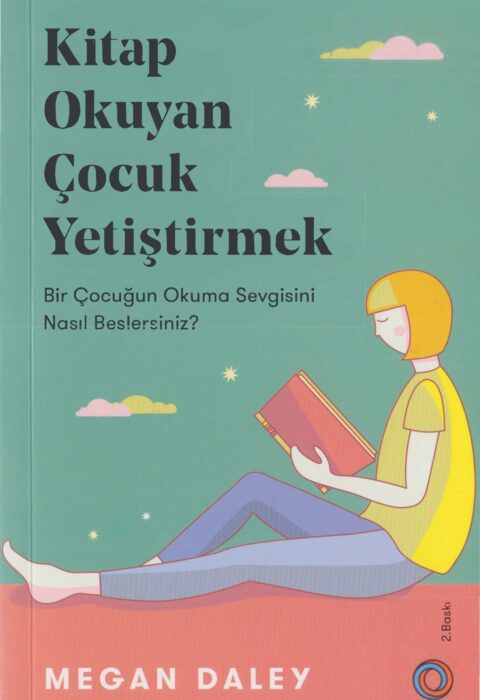
Australian teacher-librarian, primary school teacher and mother of two daughters Megan Daley explains, in a practical, warm and very concrete way, how to nurture a love of books from birth to the teenage years: bedtime reading, «incidental reading», a «mobile library» in the car, the school library, genres, digital reading and difficult topics. A useful guide for parents and teachers; its weakness is that most of the book recommendations are Australian titles, out of reach for readers elsewhere.
3.8 / 5
ReviewsRafel Əlizadə
Raising Readers — How to Nurture a Child’s Love of Books

Raising Readers — How to Nurture a Child’s Love of Books

Megan Daley · Non-fiction
Reviews
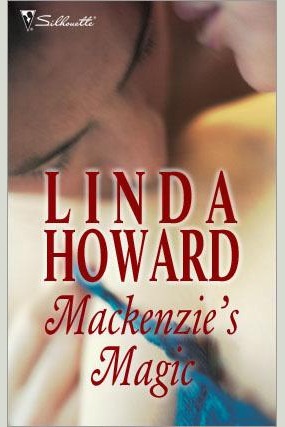
A short, warm romantic adventure: Maris Mackenzie, a trainer at a Kentucky horse farm, wakes with a concussion in a motel room and learns that the man beside her is FBI agent Alex MacNeil and that she has stolen a famous racehorse. Its strongest qualities are the quick plot, the warm family scenes and the love of horses. Its weaknesses are the «marriage in a day» pace, the simple treatment of insurance fraud and the heroes' excessive idealisation.
3.2 / 5
ReviewsAytən Həsənova
Mackenzie’s Magic

Mackenzie’s Magic

Linda Howard · Novel
Reviews
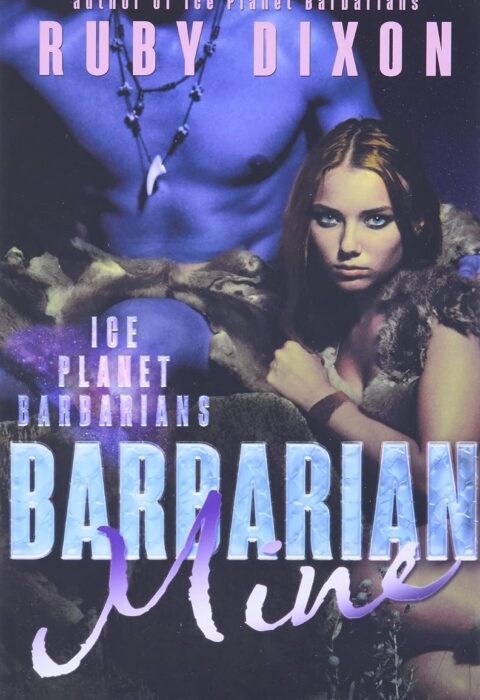
The fourth book of the series about human women living with blue, horned barbarians on another planet is the adventure of Rukh, a barbarian who has lived alone and half forgotten how to speak, and Harlow, who has been saved from cancer. Its strongest side is a sweet romance built on language learning, warm humour and the way family and community make sense at the end. Its weakest side is the question of consent at the start, when Rukh knocks Harlow out, carries her off and ties her hands and feet (the hero is softened when he later learns the word «no» and stops), the many detailed sex scenes, and the coarse, wrong word choices of the unofficial translation. Entertaining for readers of the genre, not for everyone.
3.2 / 5
ReviewsCavid Mehdiyev
Barbarian Mine

Barbarian Mine

Ruby Dixon · Novel
Esc — close · ↵ — open
Text