Kitabda Nə Var? Kitabda Nə Var?
Appearance
Join Us
What's in the Book? Discussion About Us
Azərbaycan English ✓ Русский Türkçe
← Reviews
Non-fiction

Raising Readers — How to Nurture a Child’s Love of Books

Megan Daley
Review by: Rafel Əlizadə29 September 20261 min read
Australian teacher-librarian, primary school teacher and mother of two daughters Megan Daley explains, in a practical, warm and very concrete way, how to nurture a love of books from birth to the teenage years: bedtime reading, «incidental reading», a «mobile library» in the car, the school library, genres, digital reading and difficult topics. A useful guide for parents and teachers; its weakness is that most of the book recommendations are Australian titles, out of reach for readers elsewhere.
Who Is This Book For?
Good Fit
  • Parents who want to instil a love of books in their children
  • Primary teachers and school librarians
  • Educators organising reading clubs, book days and similar events
Not a Fit
  • Anyone looking for lists of local (non-Australian) children's books
  • Those expecting a clinical guide to reading difficulties such as dyslexia
  • Readers wanting an academic, research-heavy book
How Readers Rate It
Practical value 4.1/5 High
Fit for non-Australian readers 2.7/5 Average
Readability 4.2/5 Easy
38 voters
Preface and section one, «The Early Years» — bedtime reading and «incidental reading»
Read: the preface (pp. 9–11 of the Turkish edition) and the opening of section one — babies, bedtime reading and its challenges, and «incidental reading» (pp. 13–29) — about 8% of the book.

Daley opens the preface with her own childhood: evenings when her father read to her and her brothers, and her mother, a teacher-librarian, filling the house with quality books. When her first child was born she was shocked to see that people around her didn't read to their babies. As deputy chair of the Children's Book Council of Australia she was often asked, «What's the right age to start reading to children?» — to her, the answer was obvious: from birth. Yet she tries to remember that not everyone was raised as she was, and presents the book as both a guide for families and a resource for educators.

Section one starts with babies: shortly after birth they respond to sounds, from three or four months they reach for objects, and they chew books, turn them upside down and stare at bright, contrasting colours. The importance of songs and nursery rhymes is stressed. This part is simple and solid: reading is not a «lesson» but time spent with a baby, full of voice and touch.

The pages on bedtime reading are the book's most heartfelt. Daley admits that as a single parent on exhausted evenings she sometimes started the ritual reluctantly, but found it was her own «pause button»: no phone calls, no dishes — just the children and the book. Her daughters, who never answer «what did you do today?», suddenly start talking about problems at school after a book about friendship. Practical solutions are offered for the difficulties: if time is short, grandparents can read the same book over a tablet; for reluctant readers, a book matched to their interests — a football story for a football fan.

The idea of «incidental reading» is simple but effective: if fitness experts talk about incidental exercise, why shouldn't a librarian talk about incidental reading? Book baskets all over the house, books in the nappy bag, a «mobile library» in the car — the «Car Library» her daughter made out of a shoebox is a lovely detail. Reading road signs, restaurant menus and supermarket catalogues together is also modelling reading. The example of the Pyjama Foundation, whose volunteers read to children in foster care, shows reading's social value.

Weaknesses: the book is very Australia-centred — most of the recommended books, awards and foundations will be unfamiliar elsewhere and often untranslated. The assumption that every school has a teacher-librarian won't match many realities. Some sections are lists and don't go deep. Even so, its spirit and practical ideas are universal — and few topics could suit a book site better.

Reading Experience
  • Personal experience and practical tips from a librarian-mother's perspective
  • Short sections, lists and «how-to» guides
  • Short guest contributions from authors and educators, extensive book lists
Content Warning
Most recommended books are Australian titlesAssumes a Western school systemThe section on reading difficulties is no substitute for clinical diagnosis
If You Liked This
What Does Your Child Expect from You? — In 300 QuestionsYankı Yazgan, Şule Yazgan, Onur Tuğçe Poyraz Fındık

A broad parenting guide to ages 0–6, including a section on books — reviewed on our site

The Read-Aloud HandbookJim Trelease

The classic guide to the benefits of reading aloud to children

The Rights of the ReaderDaniel Pennac

A famous essay on the rights of readers and the love of reading

Spoiler
How does this part end?
⚠️ The idea of «incidental reading»

The idea of «incidental reading» is simple but workable: if fitness experts speak of «incidental exercise», why should a librarian not speak of «incidental reading»? Book baskets all around the house, a book in the baby bag, a «mobile library» in the car — the «Car library» that Daley's daughter made from a shoebox is a touching detail.

Responsibility. This review reflects the personal assessment of its author, who is responsible for it. As a platform, "What's in the Book?" is not responsible for the content of the review. All rights to the work belong to its author and publisher; the cover image is used for promotional purposes only.

If you see a problem, write to us. Publisher, author, rights holder, or just a reader — it doesn't matter. If there's something problematic about copyright in this review, if the review's author has broken the site's rules, or if you simply have a suggestion or complaint, hey@kitabdanevar.com. We'd rather resolve this between ourselves than go to court: we review requests within 48 hours and, if needed, correct or fully remove the review.
How Would You Rate It?
Did this review help you decide?
Reviews · 0
Similar Books
Reviews
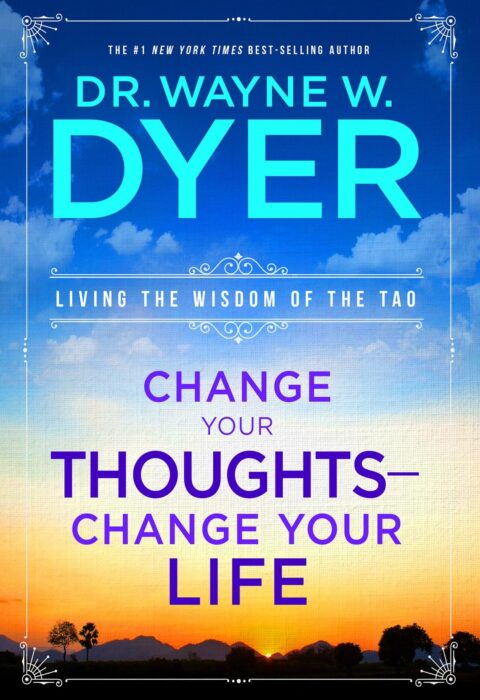
Popular self-help author Wayne Dyer writes a short essay on each of the 81 verses of Lao-tzu’s «Tao Te Ching» and ends every chapter with a daily exercise, «Doing the Tao Now». Chapters on softness, contentment with little, letting go of ego and «being like water» are calming and sometimes useful; but this is not a scholarly reading of Taoist philosophy — it is Dyer’s personal, New Age–flavoured interpretation. In particular, chapter 71’s claim that someone living in harmony with the Tao cannot suffer from illness is medically wrong and potentially harmful.
3.1 / 5
ReviewsAytən Həsənova
Change Your Thoughts — Change Your Life: Living the Wisdom of the Tao

Change Your Thoughts — Change Your Life: Living the Wisdom of the Tao

Wayne W. Dyer · Non-fiction
Reviews
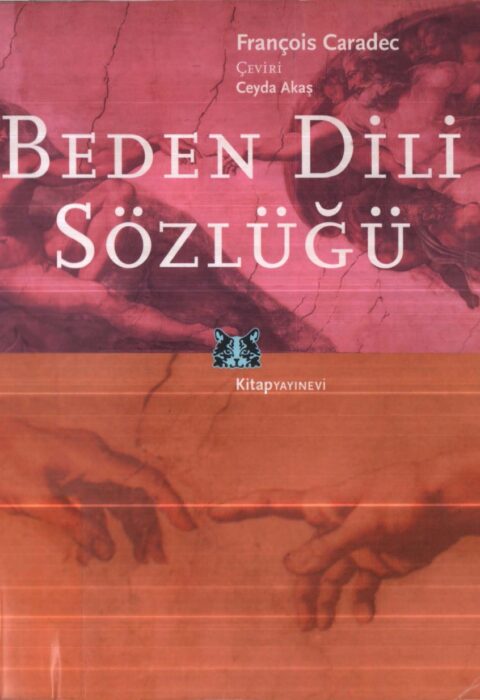
This is not a «read body language and see through people» book. It is a dictionary born of thirty years of collecting by the French writer and lexicographer Caradec, listing about 850 deliberate gestures from head to toe. Each gesture is drawn and given with its meaning, where it is used and sometimes a literary quotation. It's a reference book to browse with curiosity, often amusing, and good at showing cross-cultural misunderstandings. Its weaknesses: it is heavily French-centred, has few Eastern gestures, and is meant for dipping into rather than reading cover to cover.
3.6 / 5
Reviewsİdris Muxtarzadə
Dictionary of Gestures

Dictionary of Gestures

François Caradec · Non-fiction
Reviews
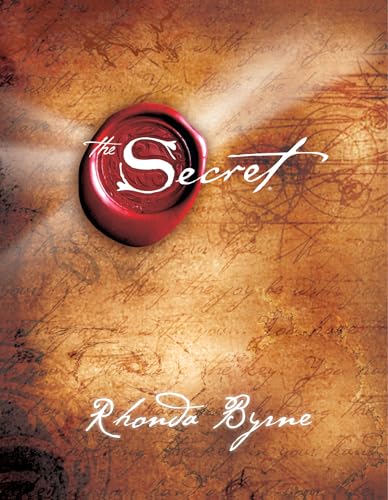
One of the best-selling self-help books in the world — built around the "law of attraction," popularizing the philosophy of attracting health, wealth, and relationships by thinking about what you want. Based on the documentary film of the same name.
3.8 / 5
Reviewsİdris Muxtarzadə
The Secret

The Secret

Rhonda Byrne · Non-fiction
Reviews
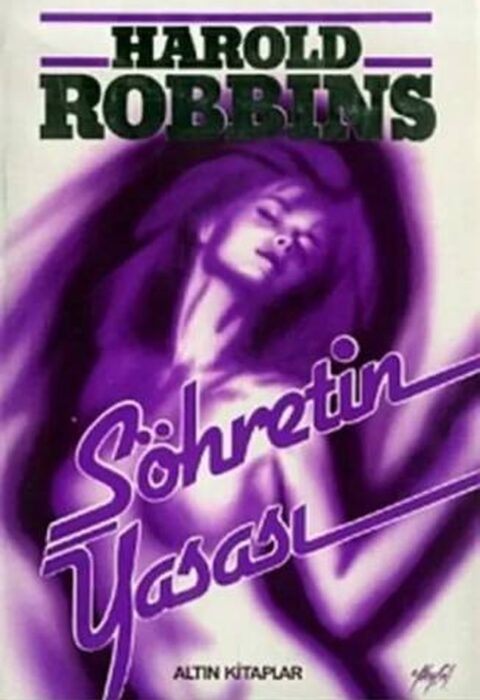
A long, episodic, sexually explicit American novel in which a Jewish Brooklyn youth rises from erotic pulp stories to Hollywood screenwriting and world-famous authorship. Its strongest quality is the lively portrait of 1940s Brooklyn, Hollywood and Europe and of the publishing-and-film market. Its weaknesses are the scattered plot, repeated sex scenes, drugs, a coarse attitude to women and a hero who shows almost no inner development.
3.0 / 5
Reviewsİdris Muxtarzadə
Şöhretin Yasası

Şöhretin Yasası

Harold Robbins · Novel
Esc — close · ↵ — open
Text