Making Sense of Chaos
Good Fit
- Students of economics, finance or physics who ask «why do forecasts fail?»
- Readers interested in the 2008 crisis, COVID's economic impact and climate policy
- Those who enjoy stories of scientific discovery and scientists' memoirs
Not a Fit
- Readers looking for a balanced, neutral view of mainstream economics
- Anyone expecting personal finance or investment advice
- Those who tire of charts and models and want a short, light read
The book opens with a dramatic story. On 16 March 2020 Farmer assembles a team of Oxford students to build a model forecasting COVID's economic impact. One group uses a US Labor Department database of some 800 occupations to estimate which jobs can be done from home; another finds Italy's list of «non-essential» sectors. The model they send to the UK government in May predicts a 21.5% fall in second-quarter GDP. The actual fall is 22.1%. At the time, the median forecast of financial institutions was 16.6% and the Bank of England's was 30%.
The story illustrates the book's central argument. Mainstream models assume equilibrium: supply always equals demand. COVID hit the economy on both the demand and supply side, very fast and sector by sector. Farmer explains it with a neat example: when demand for bicycles falls, so does demand for tyres and then synthetic rubber. When rubber plants run short of workers, tyres and then bicycles run short. The two waves collide and amplify the damage, and an equilibrium model cannot see it.
In the introduction Farmer recalls a bigger failure. A few years before 2008, Fed economists asked their model what would happen if house prices fell 20%. «Not much,» it answered. Prices fell 23% and the crisis became the worst downturn since the Great Depression. ECB President Jean-Claude Trichet later admitted that policymakers «felt abandoned by conventional tools». Farmer locates the cause in the models' core: default was hard to build in, so it was simply left out.
The alternative is «complexity economics». The economy is treated like a brain, an ant colony or a city — a complex system in which the whole behaves very differently from its parts. The key tool is the agent-based model: millions of households and firms are simulated on a computer, each making decisions with simple rules and bounded rationality, and the economy emerges from the bottom up. Farmer contrasts this with «homo economicus», a Mr Spock who calculates everything, and asks economists to replace «as if» reasoning with «as is» reasoning.
The opening of Chapter 1 is among the most entertaining passages. As a young physics student at Stanford, Farmer asks an economics professor how prices actually reach the point where supply and demand curves cross, and gets no convincing answer. The book then recounts the famous 1987 Santa Fe Institute meeting organised by Nobel laureates Kenneth Arrow and Philip Anderson. The physicists doubt the economists' assumptions; Anderson bursts out, «You guys really believe that?!», and Lawrence Summers retorts that physicists all have a «Tarzan complex».
The weakness is the tone. Farmer adopts the role of a «rebel» and mainstream economics as an old guard resisting change. Farmer writes bitterly that the team's COVID model could never appear in a top economics journal because it has no utility-maximising agents. Some of this criticism is fair, but the book gives little space to how the mainstream has changed and somewhat inflates its own successes. Still, the climate debate is gripping: where Nobel laureate William Nordhaus suggested accepting 3.4°C of warming, Farmer's team argues that a rapid green transition would save trillions of dollars.
- A lively style that blends the story of scientific discovery with personal memoir
- Complex ideas explained through simple examples — bicycles, billiards, the brain
- Concrete numbers on topical issues such as COVID, 2008 and climate
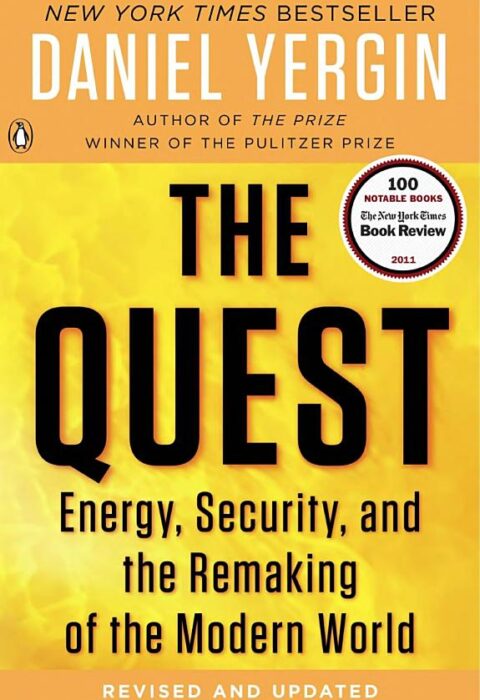
The classic account of the chaos revolution Farmer took part in
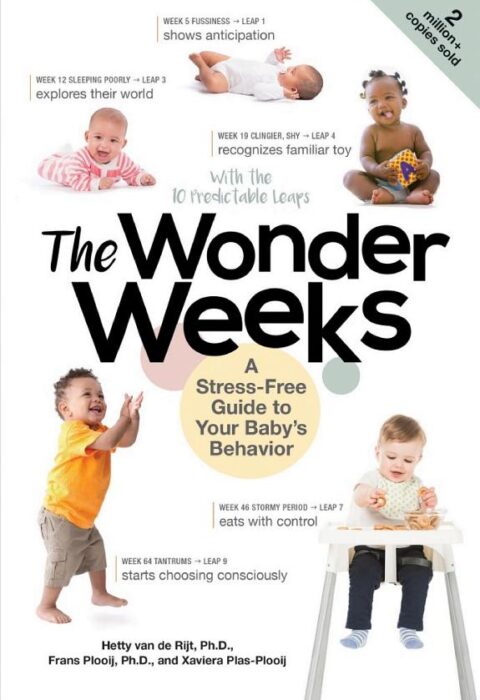
An introduction to complexity economics from Farmer's Oxford colleague
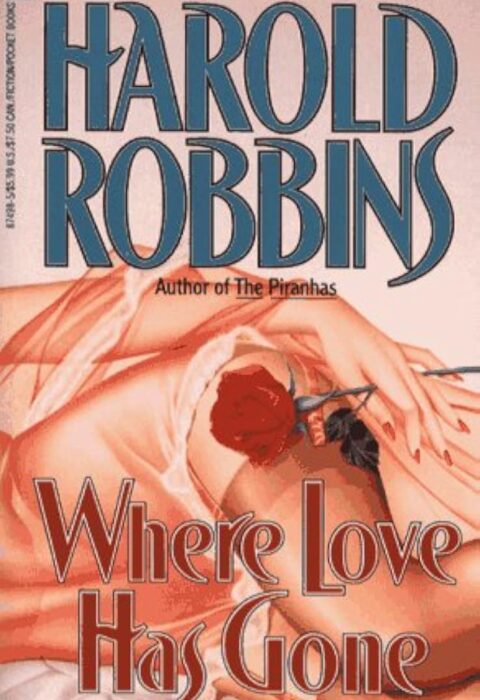
Young Farmer's adventure beating roulette with a hidden computer
The start of the first chapter is among the book's most entertaining parts. A young physicist asks his teacher in an economics class at Stanford: how does price arrive at the intersection of the supply and demand curves? He gets no satisfactory answer. Then he tells of the 1987 meeting organised at the Santa Fe Institute by the Nobel laureates Kenneth Arrow and Philip Anderson: the physicists do not believe the economists' assumptions, Anderson shouts «You really don't believe that, do you?», and Lawrence Summers replies «You physicists have a Tarzan complex».
If you see a problem, write to us. Publisher, author, rights holder, or just a reader — it doesn't matter. If there's something problematic about copyright in this review, if the review's author has broken the site's rules, or if you simply have a suggestion or complaint, hey@kitabdanevar.com. We'd rather resolve this between ourselves than go to court: we review requests within 48 hours and, if needed, correct or fully remove the review.