Kitabda Nə Var? Kitabda Nə Var?
Appearance
Join Us
What's in the Book? Discussion About Us
Azərbaycan English ✓ Русский Türkçe
← Reviews
Non-fiction

Planet Grief

Dipti Tait
Review by: Aytən Həsənova24 September 20261 min read
A warm, sincere and hopeful guide, born of the author's own losses, that links grief not only to death but to every kind of change — divorce, moving, job loss, the pandemic — though it rests more on personal experience and a hypnotherapy approach than on scientific depth.
Who Is This Book For?
Good Fit
  • Readers who have lost someone or are going through a major change such as divorce, relocation or job loss
  • Anyone looking for a warm book on grief full of honest personal stories
  • Those wanting to understand how to support a grieving loved one
  • People still processing losses from the pandemic years
Not a Fit
  • Readers after an academic, research-based source on the psychology of grief
  • Those sceptical of hypnotherapy and ideas like «the healing power of the subconscious»
  • Anyone experiencing severe depression or suicidal thoughts looking for a substitute for professional help — this book is not one
How Readers Rate It
Emotional openness 4.3/5 Very open
Scientific grounding 2.9/5 Average
Readability 4.1/5 Flowing
42 voters
Forewords, Introduction and Chapter 1 — «Death: Let's Start with That»
Covers the two forewords (Sharron Davies, Penny Power), the author biography, author's note, introduction and most of Chapter 1 (pp. 7–35 of the Turkish edition), about 12% of the book. Later chapters on growing-up grief, change, shared pain and global grief are not assessed here.

The book opens with two forewords: Olympic swimmer Sharron Davies writes about working with Tait after losing her mother, and businesswoman Penny Power about grief being tied not only to death but to the loss of a home, a job, hope. This sets out the core thesis early: whenever you are adapting to change and feel unsettled or sad, you are grieving. The author's note adds an honest caveat: some stories are anonymised, others are composite case studies based on observation.

The introduction begins with a provocative question: if everyone you know and everything you experience had a «use-by date», would you treat them differently? Nearing 48, the author calculates that, by average UK life expectancy, she has about 33 years — 1,716 weeks — left. The sum is framed not to frighten but as a call to live more consciously. Tait's core idea: if we can let go of the fear of grief, we can also overcome the fear of loss and death.

Chapter 1 describes how we avoid talking about death: we work, travel, shop — until death lifts us off our feet «like a tornado» and drops us on an unfamiliar planet. The author explains that starting with discomfort is deliberate: if we learn to look at it in a safe space, it becomes bearable. With Farrah Storr's idea of the «discomfort zone», this forms the book's methodological foundation.

At the chapter's heart is the author's own story, and it is the strongest part of the book. On Christmas Eve 2011, Dipti — an only child who had lost her father twelve years earlier — lost her mother to liver cancer and, ten days later, the grandmother she was closest to, all while going through a divorce. Details such as her Indian family's disapproval of divorce and sitting motionless in her car for seven hours after the school run are raw and moving. She names this state «Orphan Grief».

The story descends to the darkest point of depression — suicidal thoughts. Tait describes learning not to fight these thoughts but to acknowledge them — «I see you, I hear you» — and to enter into an inner dialogue with them. It is sincere as personal testimony, but the author herself notes that the same approach may not suit everyone and that professional support matters; helpline listings are given at the end of the book.

The book's weakness is that its scientific explanations stay fairly shallow and the text sometimes slips into motivational and hypnotherapy language («the healing power of the subconscious», «superpowers»). The Turkish translation is fluent, with few scanning errors. Still, for a reader living with loss it is a warm, humane companion that makes you feel less alone.

Reading Experience
  • The author's own story, client stories and expert interviews alternate
  • Open questions invite readers to reflect on their own lives
  • The author is transparent that some stories are anonymised or composite
  • Helpline and support listings appear at the end of the book
Content Warning
Frank description of suicidal thoughts — if you are experiencing such thoughts, please seek professional helpThemes of death, cancer, grief, divorce and depressionLosses related to the Covid-19 pandemic
If You Liked This
This Too Shall PassJulia Samuel

A psychotherapist's view of life's big changes and losses — reviewed on our site

The Feeling of Meaninglessness: A Challenge to Psychotherapy and PhilosophyViktor E. Frankl

A more philosophical approach to the search for meaning in loss and emptiness — reviewed on our site

Spoiler
How does this part end?
⚠️ «I see it, I hear it»

The story descends to the darkest point of depression — suicidal thoughts. Tait describes learning, instead of fighting these thoughts, to accept them by saying «I see it, I hear it» and to enter an inner dialogue with them. The author herself notes that the same approach may not suit everyone and that professional support is important.

Responsibility. This review reflects the personal assessment of its author, who is responsible for it. As a platform, "What's in the Book?" is not responsible for the content of the review. All rights to the work belong to its author and publisher; the cover image is used for promotional purposes only.

If you see a problem, write to us. Publisher, author, rights holder, or just a reader — it doesn't matter. If there's something problematic about copyright in this review, if the review's author has broken the site's rules, or if you simply have a suggestion or complaint, hey@kitabdanevar.com. We'd rather resolve this between ourselves than go to court: we review requests within 48 hours and, if needed, correct or fully remove the review.
How Would You Rate It?
Did this review help you decide?
Reviews · 0
Similar Books
Reviews
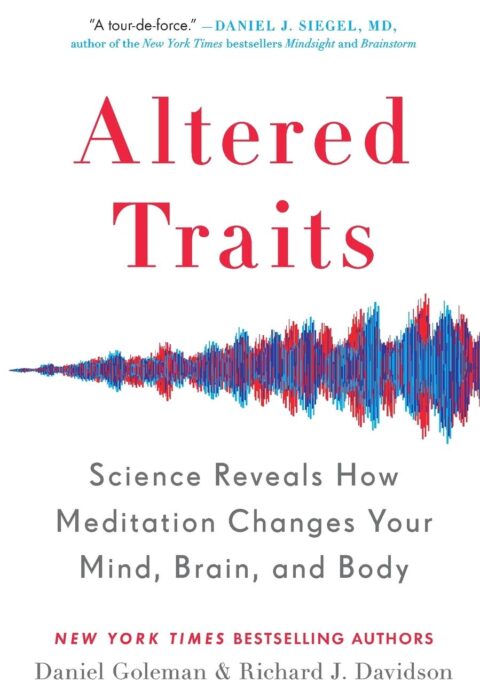
Emotional Intelligence author Daniel Goleman and neuroscientist Richard Davidson strip meditation science of its marketing hype and examine what it actually shows — a rare book that both makes the case for meditation and sharply criticizes the exaggerated claims made about it.
4.0 / 5
ReviewsRafel Əlizadə
Altered Traits

Altered Traits

Daniel Goleman, Richard J. Davidson · Non-fiction
Reviews
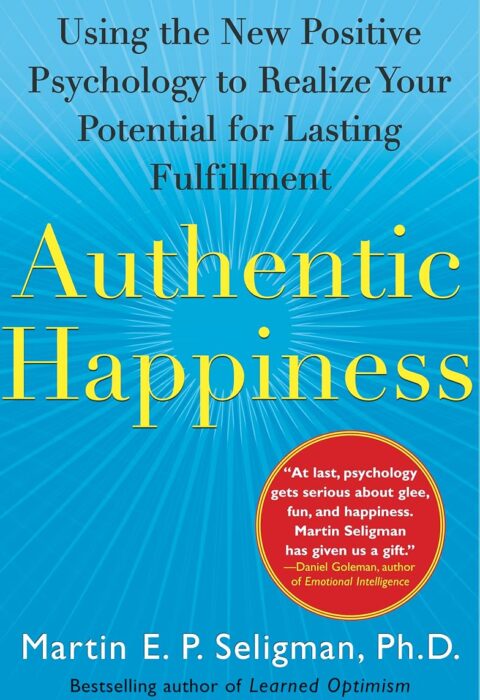
The main book of Martin Seligman, one of the founders of positive psychology, explaining happiness through «positive emotion, strengths and meaning». In the first chapter that was read, the strongest side is that it tells scientific research (the nuns, the smile, the colonoscopy) like vivid stories and clearly shows the difference between «feeling good» and «the good life». The weak side is that some studies are limited to small samples and the American context and that the author places himself somewhat at the centre. It does not replace treatment of depression; a strong start for those curious about the scientific foundations of happiness.
4.0 / 5
ReviewsTürkanə Əliyeva
Authentic Happiness

Authentic Happiness

Martin E. P. Seligman · Non-fiction
Reviews
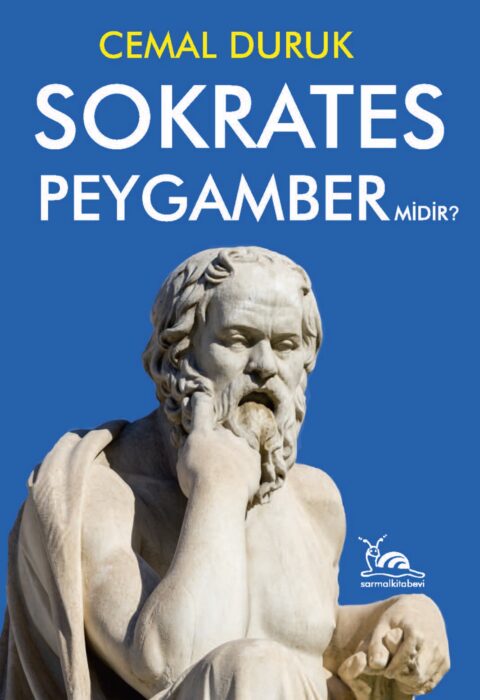
Cemal Duruk's short book examining the question «Was Socrates a prophet?» by comparing it with the concept of prophethood in the Islamic, Jewish and Christian traditions. In the first chapter that was read the concept of prophethood is explained in plain language: the difference between nabi and rasul and five common qualities (sidq, amanah, fatanah, ismah, tabligh) are illustrated with verses and hadiths. The chapter is written from a faith-based perspective and is not a study in the history of philosophy; this is both its strength (systematic exposition) and its limitation. Interesting for those who want to read about the concept of prophethood in plain exposition with a comparative religious perspective.
2.9 / 5
ReviewsTürkanə Əliyeva
Was Socrates a Prophet?

Was Socrates a Prophet?

Cemal Duruk · Non-fiction
Reviews
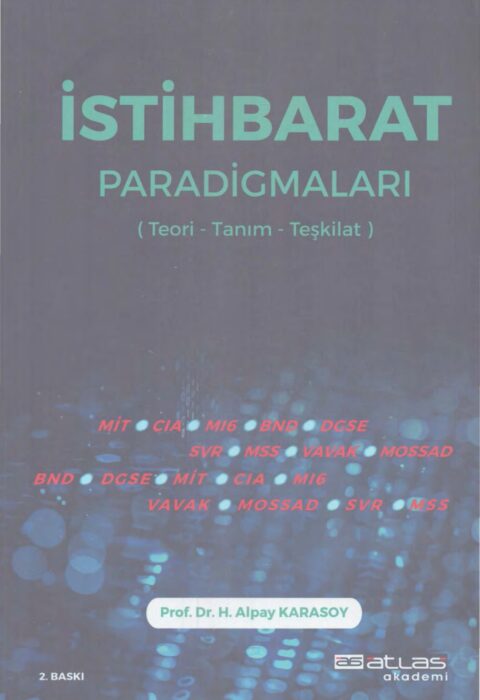
A university textbook that explains intelligence in terms of concepts, sources, types and the agencies of different countries. In the first part that was read, the strongest side is the clear structure: it begins with a concrete example (Russia–Ukraine, Yalta, 11 September) and moves on to the etymology of the word, the table of definitions and the main qualities. The weak side is the heavy academic language, many citations and the book's reliance on Anglo-Saxon literature. A good start for students and readers who want to study the subject seriously, not an easy read.
3.7 / 5
ReviewsTürkanə Əliyeva
Intelligence Paradigms

Intelligence Paradigms

H. Alpay Karasoy · Non-fiction
Esc — close · ↵ — open
Text