Kitabda Nə Var? Kitabda Nə Var?
Appearance
Join Us
What's in the Book? Discussion About Us
Azərbaycan English ✓ Русский Türkçe
← Reviews
Classics

Çocuklar İçin Şiirler

In English: Çocuklar İçin Şiirler (Poems for Children; selected from Turkish literature)
Memet Fuat (compiler)
Review by: Rafel Əlizadə15 October 20261 min read
An anthology Memet Fuat compiled from the poems of 12 Turkish poets: most were not written for children, and the compiler presents them as texts «written for adults but taken for their own by children». In the first three poets read (Nâzım Hikmet, Asaf Halet Çelebi, Cahit Sıtkı Tarancı) the strongest quality is plain language meeting deep imagery, and poems that look through a child's eyes without ornament. The weak side is that some poems (Hiroshima, death, poverty) address the grown-up reader rather than the child, and the book gives no commentary. A valuable selection for lovers of poetry and of Turkish verse; to be approached with care if read aloud to a child.
Who Is This Book For?
Good Fit
  • Readers who want to meet Turkish poetry through a selection
  • Parents and teachers who want to read poems to children in a speaking voice rather than as a school «recitation piece»
  • Those who like the plain-spoken poems of the Garip movement and the 1940s new poetry
Not a Fit
  • Anyone looking for rhymed counting-out and lullaby verse written for children: the compiler says in the foreword that the poems were written for adults
  • Readers expecting historical and literary commentary: there are only short biographies and the compiler's foreword
  • Those sensitive to war, death and poverty: some poems show these themes bare
How Readers Rate It
Readability 4.3/5 Axıcı
Emotional weight 2.7/5 Average
Suitability for children 3.5/5 Average
40 voters
The compiler's word and the first three poets: Nâzım Hikmet, Asaf Halet Çelebi, Cahit Sıtkı Tarancı
Covered: Memet Fuat's foreword «A Few Words to the Little Ones» and the sections of the first three poets — Nâzım Hikmet (3 poems), Asaf Halet Çelebi (6 poems), Cahit Sıtkı Tarancı (4 poems) — about pp. 7–32, roughly 13% of the book. The remaining poets are not opened in this review.

The book opens with a short foreword by Memet Fuat addressed to the child reader. The compiler says that, apart from the poems of Fazıl Hüsnü Dağlarca, all of the poems were written for adults; but «Don Quixote», «Gulliver's Travels» and «Robinson» were also written for adults, and children have drawn completely different flavours and meanings from them. The compiler asks readers to read the poems not like a school «recitation piece» but as if talking: unhurried, without shouting, without affectation. The foreword shows from the start how the book should be read.

The first section is three poems by Nâzım Hikmet. The biographical note says the poet was born in 1902, died in 1963, was one of the pioneers of free verse, spent long years in prison for political activity and lived abroad. «Galloping from Far Asia» likens the homeland to a mare's head and says «this country is ours»; «The Japanese Fisherman» is shaped like a song heard from friends: whoever eats the fish caught dies, and the boat is a black coffin; «The Little Girl» is written in the voice of a seven-year-old girl who died in Hiroshima and asks for signatures so that children are not killed. These three poems say the heaviest subject — the death of children in war — in the plainest words.

Asaf Halet Çelebi was born in 1907 and died in 1958, and is introduced as a poet drawn to Eastern as much as to Western culture. His six poems here stand out for strange, sometimes dark images: in «People», a being newly arrived on earth asks those who look like it who they are and gets the answer «we are human»; in «City», houses are boxes and residents beetles; «The Man I Made of Wood» is the memory of a being that became neither human nor tree; «Compassion», «Father Buoy» and «Cat» are gentler poems about children, sleep and loss. The cat crushed by a foot, and childhood crushed with it, is the poem's most moving place.

Cahit Sıtkı Tarancı was born in 1910 and died in 1956, and is introduced in the book as a master who steered clear of the excesses of the new Turkish poetry and split hairs with care. His four poems join childhood, longing for distant places and consolation: «Robinson» calls its hero «clever Robinson» and wants to go with him to an island; «So Lost in Thought» shows a child's eye that turns the empty lot next door into the sky at dusk; in «Childhood» the speaker counts out money to buy back a childhood and says there is now neither an age nor a name nor any knowing who they are; «Good News» is about the future that birds announce.

Reading Experience
  • The poems are short, most fit on one page, and many images rest on everyday objects seen through a child's eye (a boat, a tree, a cat, a window)
  • The language is very plain: even heavy poetic images are given in words a child can follow
  • Each poet's section opens with a short biography, and the poems appear with titles and without commentary
  • The compiler orders the poets by birth year, 1902–1917, and so shows the sequence of the 1940s generation of new poetry
Content Warning
Some poems touch on war, the atomic bomb and the death of children (Hiroshima), poverty and death; this can be heavy for the youngest readersThe compiler notes in the foreword that the poems were written for adults and that some contain political criticism and satireIn Cahit Külebi's «The Story of the Bird», children beat an injured bird to death
If You Liked This
Bütün ŞiirleriOrhan Veli Kanık

The key example of the plain-spoken poems of the Garip movement

Çocuk ve AllahFazıl Hüsnü Dağlarca

Dağlarca's well-known poetry book written through a child's eyes

Memleketimden İnsan ManzaralarıNâzım Hikmet

Nâzım Hikmet's long poem-novel giving portraits of ordinary people

Spoiler
How does this part end?
⚠️ Cahit Sıtkı Tarancı's poem «Good News».

The part read ends with Cahit Sıtkı Tarancı's «Good News»: birds tell the poet that something will happen in the future, that the day will dawn as we wish and that people's faces will become like roses. The last stanza says that in the river bed, in the wolf's den, at the lamb's ear the world will come to its age of order and abundance, and dream and reality will stand side by side.

Responsibility. This review reflects the personal assessment of its author, who is responsible for it. As a platform, "What's in the Book?" is not responsible for the content of the review. All rights to the work belong to its author and publisher; the cover image is used for promotional purposes only.

If you see a problem, write to us. Publisher, author, rights holder, or just a reader — it doesn't matter. If there's something problematic about copyright in this review, if the review's author has broken the site's rules, or if you simply have a suggestion or complaint, hey@kitabdanevar.com. We'd rather resolve this between ourselves than go to court: we review requests within 48 hours and, if needed, correct or fully remove the review.
How Would You Rate It?
Did this review help you decide?
Reviews · 0
Similar Books
Reviews
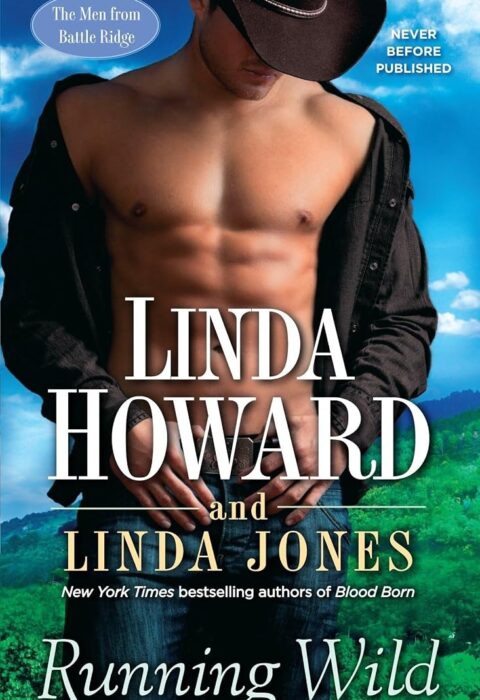
A romantic thriller about Carlin, who has run from a stalker and found work in a small cafe in Wyoming, and Zeke Decker, a cowboy who owns a large ranch. Its strongest side is warm humour, the comic scenes around the heroine's failed «Flawless White Cake», the odd family feeling of the ranch hands, and the pace at which the two authors keep the story lively. Its weakest side is Zeke's over-protective and possessive manner, several repeated scenes in the middle (detailed sex scenes), and a closing fight settled with guns rather than by trusting the law. An easy, pleasant read for lovers of romantic suspense; not for those who want heavy psychological depth.
3.4 / 5
ReviewsTürkanə Əliyeva
Running Wild

Running Wild

Linda Howard, Linda Winstead Jones · Novel
Reviews
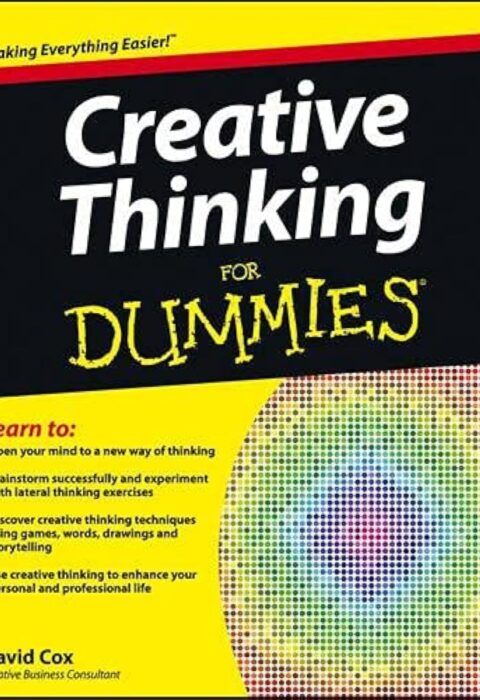
David Cox's book in the «For Dummies» series explaining creative thinking in plain language with practical exercises. In the first chapter that was read, the strongest side is finding creativity in everyday life (the pen, the printing press, a film idea) and getting the reader out of the thought «I'm not creative». The weak side is the tone of general advice in some parts, that some examples are limited to Western culture and that scientific claims are not given precise sources. A good start for those seeking a simple introduction to creative thinking.
3.4 / 5
ReviewsCavid Mehdiyev
Creative Thinking For Dummies

Creative Thinking For Dummies

David Cox · Non-fiction
Reviews
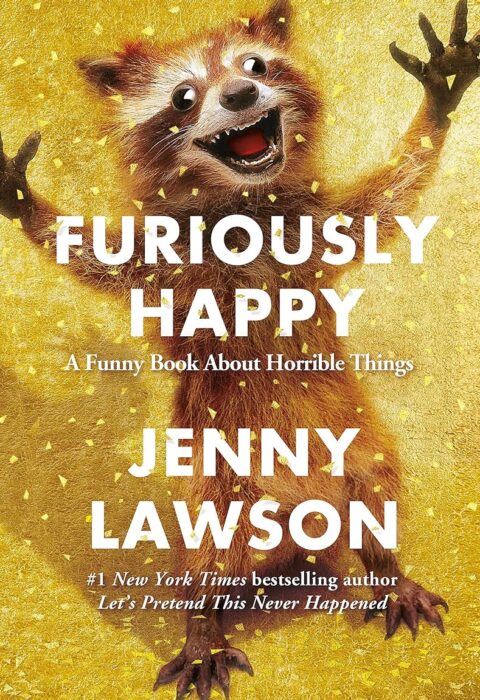
A collection of essays in which an American blogger who lives with depression, anxiety disorder, self-harm and rheumatoid arthritis talks about all of it with dark humour. Its greatest strength is sincerity: the author neither romanticises nor hides mental illness and tells the reader “you are not alone”. The final essays and the story of “the 24 file” are genuinely moving. The weak side: much of the humour relies on absurd, sexual and crude jokes, many chapters read simply as funny blog posts, and the book's overall rhythm is scattered. Some of the wordplay is lost in the Turkish translation. For readers who enjoy this kind of humour it is both funny and supportive — but it is not to everyone's taste.
3.8 / 5
ReviewsAytən Həsənova
Furiously Happy

Furiously Happy

Jenny Lawson · Non-fiction
Reviews
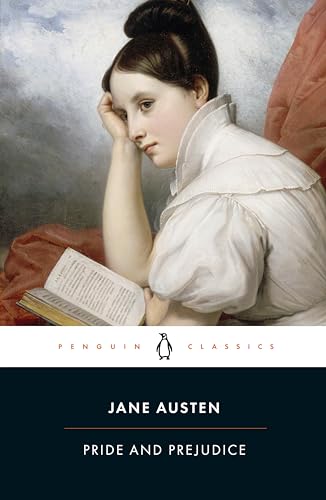
One of the most beloved novels in English literature — set against the Bennet family's search for suitable husbands for their five daughters, it follows proud Mr. Darcy and sharp-tongued Elizabeth Bennet as they overcome mutual prejudice to truly see one another. Written with exquisite irony.
4.5 / 5
ReviewsTürkanə Əliyeva
Pride and Prejudice

Pride and Prejudice

Jane Austen · Classics
Esc — close · ↵ — open
Text