Kitabda Nə Var? Kitabda Nə Var?
Appearance
Join Us
What's in the Book? Discussion About Us
Azərbaycan English ✓ Русский Türkçe
← Reviews
Non-fiction

Lies My Teacher Told Me: Everything Your American History Textbook Got Wrong

James W. Loewen
Review by: Rafel Əlizadə23 September 20261 min read
Sociologist James Loewen's classic critique of how American history textbooks flatten and distort the past through 'heroification.'
Who Is This Book For?
Good Fit
  • Anyone who wants to understand how the education system and textbooks distort history
  • Readers curious what's behind the "simplified" version of well-known figures like Helen Keller
  • Anyone who wants a critical, revisionist lens on American history
  • Teachers and educators (the book is dedicated directly to them)
Not a Fit
  • Readers who want American history presented in an idealized form
  • Anyone interested only in American history itself, without interest in a critique of education (the book's strength lies in combining both)
  • Readers wary of dense academic reference apparatus (footnotes, sources)
How Readers Rate It
Critical edge 4.1/5 Sharp
Documentation 4.2/5 Evidence-based
Readability 3.7/5 Popular
44 voters
The History Barrier: The Process of Heroification
Covers the closing of the Introduction (p. 40) and Chapter 1, 'The Process of Heroification' (pp. 41-72) — about 5% of the 652-page book. Explains the mechanism of heroification through the example of Helen Keller; later chapters' topics like Columbus, Thanksgiving, and the Vietnam War are not covered here.

The chapter opens with a quote from James Baldwin — that what we call identity in America is a bunch of myths about heroic ancestors — as Loewen shows how textbooks strip historical figures of unacceptable traits (Daniel Webster's drunkenness, George Washington owning slaves), turning them into 'flawless, pious, perfect creatures.'

Loewen explains the problem with this: this mode of thinking causes history to lose its instructive value — it produces perfect people and noble nations, but it doesn't tell the truth.

Helen Keller is chosen as the central case study — for more than 20 years, Loewen has asked his students who she was; everyone knows she was deaf-blind and learned to read through a teacher named Anne Sullivan, but almost no one remembers her radical socialist activism and political speeches.

Loewen stresses that historians and filmmakers have 'silenced' Keller by ignoring her real biography and the actual lessons we could learn from her — as a result, we know remarkably little about her, despite her being one of the most frequently taught historical figures.

The chapter closes by contrasting 'significant' presidents like Woodrow Wilson with figures deemed 'small' like Keller, who in fact had a far more complex and interesting history — questioning which figures heroification chooses, and why.

Reading Experience
  • Clear, example-driven argumentation backed by concrete textbook quotes and comparisons
  • A sociological research method (analyzing 12 textbooks) lends academic rigor, while the prose stays popular and readable
  • Each chapter is devoted to a specific topic (heroification, Columbus, Thanksgiving) and can be read independently
  • Personal context from the author's own experience (being sued as a textbook co-author)
Content Warning
Frank discussion of the harsher sides of American history — racism, slave ownershipWritten from a particular political/ideological stance (that textbooks "mythologize"), which some readers may find contentious
If You Liked This
A People's History of the United StatesHoward Zinn

A similarly revisionist, bottom-up approach to American history

British Propaganda in the First World WarServet Avşar

A similarly critical methodology showing how official historical narratives get shaped

Spoiler
How does this part end?
⚠️ Who counts as «important»?

The chapter read ends by showing the contradiction between «important» presidents such as Woodrow Wilson and figures counted as «small people» such as Helen Keller, who in fact have a more complex and interesting history. It questions which figures heroification chooses, and why.

Responsibility. This review reflects the personal assessment of its author, who is responsible for it. As a platform, "What's in the Book?" is not responsible for the content of the review. All rights to the work belong to its author and publisher; the cover image is used for promotional purposes only.

If you see a problem, write to us. Publisher, author, rights holder, or just a reader — it doesn't matter. If there's something problematic about copyright in this review, if the review's author has broken the site's rules, or if you simply have a suggestion or complaint, hey@kitabdanevar.com. We'd rather resolve this between ourselves than go to court: we review requests within 48 hours and, if needed, correct or fully remove the review.
How Would You Rate It?
Did this review help you decide?
Reviews · 0
Similar Books
Reviews
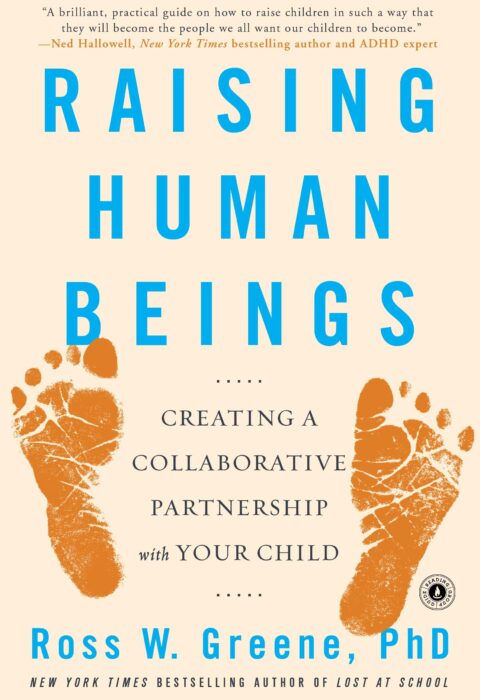
A parenting book by clinical psychologist Ross W. Greene that proposes building a «collaborative partnership» with the child. In the introduction and first chapter that were read, the strongest side is that it accurately shows parents' everyday confusion and offers «cooperation» in place of the dictatorship/softness alternative; the Denise scene shows the real mess of home life. The weak side is the general nature of some parts and the examples tied to American culture. It does not replace professional support for children with serious behavioural difficulties.
3.9 / 5
ReviewsAytən Həsənova
Raising Human Beings

Raising Human Beings

Ross W. Greene · Non-fiction
Reviews
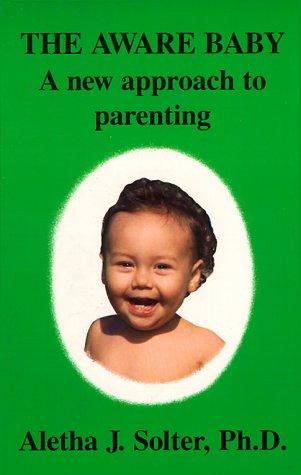
Developmental psychologist Aletha Solter's guide to what the author calls "Aware Parenting" — an alternative approach built on understanding, rather than suppressing, a baby's crying, sleep, and behavior — grounded in research but written as a direct, practical handbook for parents.
4.3 / 5
Reviewsİdris Muxtarzadə
The Aware Baby

The Aware Baby

Aletha J. Solter · Non-fiction
Reviews
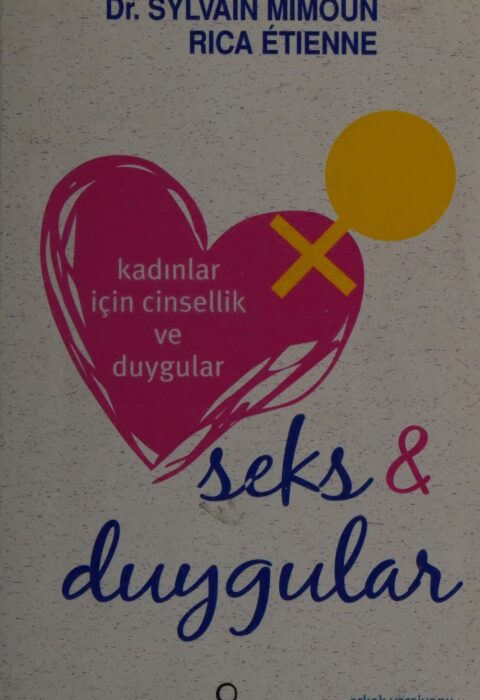
A broad guide to female sexuality, couple relationships and women's health by the French gynaecologist-andrologist Sylvain Mimoun and the journalist Rica Étienne. Its strengths are frank, non-shaming language, figures from France's large 2008 sexuality survey and real questions from the consulting room. Its weaknesses are a heavy reliance on stereotypes about men and women, some oversimplified «scientific» claims and a tendency to explain everything through Freud.
3.3 / 5
ReviewsAytən Həsənova
Kadınlar İçin Cinsellik ve Duygular

Kadınlar İçin Cinsellik ve Duygular

Sylvain Mimoun, Rica Étienne · Non-fiction
Reviews
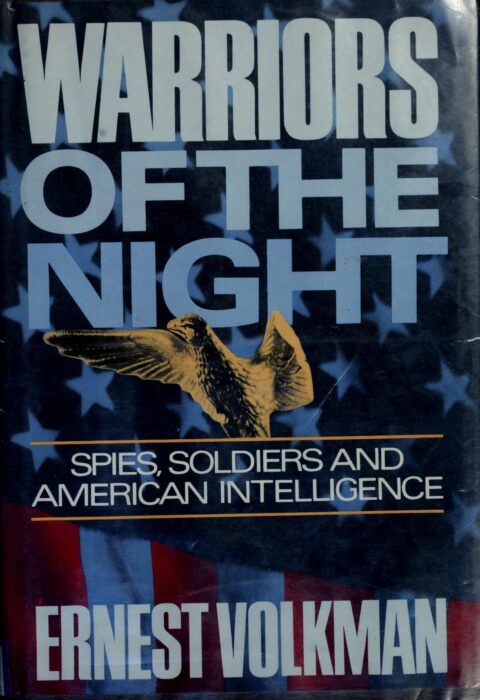
A critical synthesis of American intelligence history from 1918 to the 1980s, written in investigative journalist Ernest Volkman's hard-edged style — not a heroic tale, but a blunt portrait of the system's own institutional weaknesses.
4.1 / 5
ReviewsTürkanə Əliyeva
Warriors of the Night

Warriors of the Night

Ernest Volkman · Non-fiction
Esc — close · ↵ — open
Text