Kitabda Nə Var? Kitabda Nə Var?
Appearance
Join Us
What's in the Book? Discussion About Us
Azərbaycan English ✓ Русский Türkçe
← Reviews
Non-fiction

Tanık: Küresel Entrikalar ve Komplolar

In English: The Witness: Global Intrigues and Conspiracies (Tanık)
Cemal Duruk
Review by: İdris Muxtarzadə13 October 20261 min read
The book explains the course of England and other states as the plan of a secret network (the Illuminati, the Masons, the «bankers») with the thesis «nothing in history is coincidence». In the first section that was read, the strongest side is that factual information on English history (Walpole, the industrial revolution) is given briefly and clearly and that there are many footnotes. The weak side is that the main claims rest on probability and coincidence rather than proof and that the claims about the Rothschild family repeat an antisemitic conspiracy theory with a long tradition, which is not confirmed by historical sources. This book should be read not as a history book but as an example of conspiracy theory.
Who Is This Book For?
Good Fit
  • Readers who want to learn analytically how conspiracy theories are constructed and argued
  • Anyone who wants to see a book version of popular claims about Masonic organisations, the Templars and the Illuminati
Not a Fit
  • Anyone who wants historical facts checked against scholarly sources
  • Those who find texts that show ethnic or religious groups as a hidden power offensive
  • Readers inclined to accept books that replace official history with new theories as «the truth»
How Readers Rate It
Readability 3.1/5 Average
Depth 2.5/5 Average
Practical advice 1.6/5 Little
40 voters
The «design» of England: claims about the Illuminati and the Rothschilds
Read: the start of the section «The Design of England» — the subsections on the Illuminati and the Rothschild family and a short summary of English history (approx. pp. 13–35) — about 8% of the book. The other sections were not read.

In «Tanık» Cemal Duruk sets out the thesis «nothing in history is coincidence» and presents the history of England as a «design»: behind the «Glorious Revolution» of 1688, the arrival of the House of Hanover and the strengthening of Parliament stand «dark forces» and the support of Jewish bankers. In this part, before explaining England's development, the author takes «a short break» on the Illuminati and the Rothschilds. These claims have not been proved by historians and in the book rest on secondary, often non-academic sources (web pages, the author's own earlier book).

The section «The Illuminati Organisation» describes the Bavarian Illuminati founded by Adam Weishaupt in Ingolstadt in 1776: a system of three degrees, oaths, code names (for Weishaupt «Spartacus») and, as aims, the overthrow of monarchies, abolition of private property, weakening of patriotism and discrediting of religions are listed. It is written that in 1784, after a member died from a lightning strike, the police found secret notes, the organisation was banned and Weishaupt fled to Gotha. Then the author speaks of an underground continuation called «Neo-Illuminati»; this claim is given without sources.

In the section «The Rothschild Dynasty» the author calls the family «the real owner of the Illuminati» and attributes to it a series of claims: lending money in the England–France war and «seizing» the Bank of England, «igniting» the war of the American colonies, squeezing the Ottoman state with debt and demanding Palestine from Abdülhamid II, «engineering» the First and Second World Wars. These claims are not confirmed by historical sources; they are classic patterns of antisemitic conspiracy theories. At the end the author explains the development of England's industrial revolution in connection with the Whig party and industrialists and ends the section with «capitalists: the Rothschild and Rockefeller families».

The construction of the book: each section starts with short historical information and then tries to «prove» the role of secret organisations; many footnotes give the text an academic look, but the main claims are built not on citation but on coincidence and probability («it can't be chance»). Factual information (the Revolution of 1688, Walpole, the industrial revolution) is mixed in the same tone with claims lacking proof, so the reader may have difficulty telling which can be checked.

Reading Experience
  • The author uses many footnotes and quotations, which gives the text an academic look; but the main claims are not verified against sources
  • The thesis is accepted in advance («it can't be chance») and the events are then arranged to fit; alternative explanations are not considered
  • Factual historical information and unproven claims are mixed in the same tone
  • The language of the text is assertive and biased, with the words «Jewish», «Zionist» and «banker» used in many places to denote the same group
Content Warning
The book is a conspiracy theory: themes such as the Illuminati, freemasons, «Jewish/Zionist bankers» and the Rothschilds, and the list of the «real owners of the Fed», are claims that historians have not proved and that are widely recognised as antisemitic accusationsThe portrayal of Protestantism as a «Jewish sect», and the tying of historical revolutions, wars and coups to a single secret plan, finds no scholarly supportThese notes and this review are given to warn the reader, not to confirm the book's claimsAfter reading it, it is advisable to check the claims against independent historical sources
If You Liked This
Misyonerlerin Gizemli TarihiCemal Duruk

Another conspiracy-themed research book by the same author

Foucault's PendulumUmberto Eco

A novel about the allure and danger of conspiracy theories, for a critical view of the book's claims

The Paranoid Style in American PoliticsRichard Hofstadter

An essay explaining conspiratorial thinking in historical context

Spoiler
How does this part end?
⚠️ The industrial revolution and the «Masters of Money».

At the end of the part read the author moves on to England's industrial revolution and the Victorian era: the Whig party receiving support from industrialists, England becoming the world's first industrialised country and the birth of capitalism; the section ends with the names Rothschild and Rockefeller as the «Masters of Money». What follows is outside the scope of this review.

Responsibility. This review reflects the personal assessment of its author, who is responsible for it. As a platform, "What's in the Book?" is not responsible for the content of the review. All rights to the work belong to its author and publisher; the cover image is used for promotional purposes only.

If you see a problem, write to us. Publisher, author, rights holder, or just a reader — it doesn't matter. If there's something problematic about copyright in this review, if the review's author has broken the site's rules, or if you simply have a suggestion or complaint, hey@kitabdanevar.com. We'd rather resolve this between ourselves than go to court: we review requests within 48 hours and, if needed, correct or fully remove the review.
How Would You Rate It?
Did this review help you decide?
Reviews · 0
Similar Books
Reviews
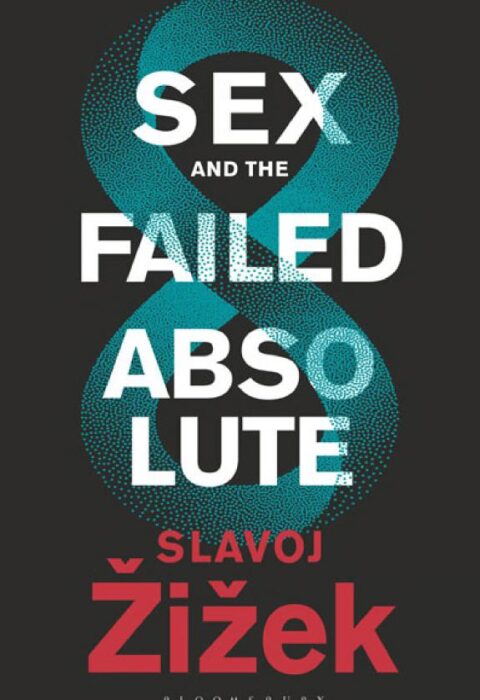
A dense, demanding reworking of Stalinist "dialectical materialism" that treats sexuality as a failed route to the philosophical Absolute — leavened, surprisingly, by pop-culture examples.
4.0 / 5
ReviewsRafel Əlizadə
Sex and the Failed Absolute

Sex and the Failed Absolute

Slavoj Žižek · Non-fiction
Reviews
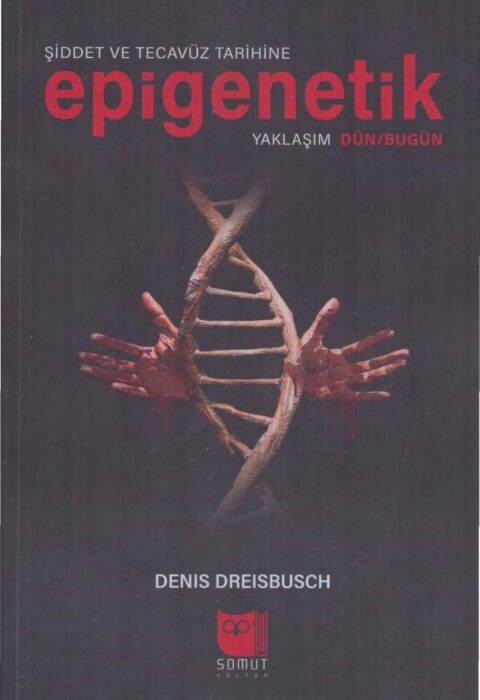
The book wants to explain violence and sexual violence in history with the idea of «epigenetic continuity». In the first section read, the strongest side is the broad list of sources (many footnotes, German psychology and endocrinology textbooks) and the bold approach to the subject. The weakest side is the lack of a consistent argument: epigenetics is used as a metaphor, not in the scientific sense; the text jumps between paedophilia, genocide, political figures, hormones and religion, and some sentences (for example «herded societies») are unproven generalisation. It should be read not as an academic work but as a collection of the author's polemical essays.
2.8 / 5
ReviewsAytən Həsənova
Şiddet ve Tecavüz Tarihine Epigenetik Yaklaşım: Dün-Bugün

Şiddet ve Tecavüz Tarihine Epigenetik Yaklaşım: Dün-Bugün

Denis Dreisbusch · Non-fiction
Reviews
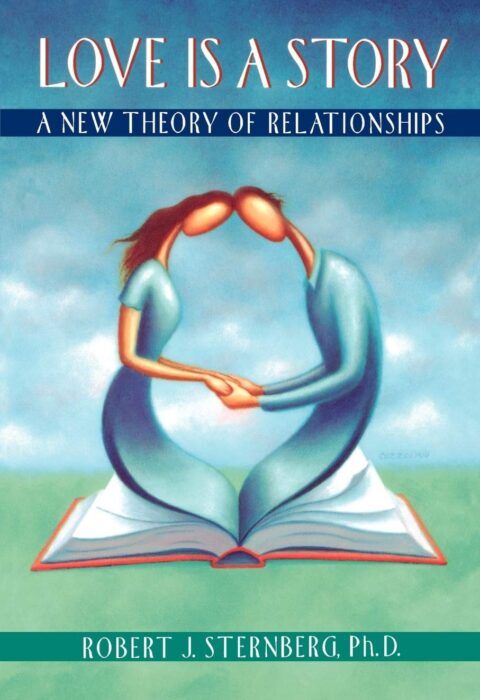
A simple, engaging psychology book that explains relationship problems not by «what is love?» but by «what story about love does each person carry?» Its great strength is that it explains one theory through dozens of real couples and memorable metaphors (climbing a mountain, aspirin). Its weakness is that, as the author admits, the theory is not yet fully tested, and that the examples follow a repeating pattern.
3.7 / 5
ReviewsAytən Həsənova
Love Is a Story

Love Is a Story

Robert J. Sternberg · Non-fiction
Reviews
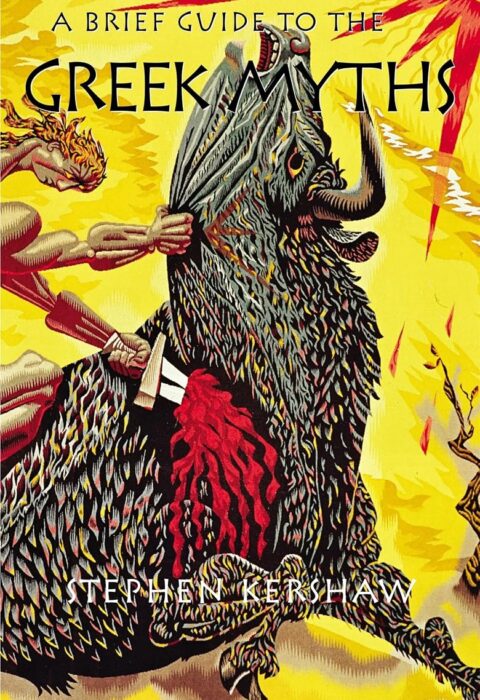
A broad and reliable guide that tells the Greek myths in chronological order, from the creation to the homecomings of the Trojan War heroes, while discussing each myth's sources, variants and the question “did it really happen?”. Its greatest strength is how it combines storyteller and scholar: the myths are retold vividly, yet constantly referenced to Homer, Hesiod, Apollodorus and Ovid and compared with archaeology and modern interpretations. The weak side: nearly 600 pages and a flood of names can tire a first-time reader, and the Turkish edition is riddled with typesetting and recognition errors. An excellent choice for anyone who wants a home reference on Greek myth.
4.0 / 5
ReviewsCavid Mehdiyev
A Brief Guide to the Greek Myths

A Brief Guide to the Greek Myths

Stephen P. Kershaw · Non-fiction
Esc — close · ↵ — open
Text