Kitabda Nə Var? Kitabda Nə Var?
Appearance
Join Us
What's in the Book? Discussion About Us
Azərbaycan English ✓ Русский Türkçe
← Reviews
Non-fiction

The Language Instinct

Steven Pinker
Review by: Türkanə Əliyeva23 September 20261 min read
Arguing that language is not a free cultural invention but a biological instinct — as natural to us as web-spinning is to a spider — this book, packed with vivid examples, is one of the most influential popular-science classics in linguistics.
Who Is This Book For?
Good Fit
  • Readers scientifically curious about how language works and how children acquire it
  • Readers of Pinker's later books (such as "The Stuff of Thought," already in the site's archive) wanting to see his first major work
  • Readers wanting to encounter a scientific argument against the idea that language is purely a cultural convention
Not a Fit
  • Readers looking for a practical guide to "correct" language use, grammar rules, or etymology — the author explicitly states this is not the book's purpose
  • Readers with little patience for dense scientific argumentation and heavy linguistic terminology, looking for lighter popular science
  • Readers holding the academic position that language is a purely cultural/social construct, opposed to the biological-instinct thesis — the book directly argues against this view
How Readers Rate It
Scientific depth 3.9/5 Deep
Writing style 3.9/5 Rich, witty
Background knowledge needed 3.0/5 Average
41 voters
Chapter One: An Instinct to Acquire an Art
Covers the preface and the opening of Chapter One (~6 pages, roughly 1% of the 545-page book) — Pinker's demonstration, through vivid examples, of language's power to transfer ideas between minds, and the thesis that language is a biological instinct akin to a spider's web-spinning; the book's main body of 13 chapters (children's language acquisition, grammar genes, the Tower of Babel/linguistic diversity) is not covered here.

In the preface, Pinker clarifies the book's purpose: unlike conventional books about "correct" language use, this one tries to explain language as a scientific phenomenon — spanning everything from neural networks to children's genius for language acquisition, from grammar genes to the legend of the Tower of Babel.

Chapter One opens with a startling example: a detailed description of octopus mating, followed by a scene from a famous soap opera. The point is simple — reading these words conjures concrete, vivid images in the reader's mind, even though no image is actually shown, only a sequence of sounds or letters. Pinker calls this "one of the wonders of nature."

Pinker emphasizes that language is a defining trait of the human species — any two or three people brought together will quickly start exchanging words, and a person alone will talk to themselves, their dog, even their plants. Social reward goes not to the fast talker but to the eloquent, persuasive one.

The chapter's core thesis is this: language is a biological instinct, just as web-spinning is for a spider — a spider doesn't receive an education in web-building, it simply has "spider intelligence." Pinker grounds this historically in Darwin's own 1871 description of language as an instinct in "The Descent of Man," and states that this directly challenges the view, dominant in the humanities, that language is purely a cultural invention.

Reading Experience
  • Pinker unpacks abstract linguistic concepts through vivid, sometimes bizarre examples (octopus mating), letting the reader feel their own mind's language machinery as "living proof"
  • Combining scientific rigor with humor and literary flourish (an Oscar Wilde quote, the "barrel of monkeys" metaphor) is one of the most recognizable stylistic hallmarks of the popular-science genre this book helped define
If You Liked This
The Stuff of ThoughtSteven Pinker

Already in the site's archive, the same author's later work continuing the exploration of language and mind

Universal Grammar theoryNoam Chomsky

The originator of the "universal grammar" concept that Pinker largely builds the book's scientific framework on

Spoiler
Where does the book go from here?
⚠️ The themes of children's language acquisition and linguistic diversity are revealed here.

The book's main body shows how young children, with no formal instruction, "extract" complex grammatical rules from their parents' incomplete, error-ridden speech — a process Pinker details in the chapter "Baby Born Talking — Describes Heaven."

Later chapters examine how language is processed in the brain (through aphasia cases), why there are so many languages (via the Tower of Babel metaphor), and how grammar rules differ from "grammar mavens'" prescriptive rules, closing the book within the broader context of the evolutionary theory of mind.

Responsibility. This review reflects the personal assessment of its author, who is responsible for it. As a platform, "What's in the Book?" is not responsible for the content of the review. All rights to the work belong to its author and publisher; the cover image is used for promotional purposes only.

If you see a problem, write to us. Publisher, author, rights holder, or just a reader — it doesn't matter. If there's something problematic about copyright in this review, if the review's author has broken the site's rules, or if you simply have a suggestion or complaint, hey@kitabdanevar.com. We'd rather resolve this between ourselves than go to court: we review requests within 48 hours and, if needed, correct or fully remove the review.
How Would You Rate It?
Did this review help you decide?
Reviews · 0
Similar Books
Reviews
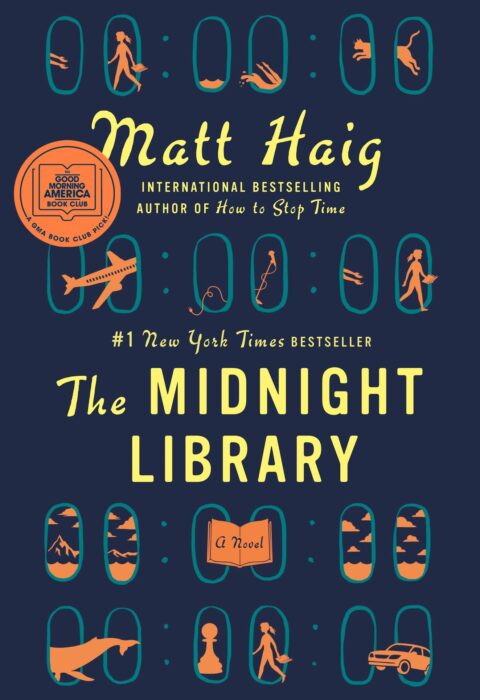
A warm, fast read that a modern fable sometimes withholds from itself the full weight of its own philosophy.
4.6 / 5
Reviewsİdris Muxtarzadə
The Midnight Library

The Midnight Library

Matt Haig · Novel
Reviews
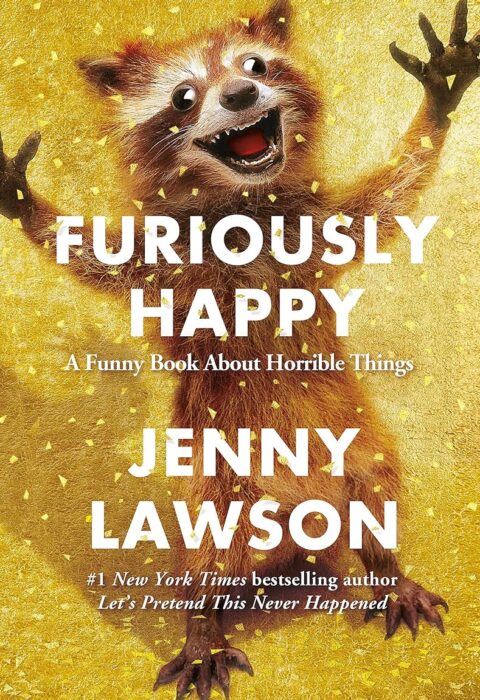
A collection of essays in which an American blogger who lives with depression, anxiety disorder, self-harm and rheumatoid arthritis talks about all of it with dark humour. Its greatest strength is sincerity: the author neither romanticises nor hides mental illness and tells the reader “you are not alone”. The final essays and the story of “the 24 file” are genuinely moving. The weak side: much of the humour relies on absurd, sexual and crude jokes, many chapters read simply as funny blog posts, and the book's overall rhythm is scattered. Some of the wordplay is lost in the Turkish translation. For readers who enjoy this kind of humour it is both funny and supportive — but it is not to everyone's taste.
3.8 / 5
ReviewsAytən Həsənova
Furiously Happy

Furiously Happy

Jenny Lawson · Non-fiction
Reviews
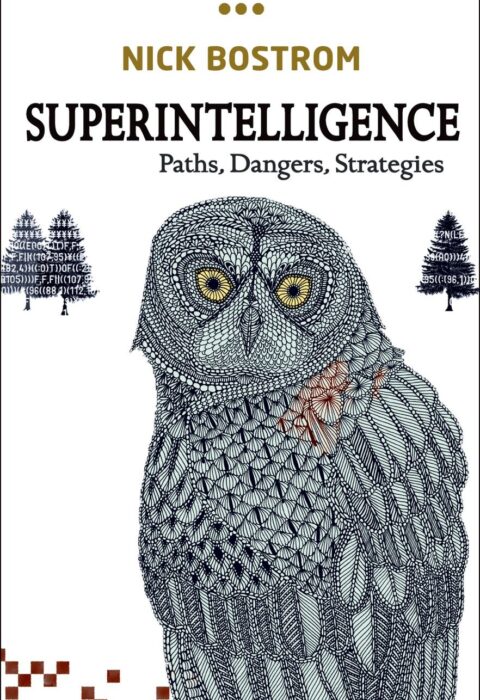
Oxford philosopher Nick Bostrom's 2014 book systematically examines how machine intelligence surpassing the human level might arise and — more importantly — how we might keep it under control. Concepts such as «the control problem», «the treacherous turn» and «instrumental convergence» flowed from this book into the entire AI safety debate. It is heavy, philosophical and speculative, and some technical forecasts have aged with the large language models of the 2020s; but it remains the foundational text for anyone who wants to take the subject seriously.
4.3 / 5
Reviewsİdris Muxtarzadə
Superintelligence — Paths, Dangers, Strategies

Superintelligence — Paths, Dangers, Strategies

Nick Bostrom · Non-fiction
Reviews
An adventurous historical fantasy set in 1885 in Egypt and Alexandria: a young woman Inez and Whit, the husband she chooses, look for the hidden library under the ancient city and the secret of Cleopatra the Alchemist. Its strongest side is the richness of the historical setting, the humorous dialogue and the chemistry-romance of the heroes. Its weak side is that it requires knowledge of the series' first book and that the romantic tension stays too much unsaid.
3.7 / 5
ReviewsRafel Əlizadə
Where the Library Hides

Where the Library Hides

Isabel Ibáñez · Fantasy
Esc — close · ↵ — open
Text