Kitabda Nə Var? Kitabda Nə Var?
Appearance
Join Us
What's in the Book? Discussion About Us
Azərbaycan English ✓ Русский Türkçe
← Reviews
Non-fiction

I Keep Getting Stuck in the Same Place

In English: I Keep Getting Stuck in the Same Place: A Guide to Emotional Resilience for Recurring Problems (Hep Aynı Yerde Takılıyorum)
Dila Selengil
Review by: Aytən Həsənova09 October 20261 min read
A psychotherapy-oriented book by Dila Selengil explaining how «blocking schemas» formed in childhood cause recurring problems in adults. Its strongest side is showing with plain examples how schemas appear in everyday life, with short exercises and a clear structure. Its weak side is the simplification of some explanations, the brief giving of scientific citations and a tendency to tie everything to childhood schemas.
Who Is This Book For?
Good Fit
  • Readers who feel the same problems keep repeating in relationships and life and want to think about why
  • Parents and parents-to-be: the book shows how childhood experiences resurface in adulthood
  • Anyone who wants to meet schema therapy through a simply written introduction
Not a Fit
  • Readers looking for a clinical, scientific, evidence-based psychology book: the explanations are at a popular level
  • Anyone expecting a diagnosis and treatment plan: the book has suggestions for noticing a schema but no therapy
  • People with severe childhood abuse and abandonment trauma as a sole source: the text touches on these subjects and in places refers readers to professional support
How Readers Rate It
Readability 3.8/5 Smooth
Depth 3.1/5 Average
Practical advice 3.7/5 A lot
40 voters
Introduction and chapter 1: the unconscious, its ten working principles and the formation of schemas
Read: the introduction «Your ideas about yourself» and the main part of chapter 1 — «Mind and schemas», «What is the unconscious?», «Working principles of the unconscious», «When do unconscious schemas begin to form?», «How do unconscious schemas show up in our lives?» and «Blocking schemas» (approx. pp. 13–40) — about 16% of the book.

The book opens with a list of «your ideas about yourself»: «I find it hard to say no», «I sacrifice myself for others' needs», «I lack self-confidence», «I feel my life is controlled by others», «I feel a strange emptiness». The author calls these negative beliefs formed in childhood: our personality was shaped in the family environment from the womb, the unconscious recorded everything second by second; as a child could not judge, it believed what it was told. Sentences such as «skilful/unskilful, clever/stupid, men cheat, money is hard to earn, don't trust even your father» settle deep in the unconscious as belief-schemas.

Schemas are «cognitive structures that help us understand ourselves and our surroundings, carrying feeling and thought». The author presents the mind as «a very advanced computer whose manual we have not read»: without antivirus (blocking schemas) we cannot get the expected efficiency from it. Then he takes the question «what is the unconscious?» through the Masnavi's story of the elephant and six blind men: each holds a part of the elephant and gives a different description, there is no whole picture. The unconscious is Freud's «invisible part of the iceberg»; consciousness lies in the cortex, the unconscious in the subcortex, which works independently.

The «working principles of the unconscious» are given in ten points: it takes childhood experience as reference (a child afraid of a bespectacled loud uncle clings to her mother's neck on seeing a man in glasses), does everything for our safety, generalises from one or two experiences (a cat scratched — «all cats are harmful»), may meet unmet needs in unhealthy ways (comfort by eating), prefers the familiar option, tries to complete unfinished stories, learns through matching, focuses on solving problems, has a long-term memory capacity and has no concept of time. The last is useful in therapy: traumatic memories can be reprocessed.

In «When do schemas begin to form?» the author takes prenatal and perinatal psychology as examples: a pregnant woman's stress passes to the baby through cortisol and adrenaline; the «Bucharest Early Intervention Project» (Charles Nelson) finding abnormalities in the brains of orphanage children; the relation of early maladaptive schemas to depression, anxiety, social phobia and eating disorders. The style is plain and rich in examples; the weakness is that some claims (for example the unconscious working «like Google») are simplified and research citations are brief.

Reading Experience
  • The chapters introduce the schemas one by one, each ending with examples and exercises
  • Abstract concepts are explained with everyday examples (computer, Google, stove, Merve)
  • The signs of each schema are given in short lists
  • The author addresses the reader directly and proposes individual exercises
Content Warning
The book is of the self-help type and is no substitute for psychotherapySome neurobiological claims are simplified and sources little disclosedThe subject of childhood trauma may be heavy for a sensitive reader
If You Liked This
Reinventing Your LifeJeffrey E. Young, Janet S. Klosko

The main popular book on schema therapy; the source the author refers to

AttachedAmir Levine, Rachel Heller

A book on attachment styles and recurring patterns in relationships

Adult Children of Emotionally Immature ParentsLindsay C. Gibson

A book explaining the effect of parent relationships in adulthood

Spoiler
How does chapter 1 end?
⚠️ Blocking schemas and the example of Merve.

At the end of the chapter the author defines «blocking schemas»: schemas are needed to survive and be protected from danger, but some lower quality of life, often trigger negative feelings such as worry, anger and sadness, and damage self-confidence and close relationships. Example: four-to-five-year-old Merve tells her father «when I grow up I will marry you», her father pushes her away, her mother says «how rude» and smacks her and sends her to her room. Merve feels guilt, and beliefs such as «hugging men is bad» and «I must suppress my feelings» may form — in adulthood leading to consequences such as avoiding relationships, sexual problems and clinging to a partner. The author says he will also write a different, informed-parent variant for the same family.

Responsibility. This review reflects the personal assessment of its author, who is responsible for it. As a platform, "What's in the Book?" is not responsible for the content of the review. All rights to the work belong to its author and publisher; the cover image is used for promotional purposes only.

If you see a problem, write to us. Publisher, author, rights holder, or just a reader — it doesn't matter. If there's something problematic about copyright in this review, if the review's author has broken the site's rules, or if you simply have a suggestion or complaint, hey@kitabdanevar.com. We'd rather resolve this between ourselves than go to court: we review requests within 48 hours and, if needed, correct or fully remove the review.

How Would You Rate It?
Did this review help you decide?
Reviews · 0
Similar Books
Reviews
The "masterwork" that renowned Turkish Seljuk historian Mehmet Altay Köymen devoted the last decade of a long career to, but never finished — a study of the reign of Sultan Alaeddin Keykubad I of the Anatolian Seljuk state (r. 1220-1237). The book was assembled by editors from the historian's manuscript notes and published 27 years after Köymen's death (1993). This review covers only the book's introductory chapter, "The Story."
4.6 / 5
ReviewsTürkanə Əliyeva
Büyük Alaeddin Keykubad ve Zamanı (Great Alaeddin Keykubad and His Era)

Büyük Alaeddin Keykubad ve Zamanı (Great Alaeddin Keykubad and His Era)

Mehmet Altay Köymen · Non-fiction
Reviews
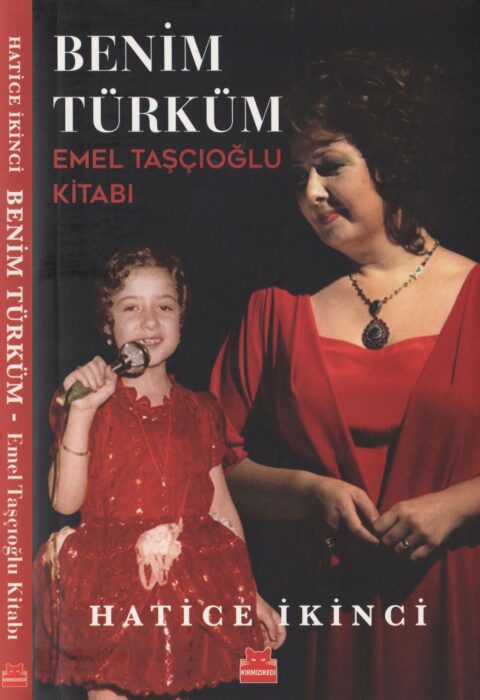
A memoir following the life of Emel Taşçıoğlu (born Emel Güney) in interview form, from her Ankara childhood to a musician family, from the first stage to the TRT period. In the first sections that were read, the strongest side is the warm, detailed description of the old Hamamönü quarter, the culture of neighbourliness and the türkü atmosphere at home. The weak side is the lack of documented historical research and the subjectivity of the memoir voice in some places. A warm and simply written read for those interested in Turkish folk music and the Ankara of the last century.
3.9 / 5
ReviewsRafel Əlizadə
My Folk Song — The Emel Taşçıoğlu Book

My Folk Song — The Emel Taşçıoğlu Book

Hatice İkinci · Non-fiction
Reviews
The last novel by Melih Cevdet Anday, one of the founders of the Turkish “Garip” poetry movement, serialised in the newspaper Cumhuriyet — a lyrical, thoughtful and slightly strange book about summer, the sea, love and the world of an eccentric old man. Its strongest asset is the language: through a poet's prose you can almost feel the light, colour and heat of the Aegean coast. The narrator's “uncle” — past seventy, meddling in everything, mixing up Mozart and Beethoven, determined to “develop” the village and never leaving the house without his revolver — is a memorable literary character. The weak side: the plot moves very slowly in the first third and the dialogue sometimes repeats itself. and Turkish letters are garbled in many places. Valuable for lovers of Anday's prose and of quiet, lyrical novels.
3.8 / 5
ReviewsTürkanə Əliyeva
Raziye

Raziye

Melih Cevdet Anday · Novel
Reviews
A fast, coarse, open American novel in which an unemployed Vietnam veteran builds a mass-market «men's magazine» empire out of a failing tabloid and is drawn into the gambling–narcotics–mafia chain. Its strongest quality is the lively description of the cheap tricks of newspaper-magazine work, advertising campaigns and mob bargaining. Its weaknesses are the many explicit sex scenes, drugs and violence, the crude treatment of women and gay characters, and the hurried «everything comes out» ending.
3.4 / 5
ReviewsTürkanə Əliyeva
Dreams Die First

Dreams Die First

Harold Robbins · Novel
Esc — close · ↵ — open
Text