Psychology Says: Whoever Is Not a Slave to Their Emotions Is the Master of Their Life
Good Fit
- Young readers taking a first interest in psychology who want short, light texts
- Those who like the style of motivational social-media posts
- Anyone wanting a book of self-contained chapters to read a page or two a day
Not a Fit
- Readers looking for an evidence-based psychology book with sources
- Those sceptical of using projective tests for self-diagnosis
- Readers uncomfortable with a deterministic, blaming tone about mother–child relationships
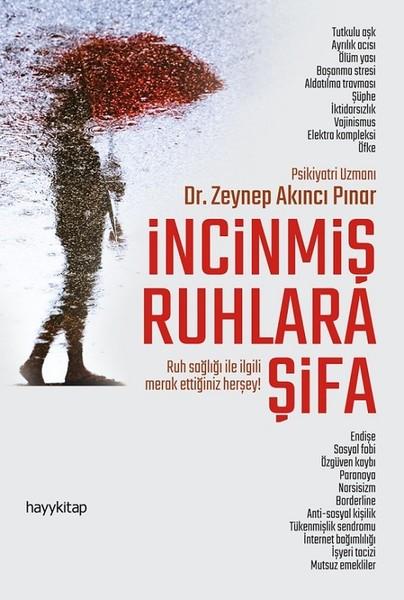
The preface sets up the book's key images: suppressed emotions are «like a pressure cooker — if the steam isn't released, it explodes»; emotions are «the bricks of your house», and feelings not lived through in childhood are missing bricks in the wall. These metaphors are memorable, and the author's message that «you cannot change the past, but you can lift the big stones from the riverbed» offers hope. Yet the «venting» (catharsis) model of emotion is seriously questioned in contemporary psychology — research shows, for example, that «letting off» anger does not reduce it — and the book presents the idea without any caveat.
Chapter one explains emotions through physiological, neurological and cognitive theories, using the example of a student, Ahmet, who finds a spider in a drawer — this is the best and most didactically clear part of the book. Darwin's evolutionary view and the functions of emotion in decision-making, relationships and expression are listed in plain language. Some claims are overstated, though: an ultrasound study at Durham and Lancaster universities is presented as «proving that emotions are experienced in the womb», whereas fetal facial movements are not evidence of emotional experience.
Chapters two and three are the most problematic part of the book. Pip Wilson's «Blob Tree» picture is given to the reader as a test, followed by personality readings keyed to the numbers of the figures chosen («number 7 is fully self-confident», «numbers 13 and 21 focus on the negative»). Then comes Karl Koch's tree-drawing test: a thin trunk means «sensitivity», a large drawing «pride and arrogance», a tree without branches «cognitive problems». Although the author adds a note that «the results are not guaranteed to be accurate», interpreting projective tests with such simple keys and without professional supervision is scientifically unreliable and can lead readers to wrong conclusions. The invitation to email drawings in for «expert evaluation» is more troubling still.
Chapter four is the most useful part: emotional deprivation is divided into three forms — deprivation of nurture, of empathy and of protection — with concrete questions for each («When you cried, did someone come and comfort you?», «As a child, did you have a safe source of refuge?»). The example of a «narcissistic mother» who dresses her daughter beautifully for every party but ignores her at home — the idea of a «false display of love» — is well chosen. Consequences such as turbulent romantic relationships, feelings of worthlessness and dependence on approval are explained clearly.
Chapter five is devoted to «the absence of the emotional mother», and here the tone shifts: «for a child deprived of affection there is no making up for this lack», a mother's absence «opens a wound in your heart that will never heal». Such deterministic statements contradict resilience research and can read as blaming working mothers; although the author later excludes unavoidable separations such as going to work, the overall message remains heavy.
Overall, «Psychology Says» is a readable, occasionally useful book written in a social-media style: short chapters, memorable metaphors and closing quotes make it appealing to a wide audience, which explains why it reached ten printings. But the scarcity of references, unverified details such as an unsourced quote attributed to the Buddha, and above all the tests offered for self-diagnosis make it hard to recommend as a scientific psychology book.
- 42 short, self-contained chapters
- A «Psychology says:» quote box at the end of each chapter
- Self-assessment tests and question lists
A more evidence-based classic on recognising and managing emotions
A deeper, more systematic look at the adult consequences of childhood emotional neglect
A research-based treatment of self-love and self-acceptance
The fifth chapter is devoted to «the absence of the emotional mother» and the tone changes here: «there is no compensating this lack for a child deprived of compassion», the mother's absence «opens a wound in your heart that will never heal». Such deterministic statements run against research on resilience.
If you see a problem, write to us. Publisher, author, rights holder, or just a reader — it doesn't matter. If there's something problematic about copyright in this review, if the review's author has broken the site's rules, or if you simply have a suggestion or complaint, hey@kitabdanevar.com. We'd rather resolve this between ourselves than go to court: we review requests within 48 hours and, if needed, correct or fully remove the review.