Kitabda Nə Var? Kitabda Nə Var?
Appearance
Join Us
What's in the Book? Discussion About Us
Azərbaycan English ✓ Русский Türkçe
← Reviews
Non-fiction

The Revolution That Divided the World: The Rise and Fall of Soviet Socialism

In English: The Revolution That Divided the World (Dünyayı Bölen Devrim)
Taha Akyol
Review by: Rafel Əlizadə14 October 20261 min read
A large book in which the journalist and writer of history Taha Akyol tells in plain language the history of Russia from tsarist rule to the rise and fall of Soviet socialism. In the first chapter read, the strongest side is the fluent, chain-like narration and the way the «continuity» thesis from tsarist despotism to Bolshevik totalitarianism is built with cited sources (Szamuely, Wolfe, Kurat). The weak side is the author's open ideological position (he calls himself anti-communist) and a heavy reliance on the «tradition of despotism» thesis as the single explanatory scheme, while sharper present-day debates are passed over in a sentence or two.
Who Is This Book For?
Good Fit
  • Readers who want Russian and Soviet history in plain language as a single-author chronicle
  • Anyone interested in totalitarianism and autocracy
  • Readers curious about the historian-journalist writing style in the Turkish press
Not a Fit
  • Those seeking academic, multi-source and critical Soviet history
  • Anyone who wants to understand the Bolshevik revolution through sociological, economic or class analysis
  • Readers who do not want to accept the author's anti-communist stance without balancing it
How Readers Rate It
Practicality 2.0/5 Theoretical
Sourcing and depth 4.2/5 Strong
Readability 4.0/5 Flowing
39 voters
Preface and Chapter 1: «Russia of the Tsars»
Read: the preface and the first chapter «Russia of the Tsars» (pp. 7–36) — about 7% of the book. The remaining chapters are not covered here.

In the preface Akyol sets out the aim of the book: Soviet socialism has collapsed, but at a time when democracies are in crisis and autocracies are rising its experience contains «extremely valuable lessons». The author calls today's Russia under Putin «a typical example of the autocrats of our time», writes openly that he is «anti-communist» and states that the book was written in two years, relying on sources such as Besim Tibuk's advice and «The Black Book of Communism».

The first chapter begins by saying that the Bolshevik revolution «divided the world» and that the Russian experience is a «laboratory» for understanding why totalitarian systems are born and collapse. The main thesis rests on a quotation from Lenin's «Left-Wing Communism»: the revolution happened «only thanks to the historical peculiarities of Russia». From here Akyol moves to the autocratic states of Ivan the Terrible (1530–1584) and Peter I (1672–1725) and uses Pushkin's poem «Demons» and Dostoevsky's «Demons» as a warning about nihilism.

The era of Ivan the Terrible is described with reference to Szamuely: the massacre of Novgorod in 1570, the 6,000-strong «oprichniki» political police, the destruction of the boyars. The author presents this as the beginning of the line «oprichniki — Cheka — GPU», explains the Russian church's subordination to the tsar with the concept of «caesaropapism» and gives examples from Russian proverbs («God in heaven, the Tsar on earth»). The conclusion put forward is that «when Marxism-Leninism is put in place of God and the First Secretary in place of the tsar, autocratic continuity is plainly visible».

Towards the end of the chapter a parallel is drawn between the «Table of Ranks» and the Soviet «nomenklatura»; the heavy condition of landowning nobles and peasants is described. Akyol's approach is explanatory and fluent, but tying all stages of Russian history to a single «tradition of despotism» is a simplification: the Soviet system must also be explained by ideological, economic and international factors, and the author himself says he will turn in this direction in the later chapters.

Reading Experience
  • The text is plain, chronological and story-like; each subheading shows the thesis clearly
  • The main references are historians such as Szamuely, Wolfe and Kurat, given in footnotes
  • Russian literature (Pushkin, Dostoevsky) is used to explain political history
  • The author's ideological stance (anti-communist) is openly declared and affects the tone of the text
Content Warning
The book describes the mass killings, torture and punishments of the era of Ivan the TerribleThe author's open ideological stance affects the explanation of history; the book is a single-author journalistic-historical essayThe main thesis (the Russian «tradition of despotism» and Bolshevism as its continuation) is debatable and should be compared with alternative explanations
If You Liked This
Rusya Tarihi (History of Russia)Akdes Nimet Kurat

An academic introduction to Russian history; one of Akyol's main references

The Russian TraditionTibor Szamuely

Akyol's main source: the tradition of despotism in Russian political culture

Spoiler
How does this part end?
⚠️ Caesaropapism and «Tsar — God».

At the end of the part read, Akyol ties tsarist power to the formula «the will of the Tsar is the will of God», calls the church's subordination to the tsar «caesaropapism» and lists Russian proverbs; then he writes that when Marxism-Leninism and the First Secretary are put in place of God and the tsar, «autocratic continuity» is plainly visible. What follows is outside the scope of this review.

Responsibility. This review reflects the personal assessment of its author, who is responsible for it. As a platform, "What's in the Book?" is not responsible for the content of the review. All rights to the work belong to its author and publisher; the cover image is used for promotional purposes only.

If you see a problem, write to us. Publisher, author, rights holder, or just a reader — it doesn't matter. If there's something problematic about copyright in this review, if the review's author has broken the site's rules, or if you simply have a suggestion or complaint, hey@kitabdanevar.com. We'd rather resolve this between ourselves than go to court: we review requests within 48 hours and, if needed, correct or fully remove the review.

How Would You Rate It?
Did this review help you decide?
Reviews · 0
Similar Books
Reviews
An advice book that teaches parents to be «kind but firm» instead of punishing and shouting, and solves everyday problems in alphabetical order. Its strongest quality is that every principle is given with a short real example (bedtime routine, a phone call, homework) so the reader finds ready-made sentences. Its weakness is the size, the repetition and some claims («75% of problems would disappear») given without sources.
3.9 / 5
Reviewsİdris Muxtarzadə
Positive Discipline A–Z

Positive Discipline A–Z

Jane Nelsen, Lynn Lott, H. Stephen Glenn · Non-fiction
Reviews
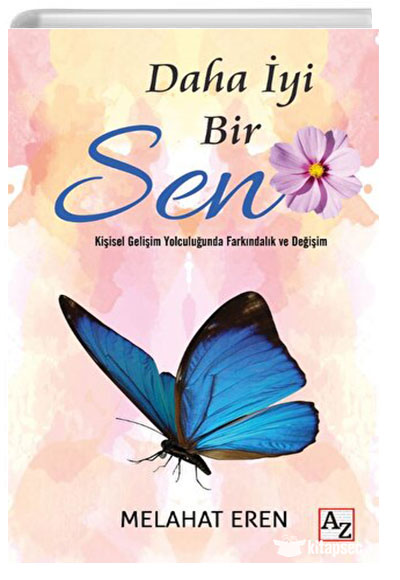
A broad, encyclopedic self-help book by Melahat Eren, covering dozens of topics from self-discovery to financial literacy in a collection of general, widely-applicable advice.
3.9 / 5
ReviewsRafel Əlizadə
A Better You

A Better You

Melahat Eren · Non-fiction
Reviews
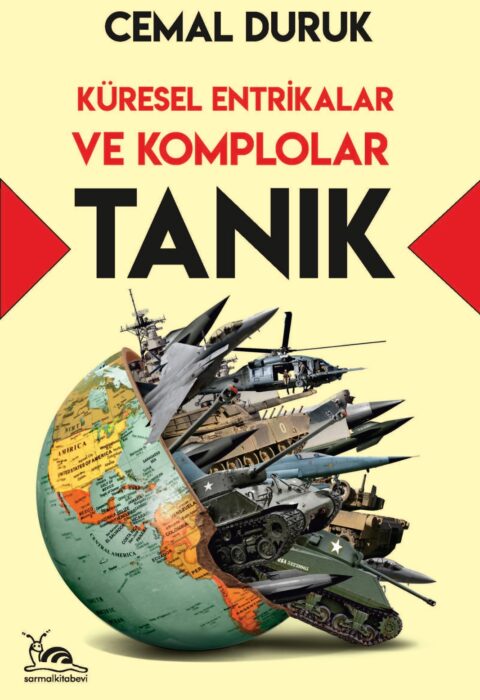
The book explains the course of England and other states as the plan of a secret network (the Illuminati, the Masons, the «bankers») with the thesis «nothing in history is coincidence». In the first section that was read, the strongest side is that factual information on English history (Walpole, the industrial revolution) is given briefly and clearly and that there are many footnotes. The weak side is that the main claims rest on probability and coincidence rather than proof and that the claims about the Rothschild family repeat an antisemitic conspiracy theory with a long tradition, which is not confirmed by historical sources. This book should be read not as a history book but as an example of conspiracy theory.
1.8 / 5
Reviewsİdris Muxtarzadə
Tanık: Küresel Entrikalar ve Komplolar

Tanık: Küresel Entrikalar ve Komplolar

Cemal Duruk · Non-fiction
Contents
The Bounds of Reason 9 – 104
A Shard of Ice 105 – 156
Eternal Fire 157 – 218
A Little Sacrifice 219 – 292
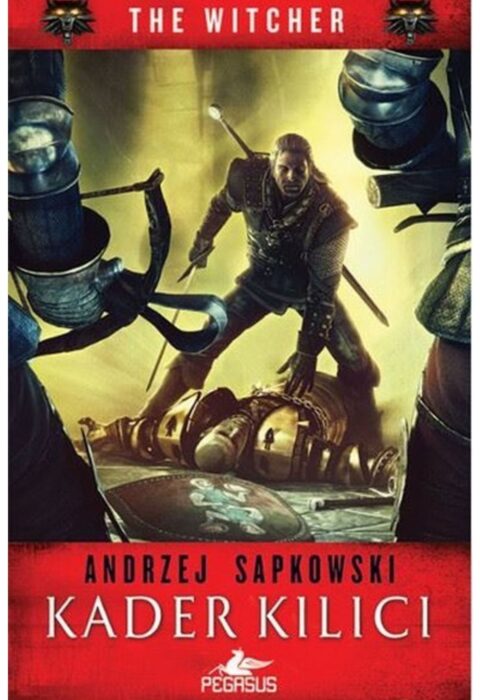
The Sword of Destiny 293 – 370
Something More 371 – 437
4.6 / 5
ReviewsRafel Əlizadə
Sword of Destiny

Sword of Destiny

Andrzej Sapkowski · Fantasy
Esc — close · ↵ — open
Text